
Creative writing is hard. It isn’t easy to make time every day, or week, or whenever you can to pour words onto a computer screen, especially if you (like the majority of writers) aren’t being paid for it.
My mindset today is quite different than a decade ago. Ten years ago, I was motivated by big dreams of getting a literary agent and a big, mainstream publisher. I wanted a big advance and to retire from my day job to work, full-time, as an author. I was motivated by rags to riches stories like those of J.K. Rowling and E.L. James. After a string of rejections, and one or two glossy offers of publication that soon lost their shine, I soon forgot about agents, publishers and unrealistic big advances, or notions of the full-time author dream and began to focus on getting my work out into the world. After all, what good is 3 sample chapters of a novel MS if they’re left sitting on an editor’s desk for a year, only to be glanced at for five minutes, then given a form rejection. Nope; I was much too impatient for that, and wanted more control over my writing fate.
These days my goals are much more practical and realistic, especially because, as an Indie author, I don’t have the marketing budget that a big publishing house has. Nowadays I’m motivated by writing the stories themselves and not the end goal. I get excited by a project that I want to share with the world. When the story is finished, I use professional editors and proofreaders – people I select and hire – to make my work the best it can be. When published, I focus on marketing to reach more and more readers without worrying about a specific number of sales; this is because targets can be a double-edged sword. It can be motivating if you reach them, but if you don’t, it can easily derail an otherwise optimistic plan.
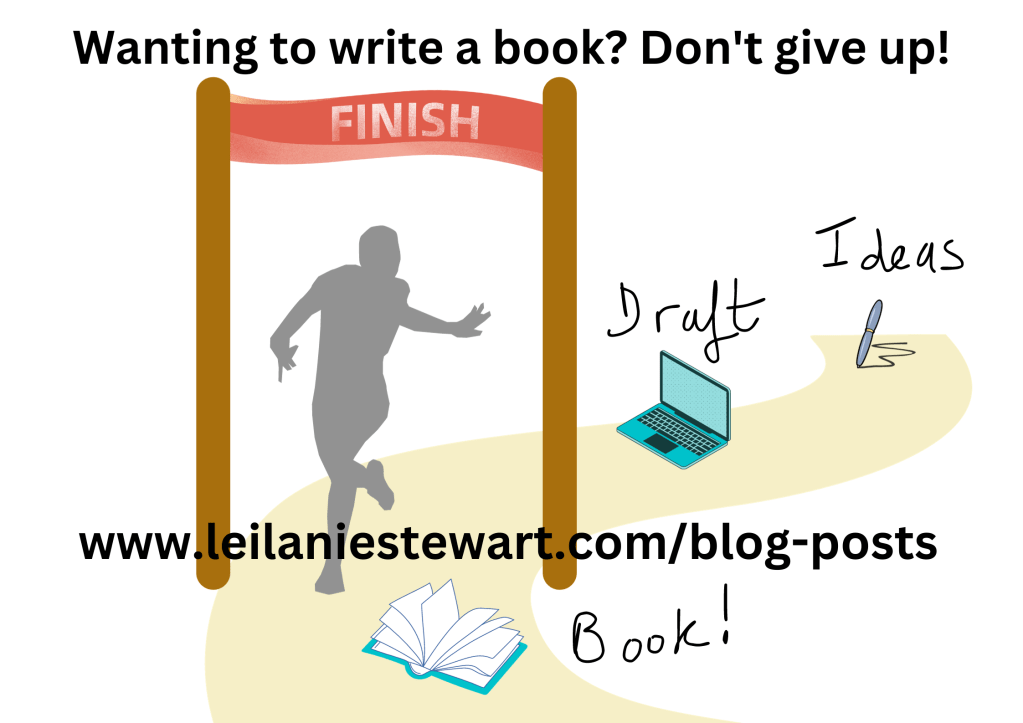
So, what’s my advice, after fifteen years of publishing in literary magazines, traditionally with small publishing houses and going it alone as an Indie author? Once you start your book, don’t stop. Keep chipping away, even if only a few words every other day. Write it for yourself, and once it’s done, get yourself an editor who will help to get it ready for an audience. Get it published: by yourself, or via the traditional slushpile. Tailor your metadata and key words to reach as many new readers as you can. Tell the world about your book. Shamelessly self-promote yourself. Allocate what you can afford in your marketing budget. Get your book into bookstores, or libraries, if you can. Adapt your strategies; if ‘going wide’ didn’t work for one book, go ‘exclusive’ with the next. Tinker with pricing, to drive sales. Keep writing more books.
Is it easy? No. But, please…
Don’t – give – up!

 Leilanie Stewart