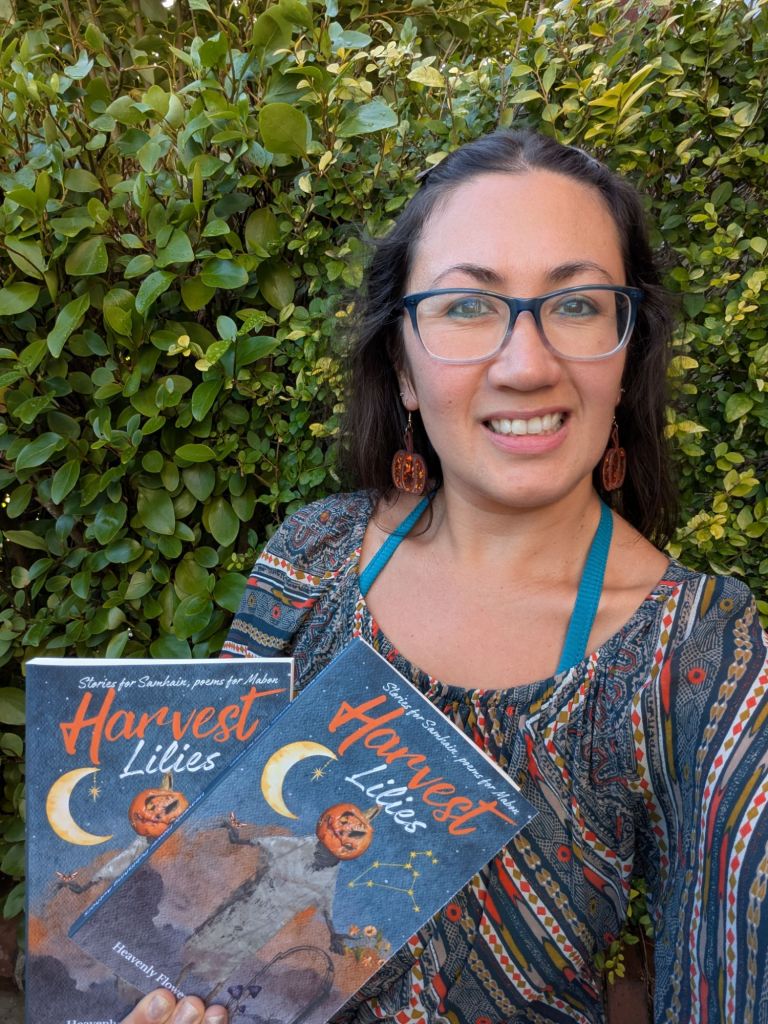
I finally got my paperback of Harvest Lilies anthology 2 weeks after publication on 23rd September; I was too broke to buy copies sooner, as we had a gigantic heating bill this month, plus other expenses. One copy is for me and Bindweed co-editor, my hubby Joseph Robert and the other is for legal deposit at The British Library. We’re really pleased with all the reviews so far from the US, Australia and UK and the feedback from happy contributors who love the book design and internal artwork accompanying their stories/poems. Positive feedback really motivates us to keep Bindweed going; we’re currently working on a theme for our 2027 anthology.
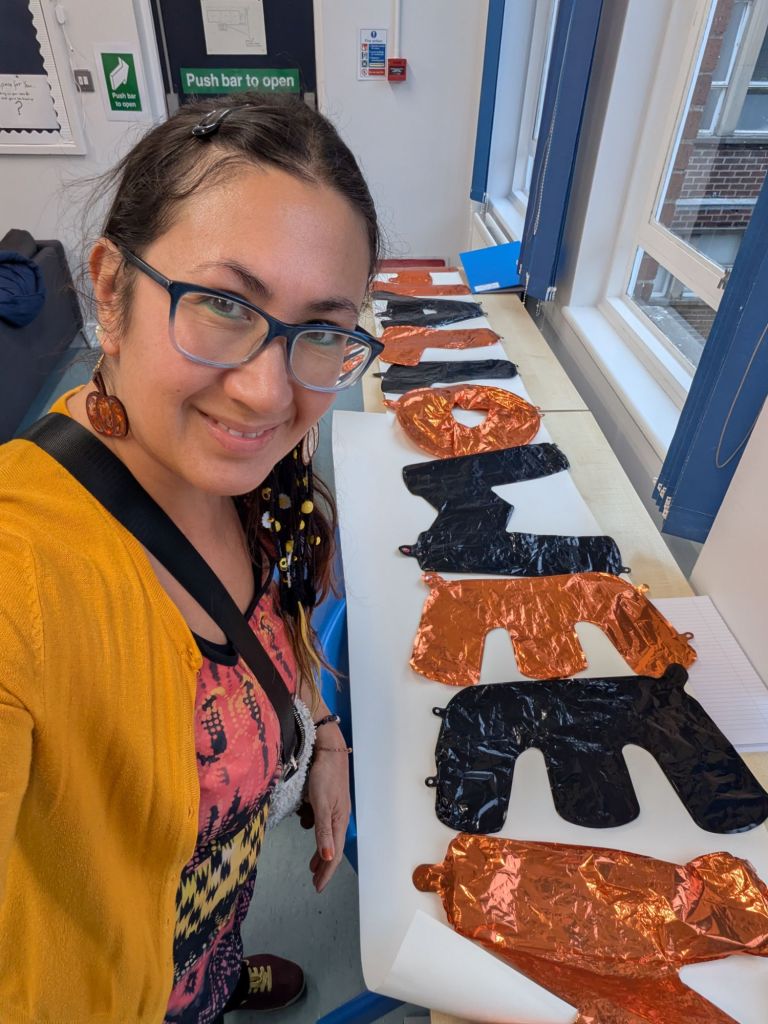
An inflatable foil banner is essential for Halloween
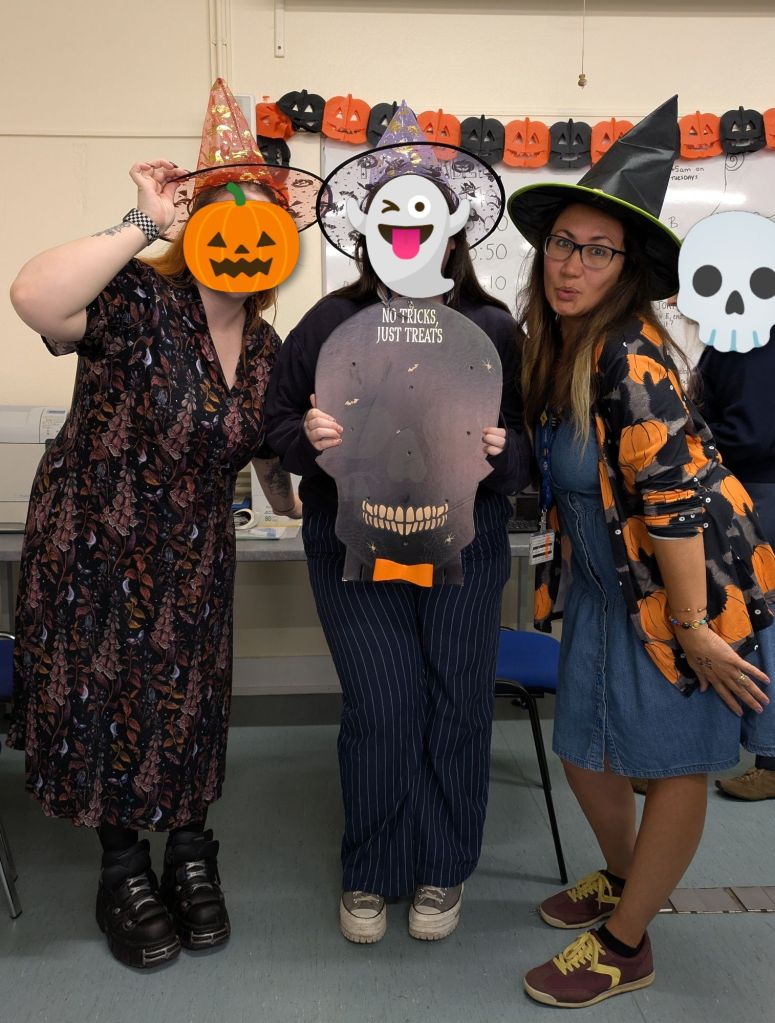
Aside from buying copies of our autumnal publication, this week I was busy at work running Team Halloween; in other words, I was the witch in charge of decorating (lol). Time well spent, of course.
Team Halloween at work
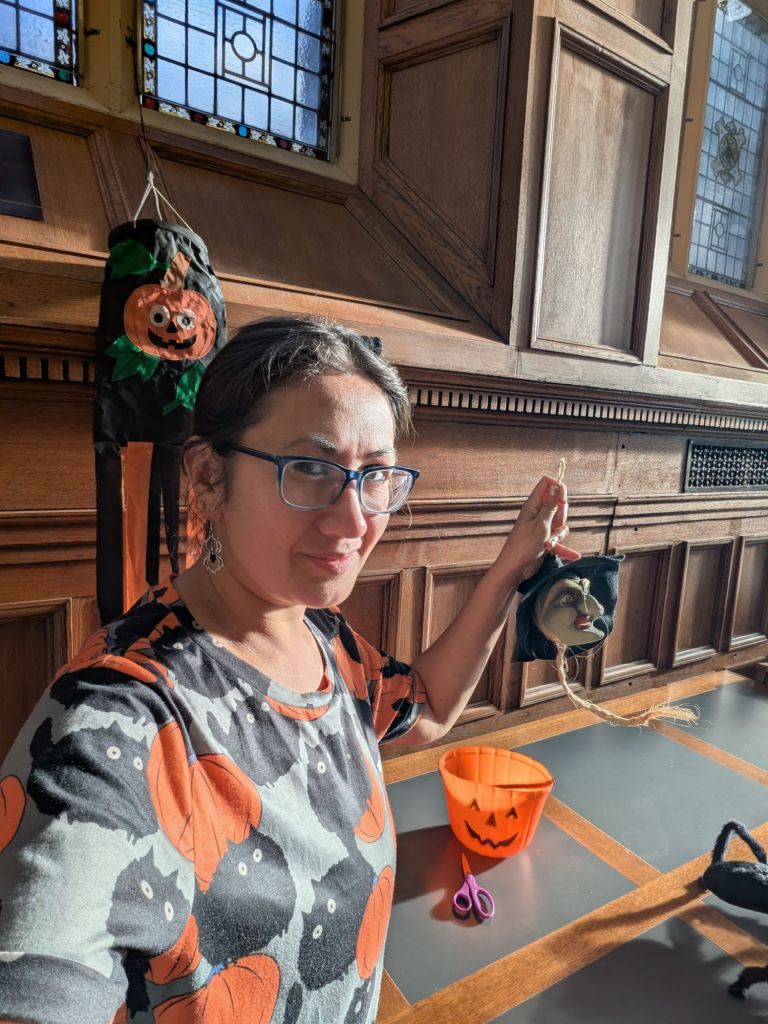
As you know, I work in secondary education. The students loved the decorations; seasonal cheer is always good for one’s spirits (erm, spooky pun intended, ha ha).
Getting the decorations ready in the library
Aside from getting into the swing of the season, I’ve been busy working on my body horror short story collection and teaching creative writing to a new sixth form group (16-17 year olds). I’m very lucky to be able to share the thing that I’m most passionate about – creative writing – with the next generation of writers. Just over half of my newbies are interested in horror too. Hurray! What more could a horror author ask for, eh?
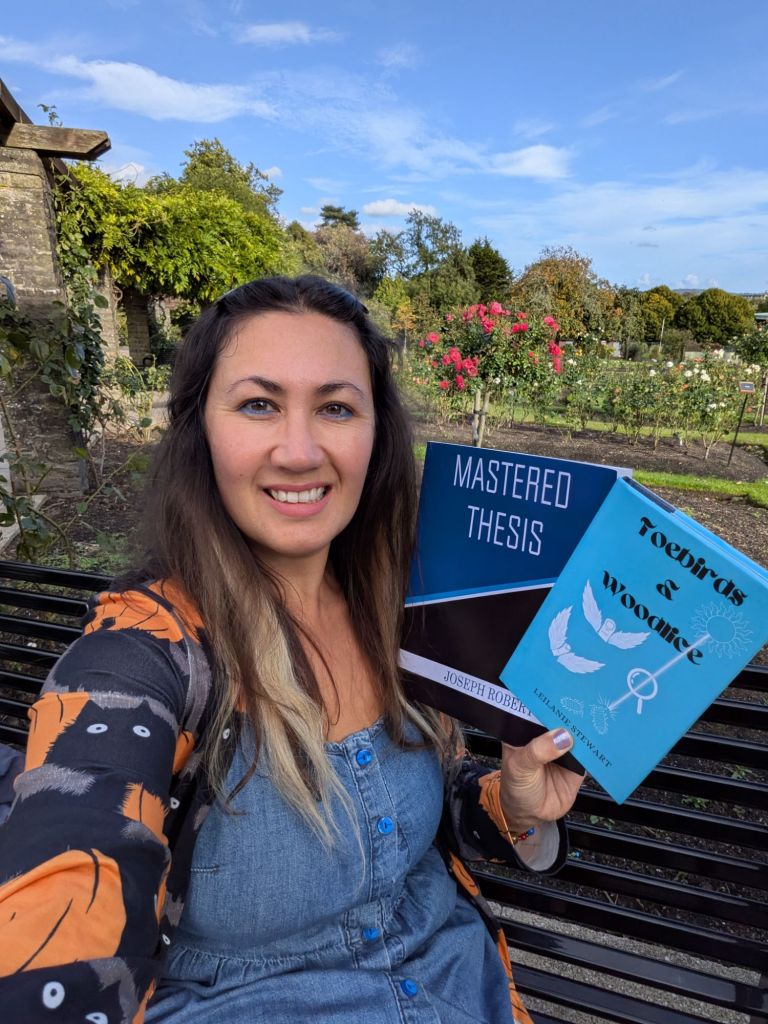
Happy National Poetry Day! Here’s a poem from my hubby Joseph Robert’s collection, ‘Mastered Thesis’ and one from my poetry collection ‘Toebirds & Woodlice ‘.
Thursday 1st October is also officially the start of spooky season and countdown to Samhain. Like my pumpkin and cat cardi? Me too. Expect all my Halloween outfits to be making an appearance over the next few weeks…
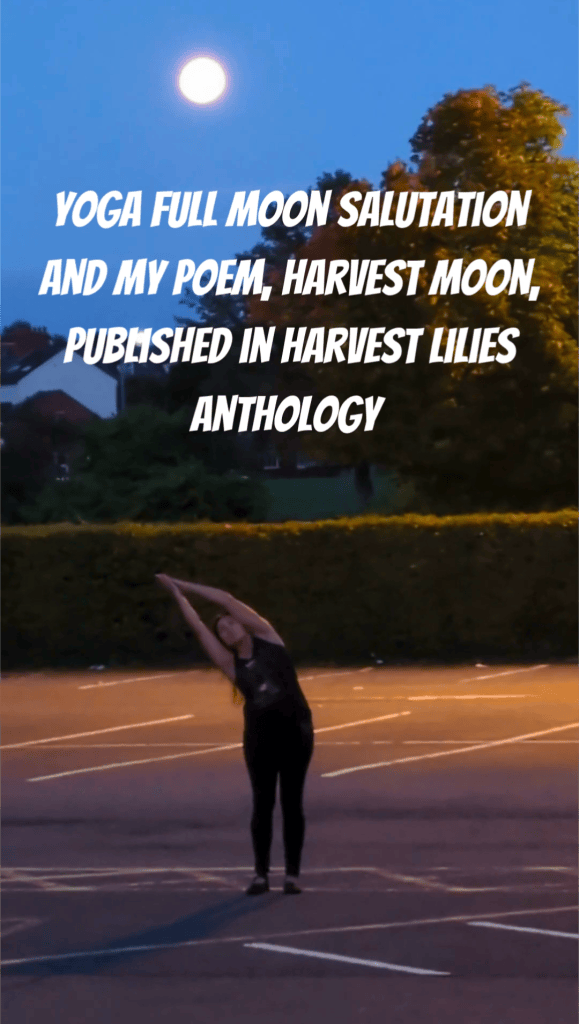
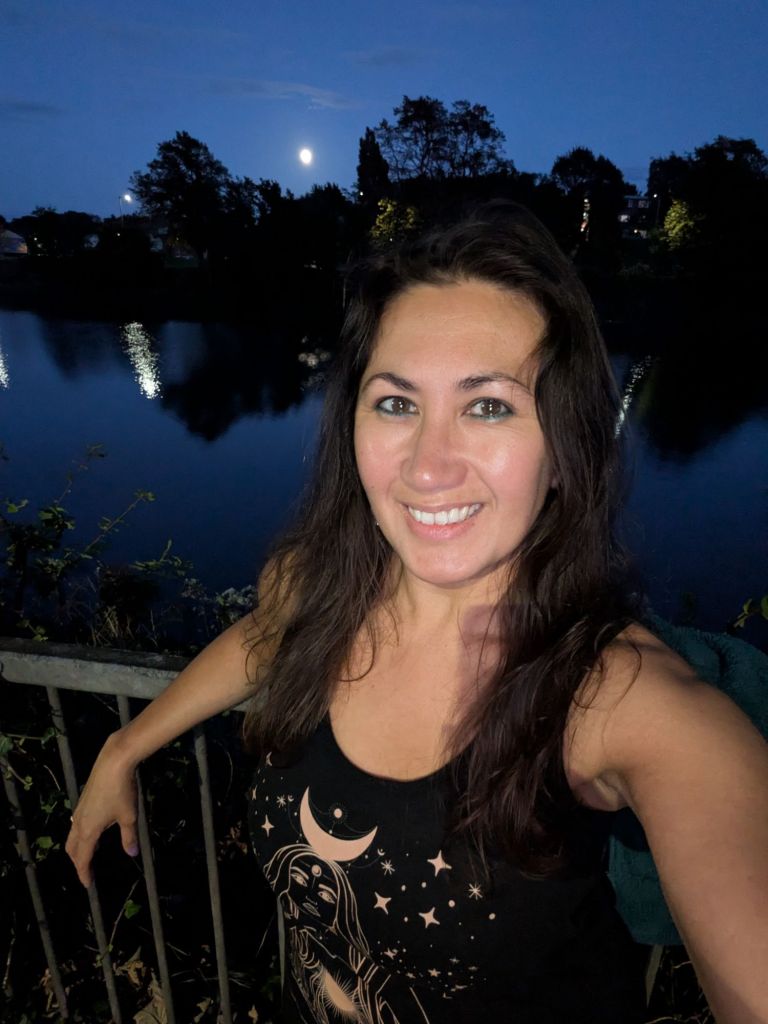
Happy Harvest Moon! Here I am doing a full moon salutation along with a reading of my poem Harvest Moon, published in Harvest Lilies anthology.
A full moon is a time for gratitude, so this week I’d like to say thanks to the fabulous author and book blogger, Laura Lyndhurst for her amazing review of my novel The Buddha’s Bone, as well as thanks to Bird Reviews Sal for reviewing Harvest Lilies, our latest Bindweed anthology that was published on the autumn equinox. And, of course, thanks to my lovely yoga teacher Diane for contributing so much to my health!
Many thanks to author and book blogger, Laura Lyndhurst for this amazing review of The Buddha’s Bone! 🥰🌞 You can read her full review on her website – Books that make you think:
Cause for Concern – 5* I wasn’t sure whether to salute Kimberly’s courage or worry about her foolhardiness when she set off to spend a year teaching English in Japan. It’s a long way from home, especially when you’re alone in a culture so different from your own … Read More
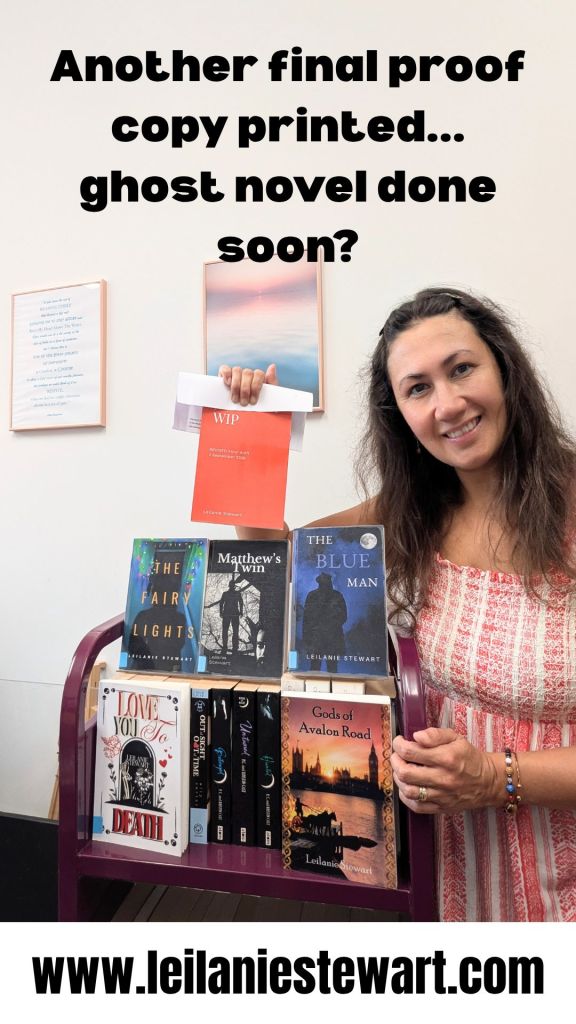
You might recall my blog post back in May about unboxing the final draft of my ghost novel work in progress of the last three years. Well, consider this a bit of deja vu then, for I have now ordered a revised final draft for another proof read and I’m hoping (oh please, oh please…) that this is actually the FINAL final draft.
Let me explain. After my lovely hubby editor gave the proof copy in May some much-needed red pen treatment, I realised that the historical details in my manuscript needed fine-tuning. You see, the part of London it is set in was not urban back in early Victorian England; it was still rural. That could have been a disastrous anachronism and I’m glad I caught the mistake prior to publication. After getting my hands on some archived maps of the area, I revised my details and now I’m confident that the novel is done. Whew!
I strive for historical accuracy in my books, as I really believe that authentic settings, even in a fictional book, grounds a story in reality; and particularly in the horror genre, enhances the fear factor. I aim to scare. Hopefully you will be the judge of that in the not-too-distant future, and fingers crossed my latest novel WIP will join my other published books soon.
School term has been in full swing for the past three weeks, and if I were to imagine life as a rug, it feels like it’s being pulled out from under me. I’ve been so busy with my day work in secondary education that I’ve had to try to squeeze exercise into my routine before work and writing time after, while our son is still at after-school club, and then family time in the evening before it all repeats. Lately it hasn’t left much time for anything else; I have barely been online at all as I have no time to pick up my phone (in fact my story of the week has been shouting across the house, “honey, have you seen my phone?” Lol). Unintended digital detox? Yep, pretty much.
The flip side of that is, I feel out of touch with the world. I haven’t even had a chance to read the news. I don’t know what is going on in my country, nevermind elsewhere. I don’t know what has been happening with all the social media accounts I follow. I haven’t had time to do anything online. In fact, I even just realised that it had been a week since my last blog post, so I decided to throw together this one.
Digital blackout is maybe more apt.
And a reading blackout too. I have barely had time to pick up a paperback. Normally I would read ebooks in bed at night, but I’ve been so zonked, I’ve been hitting the sack soon after our son is in bed. Should I be sleeping as much as a primary schooler? Maybe not, but that has been the case for me, certainly these past few weeks.
At least my writing is chugging along: if you imagine a slow, over-loaded cartoon cargo train trying to struggle up a steep mountain slope, panting and gasping, like in those black and white 1930s cartoons, that would be the train depicting my literary life balance. I’m getting the bare minimum done on my two current WIPs (a novel and a short story collection), but at least it’s enough to keep the ideas fresh in my brain.
Is my brain fresh, though? Hmm. I don’t know about that.
I’m still here. When I’m not sitting, I’m standing, and when I’m not standing, I’m sleeping. Everything in between is a balancing act. If you’ve read this far, thanks for bearing with my rambling. I’m still coherent, for now, at least. Good enough!
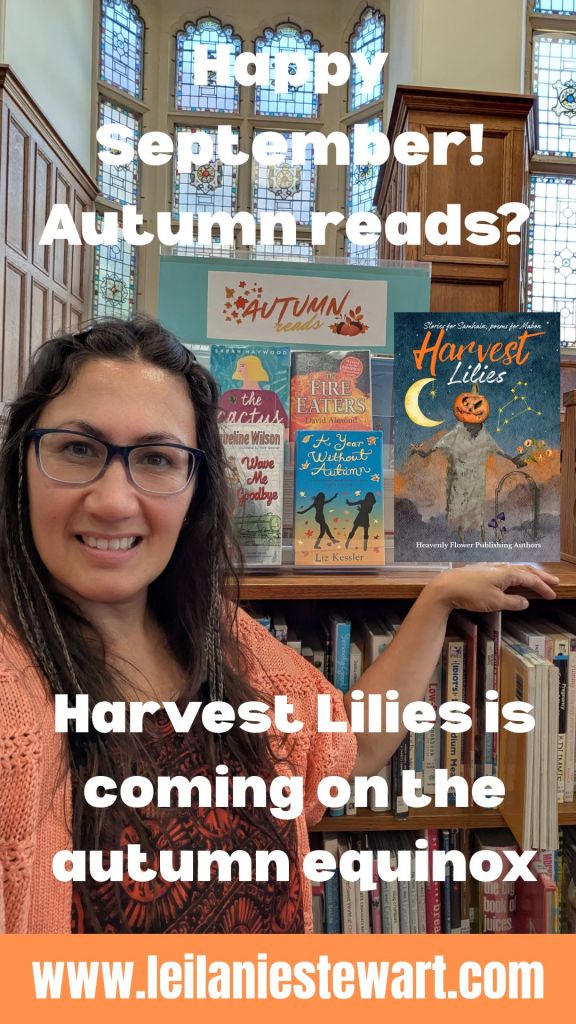
Happy September! Is it really meteorological autumn? Yes, as of 1st September, but the autumn equinox isn’t until 23rd… speaking of which, Harvest Lilies: Stories for Samhain, Poems for Mabon is due for release on the equinox. It’s our latest Bindweed anthology featuring 23 writers and poets from all over the world.
Aside from formatting and typesetting Harvest Lilies over the summer, I also finished editing (really this time…!) my latest ghost novel manuscript, a 3 year work in progress. I’m also up to 37k of a new novel I’m working on. Whew, a busy start to autumn!
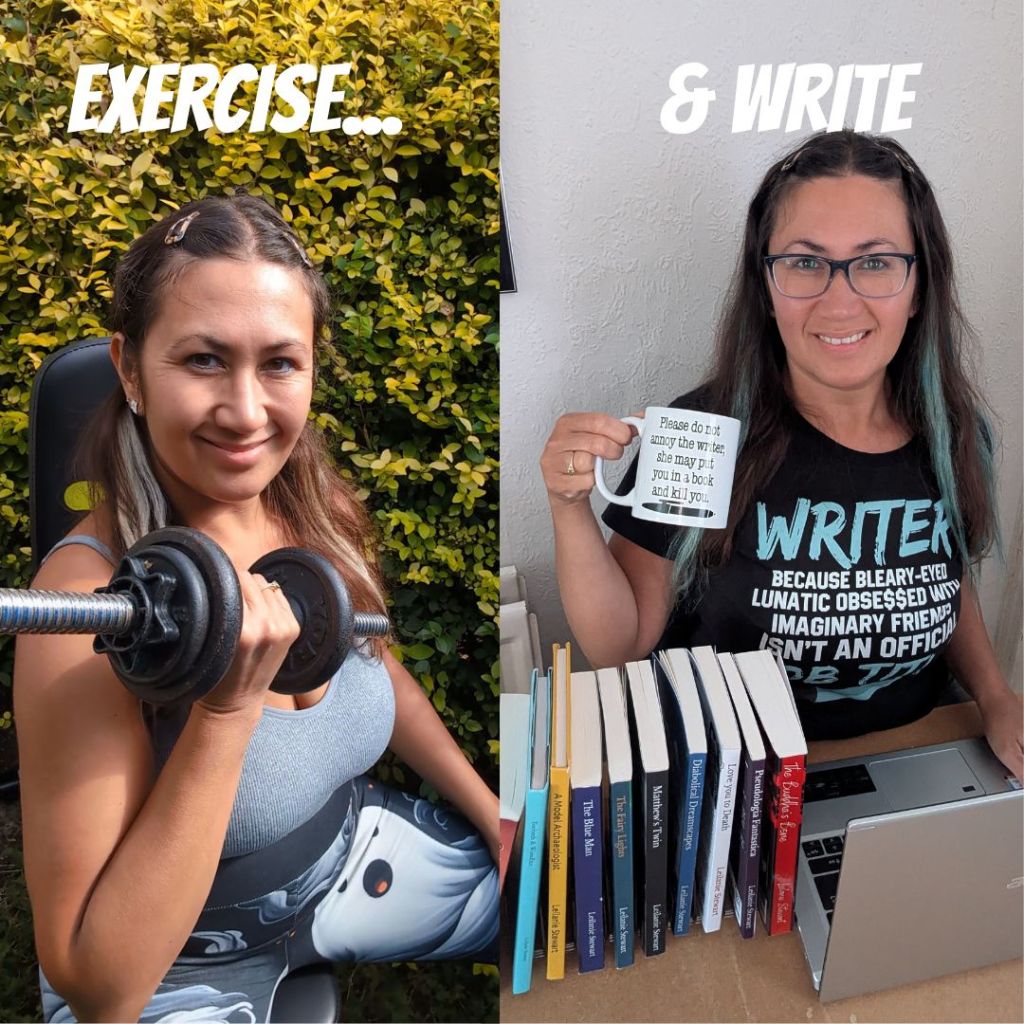
This summer I’ve been working out in between writing stints. After all, flaccid arms are no good for writing a new novel manuscript, and I’m up to 37k words already. I also finished final edits on the ghost horror novel I’ve been working on for the past 3 years, getting it as polished as can be, as I plan to put it out on submission. Exciting!
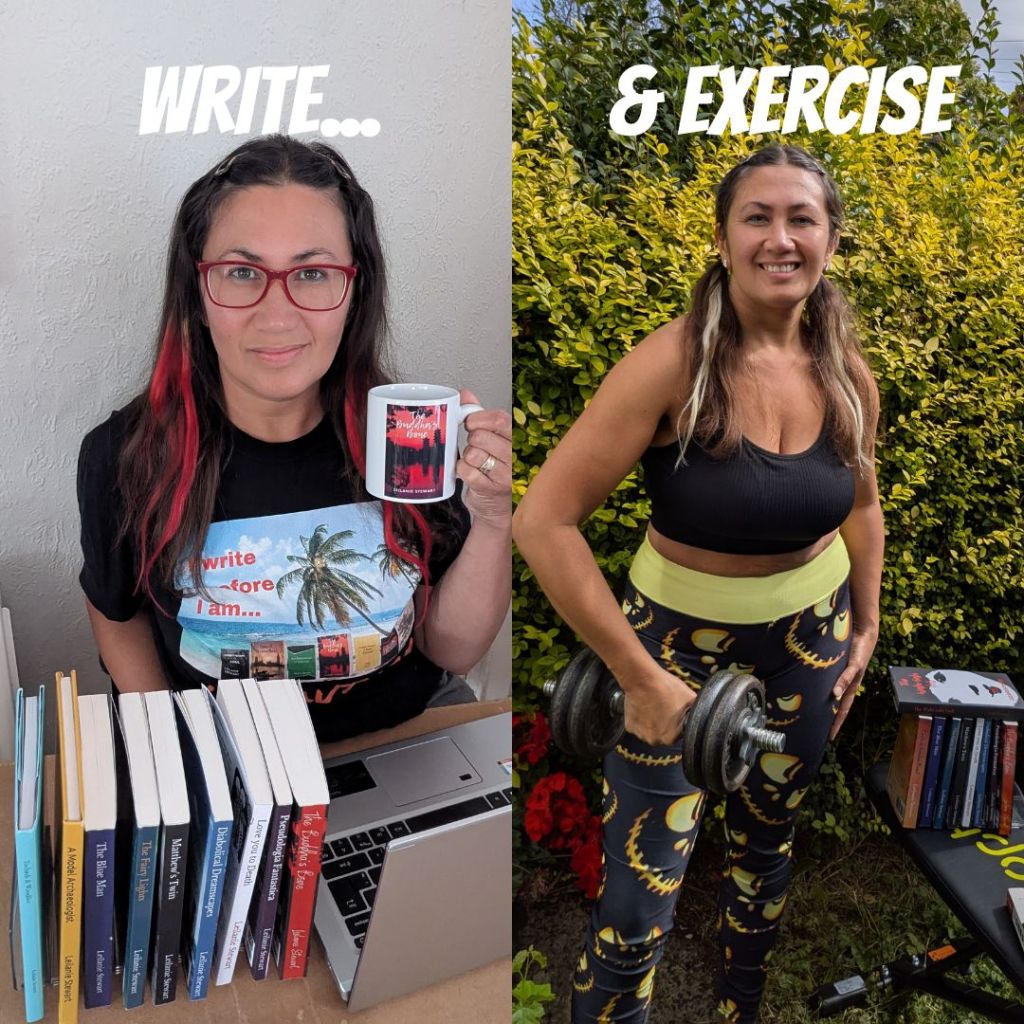
Write ghost novels and exercise (in Halloween clothing)
Also, on the keto/intermittent fasting and exercise front, I’ve lost 10lbs since 18th June. Not bad for 10 weeks, hurray!
BTW, does anyone else find that coffee is a great painkiller for working out? I find it’s a great companion when doing weights/boxing workouts and helps me to push myself further. Anyone relate?
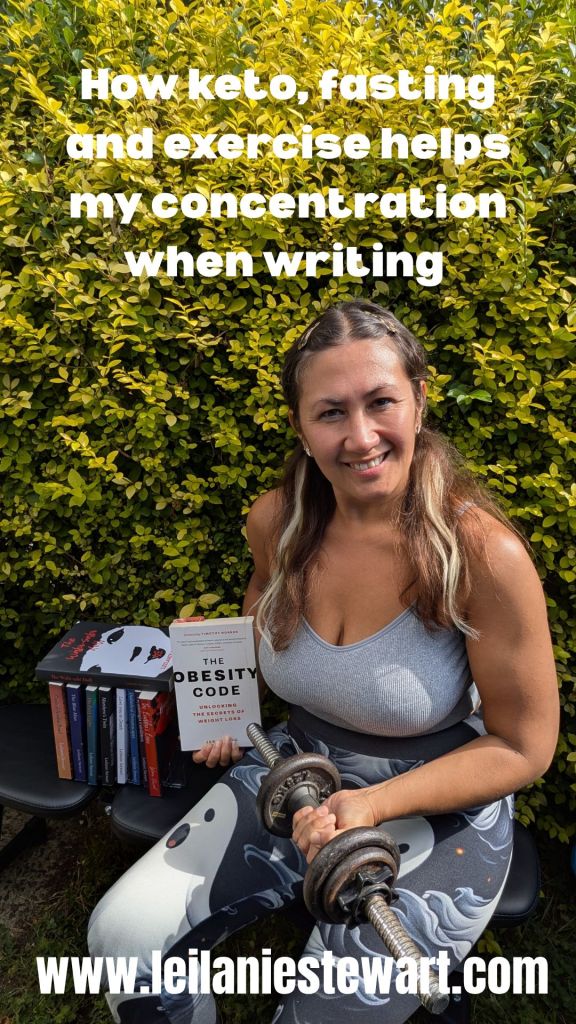
Last month I wrote a post about managing insulin resistance long term with keto, intermittent fasting and exercise, so this is a follow up about how this has positively impacted my writing. While I was off for 7 weeks over the summer holiday (from my day job working in secondary education) I spent 5 days a week doing weights, boxing, resistance training and swimming, in conjunction with keto dieting and intermittent fasting, and so I felt I should mention how this has improved my concentration.
I follow the Warrior Diet (fasting for 20 hours and eating during 4 hours) and OMAD (one meal a day, aka 24 hour fasting as detailed in Dr. Jason Fung’s book ‘The Obesity Code ‘, which I do 2 or 3 times a week. I plan my exercise during my fasting hours, as our ancestors would have done (hunting and gathering for most of the day and eating once in the evening). Obviously I’m not a palaeolithic woman (lol, I could make a video in a cave woman outfit next time, ha ha) but this eating plan works for me; it has accelerated my fat burning and lowered my insulin resistance. Obviously 20 to 24 hour fasting is advanced, so if you want more information, you can read this article on Bodyspec titled, The Ultimate Guide to 20:4 intermittent fasting. As for me, and my author-fitness lifestyle? Here goes:
Less brain fog
Carbs really make me sluggish, both in mind and body. I find that when I eat heavy starchy carbs, particularly wheat, I feel fuzzy-headed. Fasting switches my body from glucose burning (all carbs break down into glucose) to burning ketones from my own body fat. With an empty stomach and plenty of my own fuel, I’m much clearer headed, perfect for concentrating on my writing.
Better memory
Related to brain fog above, I didn’t realise how forgetful I was while in carb-burning mode until I went low carb/keto and once I was fat-adapted within a few weeks, my short term memory improved. Another win for writing, as it’s easier to keep the continuity in your stories if you can remember all the little plot points without having to read back over everything all the time. Plus, I’m better able to remember snippets of info or ideas to include in my stories without a goldfish-brain letting me down before I even get near my computer.
More energy
It’s a myth that the human body needs carbs for energy. If you have enough body fat to burn, that gives you all the energy you need. While fasting, I have enough energy to sustain me for both a boxing workout and writing; although I have to admit that I don’t fast on weight training days as I get too hungry and crave protein.
Better sleep/less cortisol
This one is a biggie for my writing. While eating starchy carbs, I found that my insomnia was bad. I often had to wake up several times overnight to pee, as carbs make the body retain excess water. Now that I’m in ketosis, I don’t wake up to wee, soy insomnia is gone. Better sleep equals better writing. Hurray!
In summary
My ability to concentrate on my writing and retain information related to my plot or new ideas has significantly improved over these last 7 weeks while back on keto and intermittent fasting. I’m confident that I can stick to my diet and workout routine now that school term has started again, as I’ve set manageable habits over the summer, so here’s hoping the impact on my writing will be for the long term too.
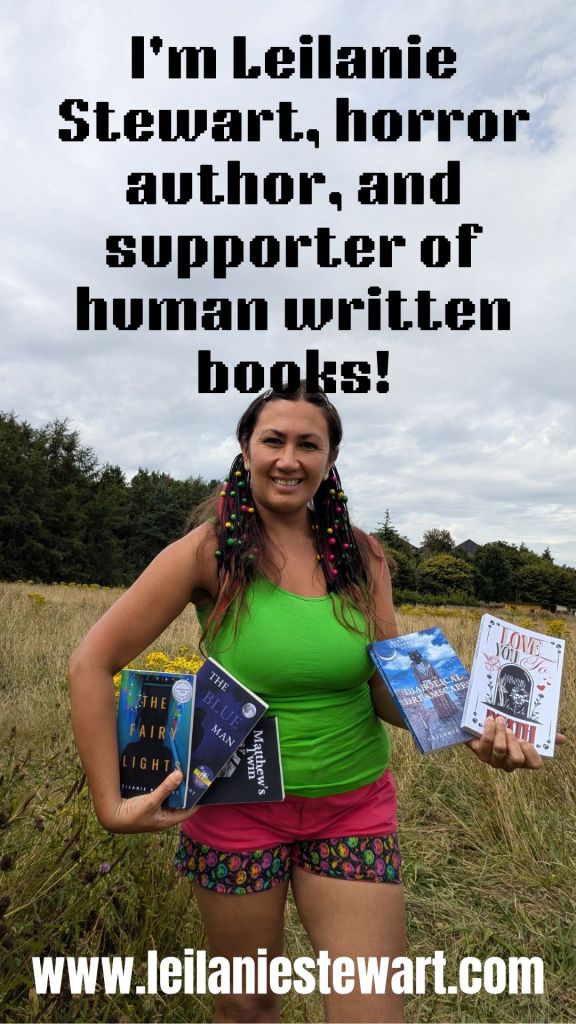
Hi there, I’m a human being who writes books the old fashioned way without using any generative AI. I also don’t use AI in my photos or videos to make myself look thinner/younger/more attractive. I don’t even use filters. What you see is what you get, wrinkles and rolls and all, lol. I do all of the graphics and text in my videos manually myself via my Canva subscription.
I believe in doing things the old-fashioned way and fostering authenticity with my readers. What I can give you are my (reader approved) scary ghost books and psychological horror reads. I also support authors who write books the old-fashioned way, by exercising their brains and not using cheap prompts that steals copyrighted work. And the only data centres I support are libraries.
In fact, having seen so many social media accounts using AI filters for trivial purposes like making users look prettier or younger, I would say, why not go for a nice long nature walk instead? Fresh air, exercise and de-stressing works wonders towards improving one’s appearance, and beauty sleep is far better for you – and the environment – than using AI generated beauty filters.
Speaking of the environment: why did I film this video in a grassy meadow in Belfast? Because nature will suffer if more data centres are built in Northern Ireland, depleting water and other natural resources – as well as raising the price of electricity for ordinary households. Let’s say no to this!
Here’s to literature, art and culture as it has been done for tens of thousands of years… and here’s to our beautiful natural environment.