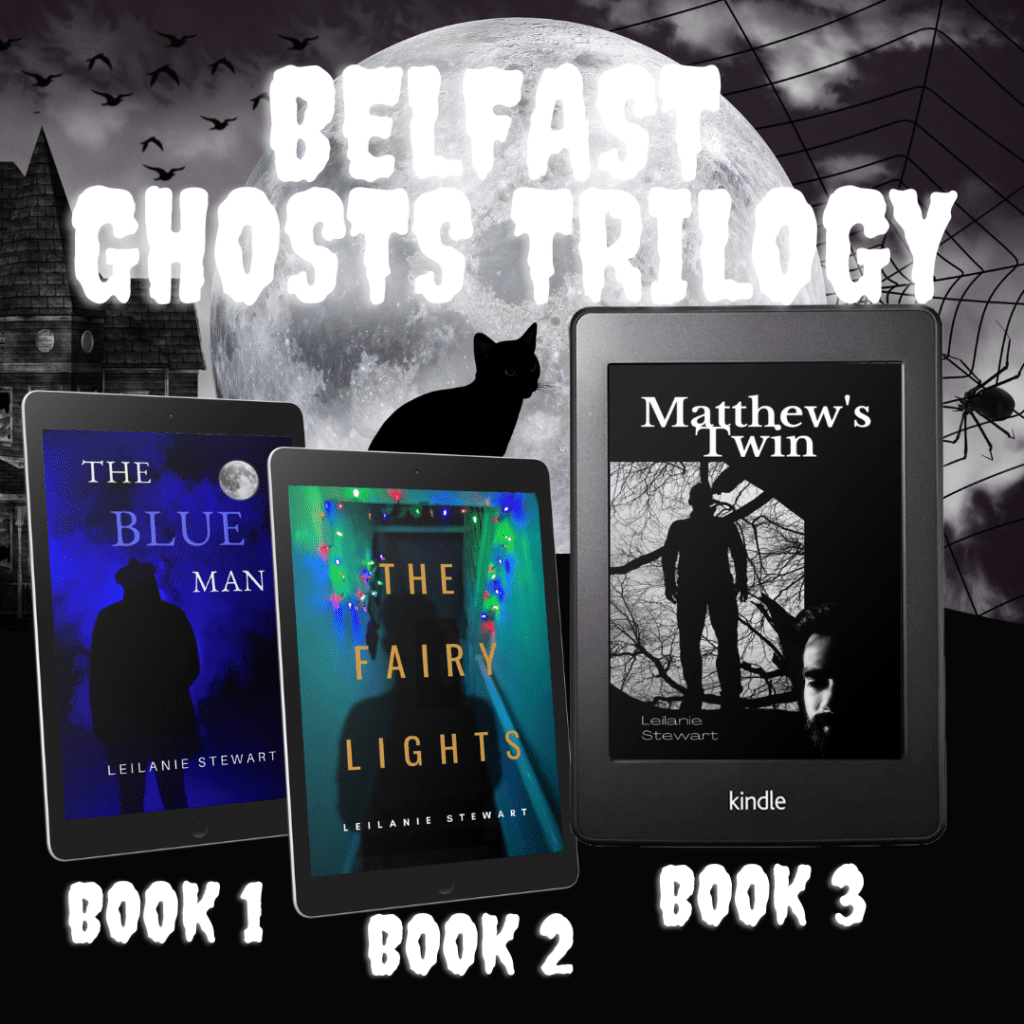
It’s 10 days until publication of Book 3 in my Belfast Ghosts series. Matthew’s Twin has medieval spirits, witchcraft and a revenge plot spanning 700 years. The final instalment of my ghostly trilogy is coming on 24th October, just in time for Halloween. It’s the perfect spooky Samhain read, and will be on Kindle Unlimited, so free to read if you’re a subscriber.
The ten day countdown is on!
This book is the third and final of my Belfast Ghosts trilogy, but it’s actually my fifth published novel. You can imagine how excited I am. I’m always excited at every book release, but this one was very research-heavy, and so it took the most work out of all my novels so far.
*Note* I have amended some information in this post after a recent update. I’ll discuss the details of the amendment in another forthcoming post.
If you are an author, at some point in your career, you may unfortunately become victim of book theft. In this post, I’m referring to finished books, not copyright theft – though that may well be a subject to broach in another post.
When someone steals a book from an author, the author does not get paid. On the one hand, it might be easy to view a stolen book as a compliment; clearly, someone enjoyed it enough to steal it. I have had books stolen on a few occasions, in different circumstances. One of my poetry books was stolen from a cafe in Cambridge, to the embarrassment of management who had agreed to stock copies for purchase by customers. On another occasion, digital ARC copies of one of my novels ended up becoming distributed widely, for free, against my wishes. I have since learned to only distribute epub or paperback ARCs to people I have a working relationship with (i.e. not strangers).
In my humble opinion, I consider book theft to be an insult to an author and not a compliment. If such an unscrupulous type steals work from an author, they are making a statement that said author is unworthy of or undeserving of compensation for their art. Bear in mind that I speak as an author who has been on the receiving end of theft; of course I feel passionately outraged about such an act. So, let me finish by asking you cool-headed impartial folks out there – what do you think? Compliment or insult? I would welcome your thoughts.
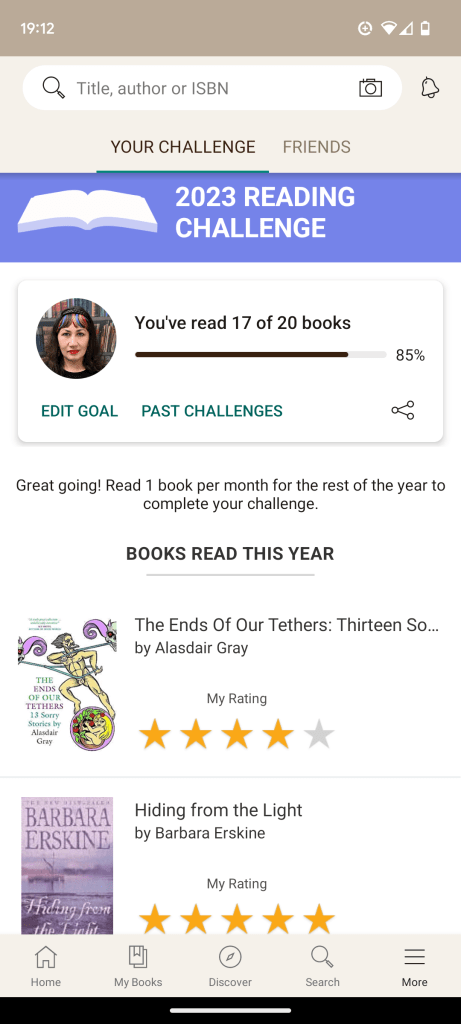
I’m on track to achieve my Goodreads challenge goal of 20 books this year with 17 reached so far. Can I manage 3 more in 2023? It’s likely.
At the moment I’m reading 2 books on the history of witchcraft, for writing research, and I’m pretty sure I’ll have finished those before the year is out. I’ve also got books on the GCSE syllabus for work that count towards my reading goals; luckily I enjoy the ones on my class reading list regardless of needing to read them as part of my job.
Anyway, I’m going to keep this post short today, mainly because there aren’t enough hours in the day and I’d like to spend them reading – and writing. Want to join me with a cuppa and a good book? Alright then, bibliophile buddy. Let’s do it!
October is here and that means two things. Number one: Halloween is coming. Hurray! But before Samhain makes its grand entrance, the final instalment of my Belfast Ghosts trilogy will be published.
Matthew’s Twin is Book 3 of my spooky series of standalone, supernatural novels. If you like all the Ms – medieval mercenaries, murder and mayhem thrown in the mix with a mad dash of mitosis – then this strange and creepy book may just be for you!
Want to know more? Here’s the back cover blurb:
Matthew’s Twin: the spirit of medieval vengeance made flesh
A medieval Scottish soldier. An Anglo-Irish witch. A seven hundred year plot for revenge.
Around the time Customs Inspector Matthew began having crippling stomach pains, he began witnessing visions of a past-life involving a Scottish soldier during Edward Bruce’s conquest of Ireland, an Anglo-Irish defender of Carrickfergus Castle and a local witch with a bloodthirsty agenda. When medieval mercenary and vengeful witch performed a necromantic ritual to help the Scottish conquest succeed, Matthew began to learn more about his connection with 14th century Northern Ireland.
After an operation to remove what he thought to be a tumour from his stomach, a mysterious man arrived to cause chaos in Matthew’s life. What did the strange – yet familiar – man have to do with him? Why did malign forces from a dark, medieval past want to cause harm? Was there any way for Matthew to learn about a seven hundred year injustice before the ghosts came to wreak vengeance on him in the present?
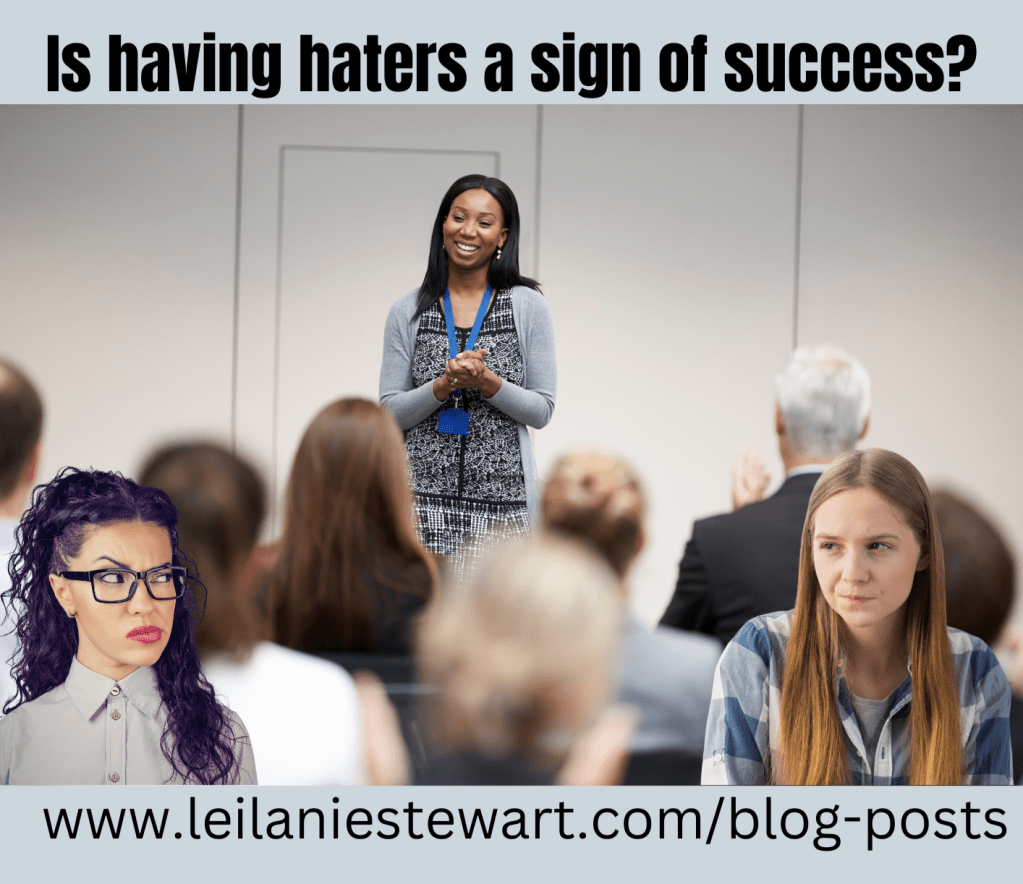
Recently an old friend of mine lamented on Facebook that if people want to say things about her, they should say any such comments to her face. For reference, my friend is quite a successful singer, as part of a touring duo in the UK and Ireland. After offering reassuring advice, I then took a moment to reflect on her post, as it got me thinking: is having haters a sign of success?
Now, nobody wants haters. Who wants to be harassed by trolls, whether they are people you may know in real life, or anonymous, online ‘keyboard warriors’? Wouldn’t we all like to be loved? Few would say no. Yet, life doesn’t work that way.
Dealing with haters merits the same kind of thick skin that dealing with a psychic vampire requires. These types have nothing good to offer, and with no real accomplishments of their own to show the world, seek to attack others and bring them down to make themselves (the haters) feel better.
I’m no stranger to haters myself, having incurred the wrath of a few sad sacks online earlier this year, who harassed me after I appeared at a public author event. Anyone who has had a run-in with haters can relate to how frustrating it is to be on the receiving end of abuse. So, let’s break down what it means if you become unlucky enough to cross paths with nasty trolls:
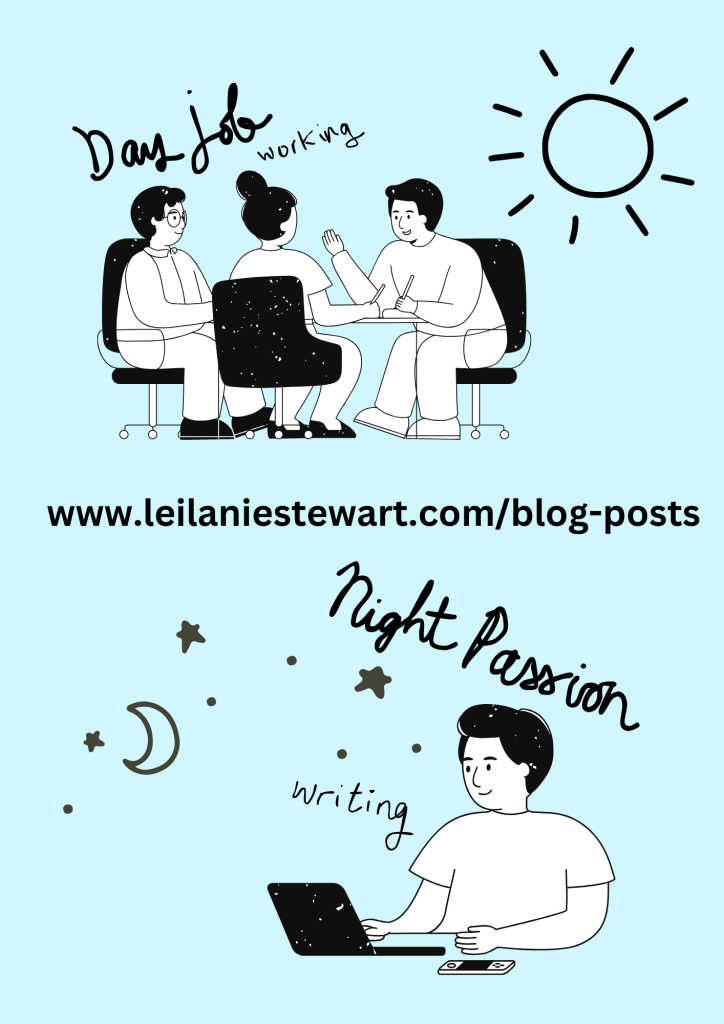
As a follow up to my previous blog post, I thought I’d look at all the benefits of having other full-time work instead of writing. Given my way, of course, I’d be making enough from my books to write full-time. But there are definite perks to doing other day jobs; with that in mind, let’s take a look at the pros:
You can stay true to your art
If you aren’t having to rely on your writing for a pay check, then you can take more risks with your art. This might be something as simple as having profanity in your books – I had to remove all swear words from my debut novel, as per my publishing contract, as the publisher worried that profanity could potentially lead to bad reviews. Freedom to write what you want could mean an unconventional plot, or dealing with controversial subject matter, or simply telling the story that you want to share with the world regardless of whether it might sell well, or not.
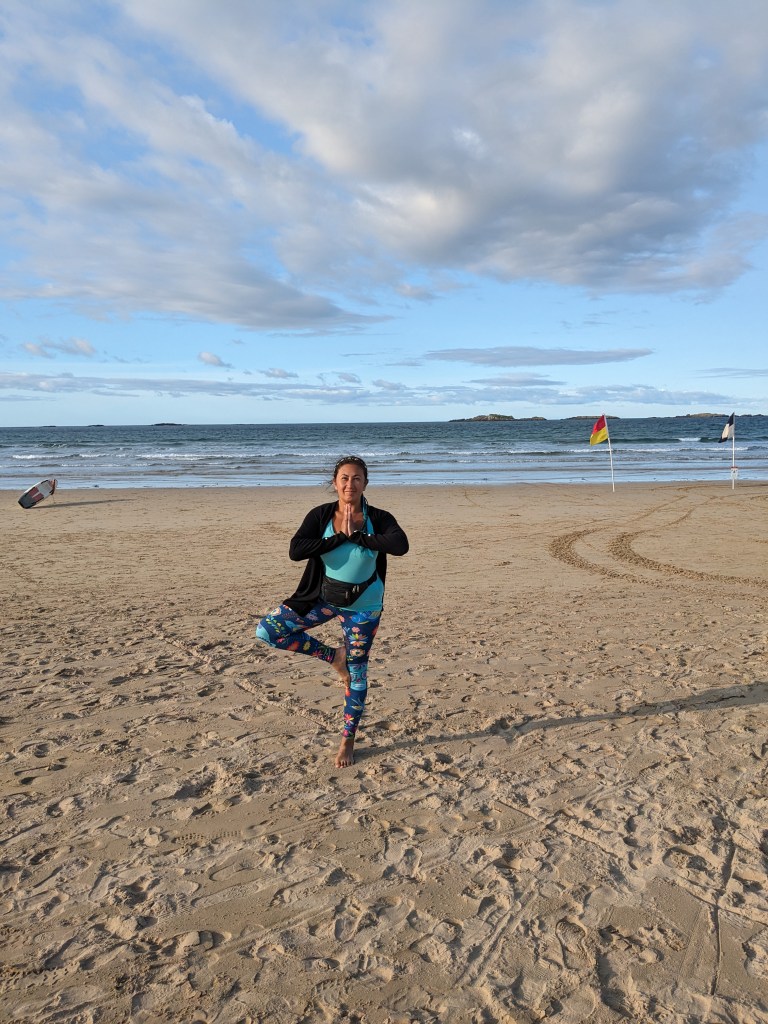
I didn’t get any writing done last weekend, as I was away with my family on a staycation up to Portrush, on the north coast of Northern Ireland. I spent my monthly writing royalties on a lovely holiday apartment by the beach so that we could enjoy a sunny getaway from Belfast, where we live. The cost of the holiday apartment was £120, the exact amount I had been paid at the end of August for my book sales from both KDP and Ingramspark, and incidentally when I booked the trip. It was meant to be.
Enjoying the sunshine on a staycation at Portrush
But it got me thinking: £120 would barely cover any of my bills, never mind provide enough for a living wage. Disputes over how much writers get paid is current news, given the writers’ strikes in the US. It really begs the question: why don’t writers get paid a living wage?
In just over 5 weeks, the 3rd and final instalment of my Belfast Ghosts series will be released. This is my first trilogy of standalone novels. They’re all related only in theme, but feature different characters and are set in different parts of Belfast. With just over a month to go, I thought I’d show you the similarities and differences between each of the three novels:
Similarities:
1. All feature ghosts (of some description…)
2. All are set in Belfast
Differences:
1. Book 1 is a first person novel, whereas Books 2 and 3 are in third person
2. Books 1 and 2 feature female main characters whereas Book 3 features a man.
What are they about?
Book 1 – The Blue Man: A haunted friendship across the decades
Two best friends. An urban legend. A sinister curse.
Twenty years ago teenage friends, Megan and Sabrina, destroyed their friendship after learning the terrifying Irish urban legend of the Blue Man and unleashing a sinister force into their lives. Now, as mothers-to-be, they reunite once more to confront the horror and trauma. Could they finally bury the past and change the fate of their families?
Book 2 – The Fairy Lights: The ghost of Christmas that never was
When Aisling moves into an old Edwardian house, she soon realises her student digs are haunted by a ghost known locally as Jimbo. As yuletide approaches, she uses the fairy lights to attract Jimbo and with the help of a local psychic and friends from her university course, seeks to uncover dark, buried truths. But what will the spirit world reveal about her own past?
Book 3 – Matthew’s Twin: The spirit of medieval vengeance made flesh
Around the time Custom’s Inspector, Matthew, began having crippling stomach pains, he began witnessing visions of a past life in medieval Northern Ireland during Edward Bruce’s invasion. After an operation to remove what he thought to be a tumour from his stomach, a mysterious man arrived to cause chaos in Matthew’s life. What did the stranger have to do with malign forces from a dark, medieval past? Could Matthew find out about a seven hundred year injustice before the ghosts came to wreak vengeance on him in the present?
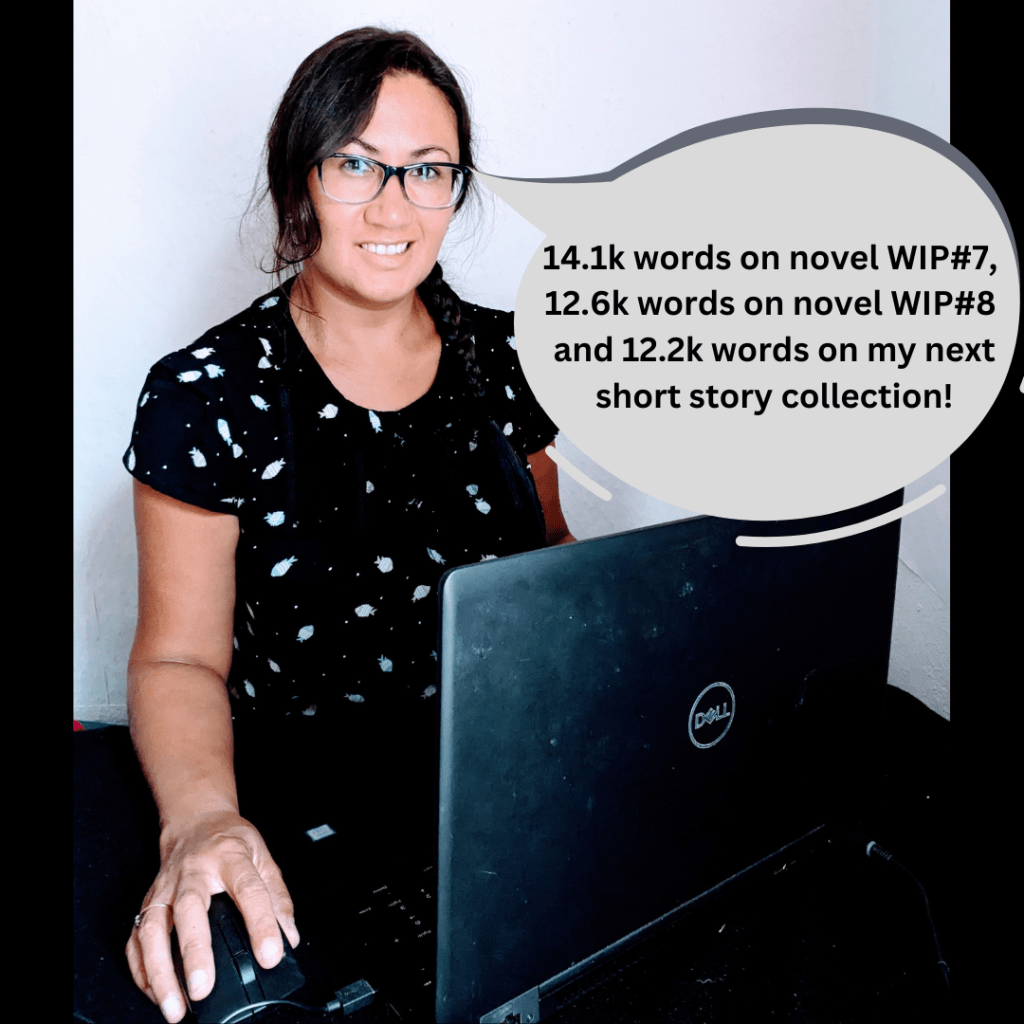
I’m chipping away, bit by bit, at the 3 writing projects that I’ve currently got on the go. Novel WIP#7 is a supernatural horror set in London. I’m up to 14.1k words on this. Novel WIP#8 is the sequel to The Buddha’s Bone, which I’m drafting because I’ve had enough reader requests to justify writing a follow up, and like the first, it’s psychological literary fiction. Fiction WIP#9 is a short story collection that will also be psychological literary fiction and is a mix of previously published and new stories. That’s enough to keep me busy for pretty much all of 2024, I think!
Do my current WIPs have titles?
Yes, they all have working titles. But for now, like all my other WIPs, I’ll stick to numbers just to keep my projects straight when I’m referring to them in writing updates.
What did all my other numbered WIPs become?
Novel WIP#1 is my still unpublished, experimental literary novel. I’ll publish it at some point. More on why I haven’t already in another post.
Why did my poetry collections and short story collection not start as WIPs?
Because they were all previously published individually in literary magazines and anthologies, so I didn’t actually draft anything new.
Is it hard to work on 3 WIPs at the same time?
Not as hard as I thought it might be. The three projects are all distinct enough that I don’t get confused switching between them, especially because they’re all different genres. Also, because #7 is in third person and #8 is in first person, I find this helps me change gears easily.
Where do I get the time to write my current WIPs?
Hmm. Not sure (scratches head). Copious amounts of caffeine sure does help!
Term time has started, so that means as of last week, I’ve been back into the full swing of work in secondary education. When I was catching up with a teaching colleague who I hadn’t talked to for a while, she asked me how I manage to get any writing time alongside full-time work and family life. My honest answer to this was, I don’t know.
I suppose, now that I’ve had time to think about it, fitting in writing time (along with time reading submissions for Bindweed Anthologies) is a juggling act. It’s important to me, however, so I make time for it. Even if I only write a few sentences a day, I consider that time well spent. The longer I’m away from writing anything new in a work-in-progress, the harder I find it to get back into the swing of things. Often, I’ll end up spending more time reading back through what I had already written than drafting anything new, if I leave it too long, so it’s easier to keep chipping away, little and often.



 Leilanie Stewart