The importance of reading and literacy for children

Aside from being an Indie and small-press author, I also work in a grammar school. My day profession provides a steady income that my writing doesn’t. Of course, that doesn’t mean I’m doing it simply to pay the bills; I enjoy helping to support young people academically and get them through their GCSE and A-levels with – hopefully – the grades they want to achieve.

When I was at school, Art and English were my favourite subjects. I spent a good deal of my break and lunchtimes in the school library either borrowing books on Klimt, or on Celtic art, or the newest horror additions to the library once I had read all of the Stephen King, Dean Koontz or R.L. Stine books. But in my early childhood, it was a different story…

No books for my hungry young mind…

Can you believe that I grew up in a working class household where books were not valued? In fact, when I was a pre-schooler, there were no books in my household at all. I have no memories of anyone ever reading a book to me in my early childhood. Isn’t that a shame? As you can imagine, I struggled when I started compulsory education and I was in the bottom reading group from when I was in P1 (age 4-5 years, for folks reading outside of Northern Ireland) through until I was P3 (age 6-7 years).

Getting books as prizes

Don’t worry, my boo-hoo-bookish story gets happier. Thanks to my teachers at school who pushed me to read, as well as my Nanny (grandmother for those outside N.I.), who gave a few old copies of Enid Blyton, A Child’s garden of Verses, and Grimm’s fairy tales that I began trying to read by myself. I was artistic as a child and started winning art prizes from an early age and my teachers always gave reading books for those prizes too. I also started buying books out of my pocket money from around the age of 8. My reading level improved until I ended up in the top set in class from P5 (age 8-9) going forwards. I got a top grade in my GCSE English in the end too.

Nurture children’s brains

As a parent myself, my hubby Joseph Robert and I spend time reading with our youngster everyday. Our eager bookworm is at an age where he can now read parts himself. Books nurture young minds. I’m happy to say that our house is coming down with books; in fact we could seriously do with more bookshelves to cater for the stacks of overspill on top of the bookshelves we already have. It’s a happy, bookish household where literature is valued, not scorned.

Plus, there’s nothing more nurturing for your parent-child relationship than cuddling up with a book, spending quality time reading and sealing that lovely bond you have with your kid. Can’t beat it!

Novel writing: how to keep your plot moving forward

Writing in the park during the Belfast photo festival, June 1st to June 30th

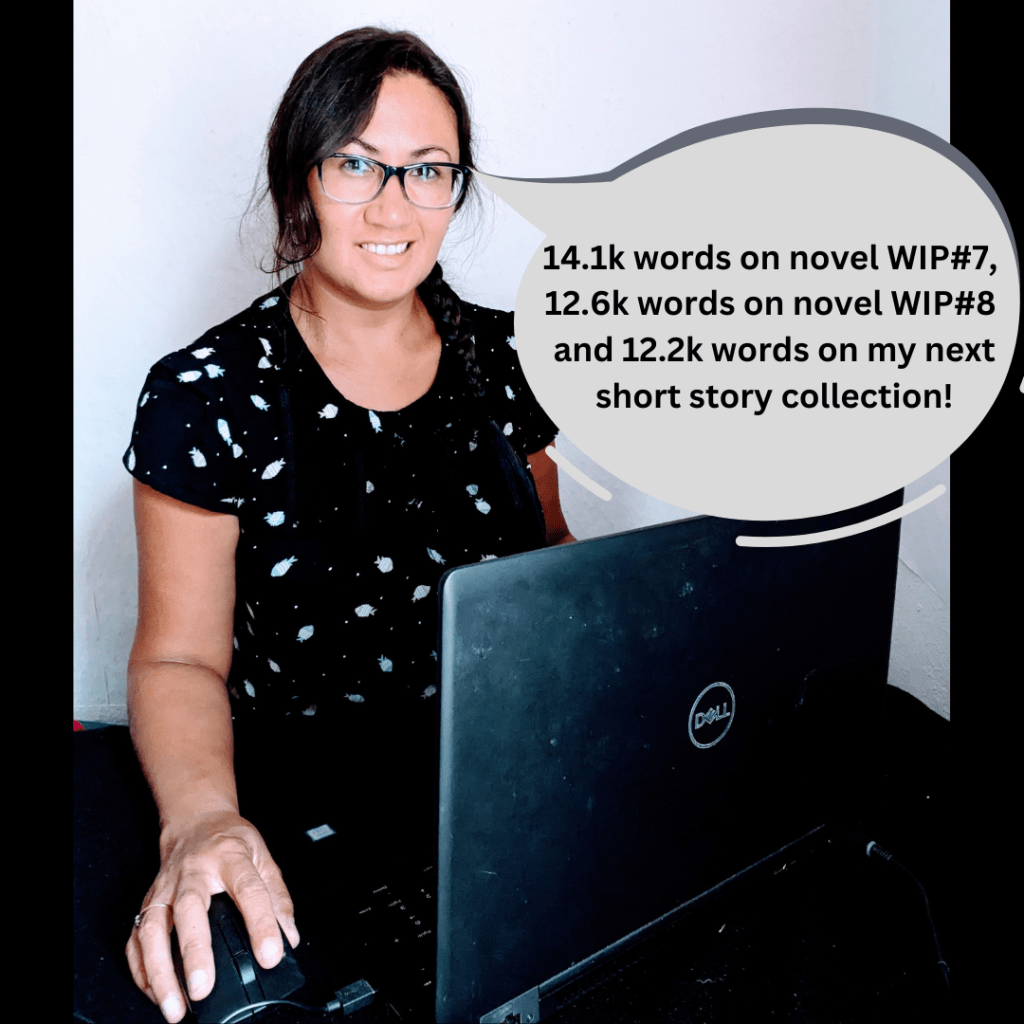
Can I share a little writing secret with you? Despite the fact that I’ve had four novels published, every time I start a new novel manuscript, I find myself wrestling with the plot. To help keep my novels moving forward and stop myself from struggling to keep the thread of ideas, I’m going to let you in on a few tips that work for me when drafting a manuscript. This, for me, is especially important given that I’m currently working on two novel drafts. I’m up to around 6000 words on novel WIP#7 and 4000 words on novel WIP#8.

Use a chapter plan

I keep a notebook with a rough outline of each chapter, in little more than a few sentences. Lately I’ve also taken to keeping an e-chapter plan at the beginning of a draft, using the chapter heading formatting to make it easy to refer back to specific chapters as I go along.

Keep a list of character names

I tend to do this in a notebook, making it easy to use find and replace if I change my mind later.

Use find and replace for changes

As above, let find and replace become your friend! What I always do is check afterwards to make sure all changes are saved.

Skim read your back chapters to work through writer’s block

It helps to get the whole story back in your head again, in order to keep going forwards when you’re stuck.

Don’t necessarily trust that auto-save is doing its job

I manually save work, both online and locally on my desktop. I sometimes email a draft to myself too. Better to have too many copies than only one – which could be vulnerable to getting lost. Lots of backups is best for your book baby.

Put dates on drafts

This helps to make sure you are uploading your most recent revision. How awful would it be to accidentally publish an older version, with all its typos, by mistake? (Cue shudders).

Anything else?

Nope, that’s that. What do you think? If you have any other tips during the writing process, please feel free to share.

When can you call yourself a best-selling author?

From time to time on social media, I’ve seen authors displaying on their bio that they’re a ‘best-selling author’. In truth, anyone could label themselves with such a title. After some research about what constitutes being a ‘best-selling author’, I thought I’d share my thoughts on how it seems to be defined. I’ll talk about my own brush with the best-seller charts, what I learned from this, and what I think an author has to do to merit the coveted status of best-selling author.

Continue reading

Reading goals update – why I review the books I read

Hurray! I’m well ahead of my reading schedule for 2023. With 44 books read on my Kindle, I’m on track with my Goodreads challenge. As I’d mentioned in an earlier blog post, I’ve spread my reading goals across my two accounts: with 7 reviewed on my author page and 30 reviewed on my anonymous reader page.

Why do I post reviews of books I read?

For a few reasons. A) I enjoy reviewing books as it’s a log of what I read that I can look back on to jog my memory, especially if/when I re-read a book and; B) I like supporting authors and I know that sharing my thoughts helps steer readers like me to that author’s book. As an author myself, I know how important reviews are.

What’s the difference between reviews on my author account and reader account?

None, except that I review big publisher books on my Goodreads author page, whereas I review Indie and small press books on my Goodreads and Amazon reader accounts. This is because I figure big publisher books are less in need of my review; they are already at an advantage through huge marketing budgets, access to netgalley reviews, and publicity, which is why I post my thoughts only on Goodreads. On the other hand, I post Indie and small-press reviews on Goodreads, Amazon, Waterstones and anywhere else where those books appear and I hold a reader account. This is because those books most likely don’t have access to a huge marketing budget, and so I feel my review counts much more towards boosting those books – and their authors.

Is reading important to writing?

Yes. I’m also a firm believer that writers should read widely outside of the primary genres that they write, and should read a variety of fiction and nonfiction. I’m happy to say that there are no genres I won’t read, even though horror and psychological fiction remain my go-to favourites.

Self-publishing success stories in the news

I love being an Indie author, though I didn’t have to tell you that. But you don’t have to take my word for it either. Here are some success stories from two different authors. Pamela Samuels Young started out with her first two books traditionally then switched to self-publishing when her third in the series wasn’t taken by her publisher, according to this article I read on Writer’s Digest. Another author, Graham Elder, found success during the pandemic writing about COVID and using his experience as a surgeon, according to this article in Sault this Week.

Being an Indie author is hard work, and for me it feels very much like a ‘learning on the job’ experience. I’m most definitely no expert, which is why success stories like these give me a bit of a boost. Hope they do the same for you!

Why do novels mostly feature rich characters?

I’m a prolific reader. I always have nine or so books on my Kindle Unlimited subscription, along with the numerous paperbacks and hardcovers that I pick up while on a book shopping spree (I really shouldn’t; my bank balance doesn’t thank me, nor does my never-dwindling tbr pile). I try to read a few pages of each one every day, and leave reviews for the majority on Goodreads and Amazon.

Characters with money for readers with money

Continue reading

Two newspaper articles two decades apart, and two related books

After my recent newspaper article in The Belfast Telegraph, I remembered that I’d previously had another article in the same newspaper two decades ago. Being the hoarder that I am, I hoked out (Northern Irish slang = searched for) the previous article, as dog-eared and aging as it now is (a bit like myself, perhaps!)

Since the weather has been gorgeous this week, it made for a lovely photo in the park with both news articles.

Continue reading

In the news! The Blue Man is in the Belfast Telegraph

My ghost horror novel, The Blue Man appeared in an article in the Belfast Telegraph at the weekend. This was to feature my Chill with a Book Premier Readers’ Award win in February this year, and also to discuss my writing process.

Continue reading

Reviews matter – on reaching 100 Goodreads ratings

This week, I have reached 100 ratings on Goodreads. Woohoo (happy dance). I am thankful for Goodreads as it collectively gathers all reviews or ratings for a book in one place; unlike Amazon reviews, which can be scattered among the marketplaces. Do I now have a coveted pass into an exclusive club, or have I reached a milestone? Just kidding.

Continue reading

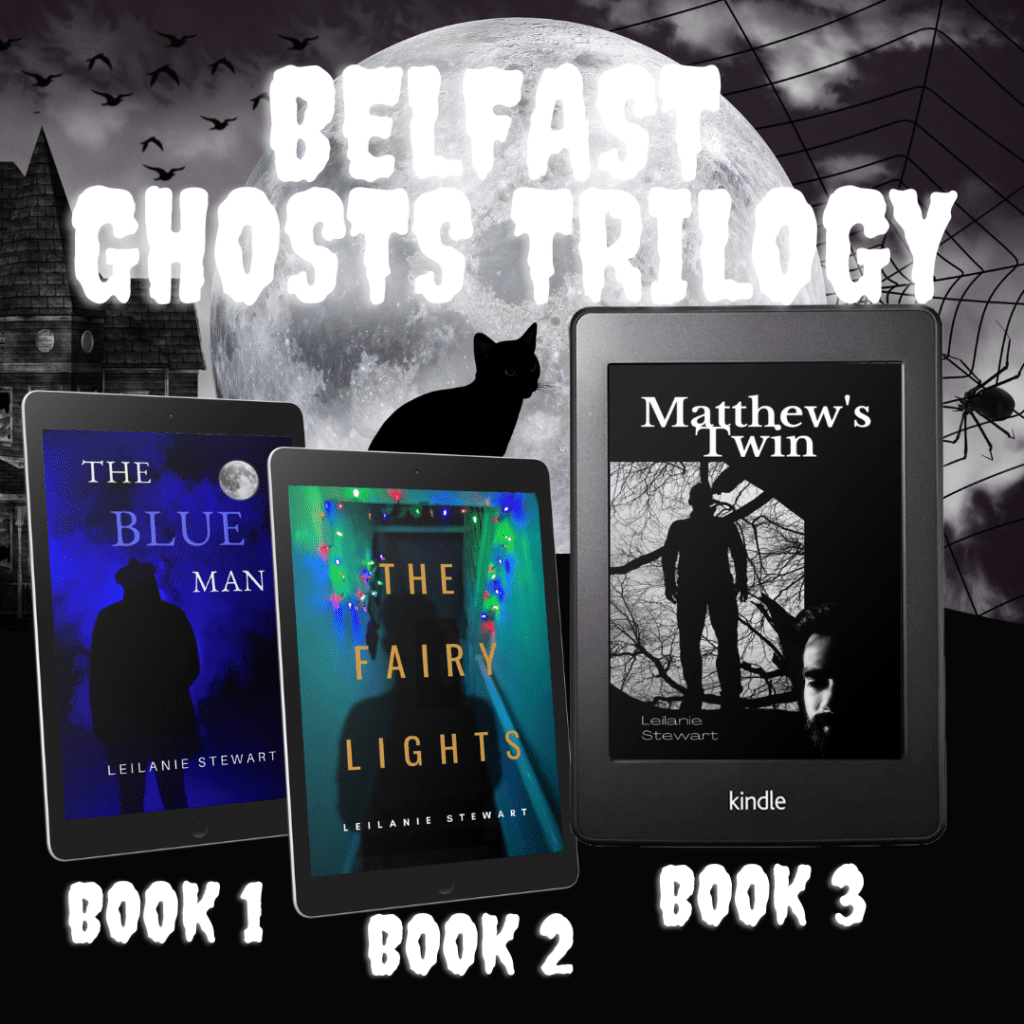
May manuscript update: final checks on Belfast Ghosts Book 3

I’ve been chipping away at my current work in progress (novel WIP#6) since January 2022, so it goes without saying that I’m more than ready to see it finished. This one is particularly complicated because it has historical time skips, which is making it especially hard for me to keep the continuity straight between past and present. Why on earth did I do this to myself? Okay, I’m being a bit wry there; it’s a challenge that (I think) I’m up to. I’ll get this final draft finished eventually.

Continue reading