Supporting small bookstores and small presses

What to do when you’re book shopping:

1. If it is a thick book, rap on the front cover to hear that lovely deep ‘thunk’.

2. Open it up and smell it. New books have their new smell, second hand books have their well-loved scent.

3. Buy the book! Support small businesses! Don’t let them close in the face of online retailers. Don’t be one of those people who browses in stores, then puts a dog-eared book back on a shelf and buys a new copy from Amazon. Amazon is great for obscure or out of print books, but don’t forget your local bookstores!

4. And the same goes for magazines. You don’t get the lovely ‘thunk’ sound as they’re not thick enough to make it, but when I’m on my morning commute, I prefer to have a poetry magazine or a physical copy of a book that I can read. Yes, my ipad is great and I have a ton of books downloaded on it, but call me old-fashioned… I’d still rather root around in my bag for a good old paperback or a nice past contributor copy.

Contributor copies. If I had the means I would subscribe to more small presses, more often. Instead, when I catch a moment I like to read through past contributor copies of favourites… Decanto, Sarasvati and some newer ones like Mistress Quickly’s Bed.
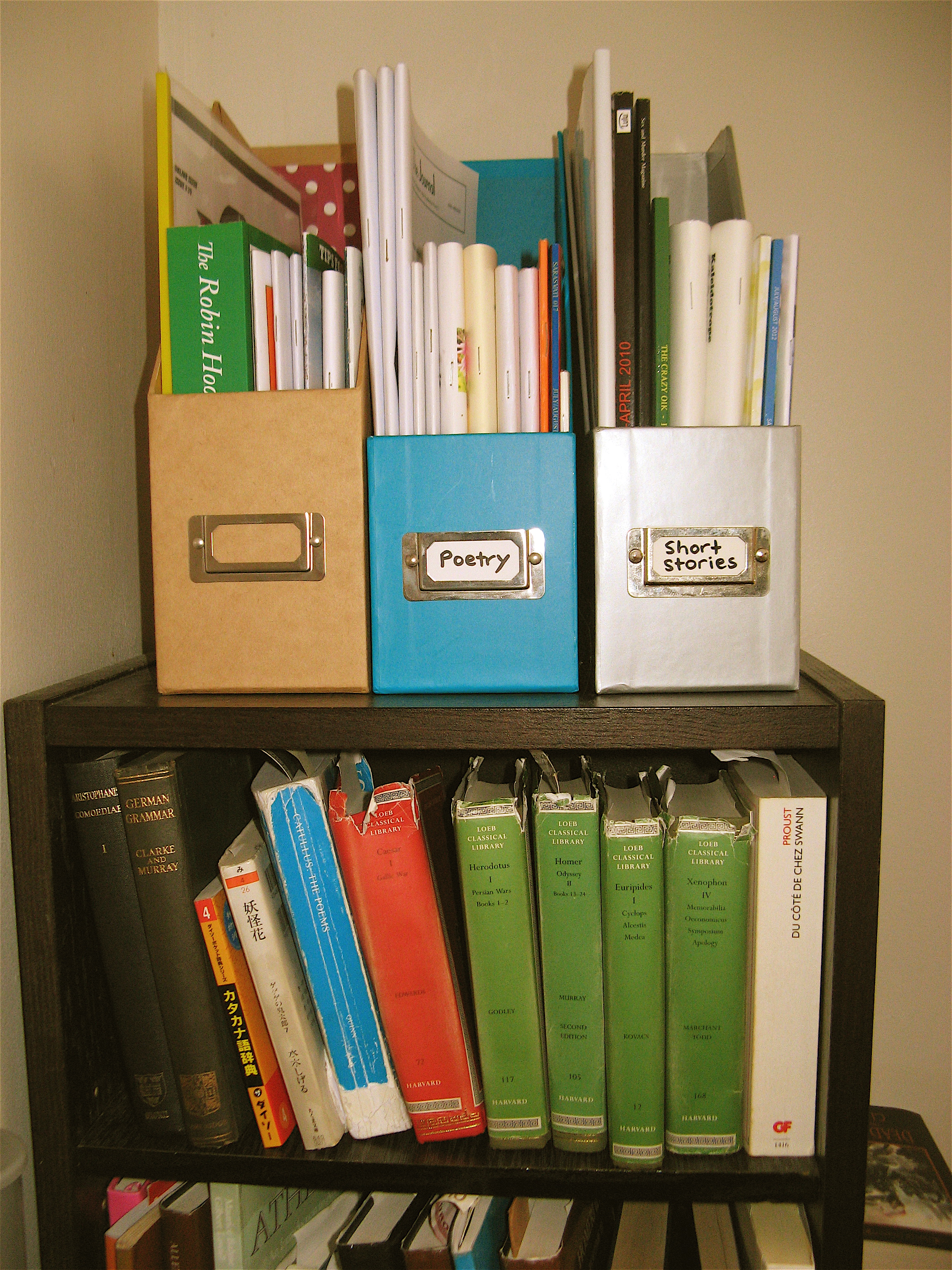
Contributor copies - poetry, fiction and both.

Contributor copies – poetry, fiction and both.

A debut author in a debut age of publishing

Here are the facts about traditional publishing as I see them: in a world of tough economic times, big publishing houses are sticking to the safe and familiar rather than going with the new and risky. And in this fashion, a ‘new’ author comes out with a crime novel, which manages to move around 500 or so books. Of course, the author’s name is revealed to be a pseudonym and the real writer is unmasked… add another 0 onto the end of the 500 and the 5000 figure represents the number of books moved in a few hours after the big reveal. And, well you’ve read the rest. It’s been interesting to hear the views of upcoming writers who have expressed a sense of relief that their debut sales of around the 500 mark were normal and comparable with a hugely famous author under a guise.

It goes to show that most readers nowadays would rather stick to a famous name than try out a novice. As for me, unfortunately most literary debuts can’t hold my interest for more than a few minutes anymore – they aren’t challenging enough and most contemporary poetry in Foyles or Waterstones isn’t interesting enough for my taste. The Southbank Poetry library is keeping the real poetry scene alive, IMHO, and as for novels… when I’m out book shopping, I’ve reverted to buying classics, genre fiction and good old non-fiction, in the ‘interim’. Let’s hope the traditional publishing industry doesn’t stagnate too much, as this poor bookshelf did.

Stagnation: Is this to be the way of traditional publishing?

Stagnation: Is this to be the way of traditional publishing?

Poetry readings and reading prose

During the last couple of weeks, my young creative writers have been more than enthusiastic about reading their poems to primary school children across London. I was impressed by their improvisation skills as well as their bravery, since a few even adapted one or two lines to suit their audience (like toning down their worries about coming to secondary school and focussing on the fun).

My young writers reading their poetry to primary school pupils

My young writers reading their poetry to primary school pupils

Reading to an audience takes practise, skill...and sometimes improvisation!

Reading to an audience takes practise, skill…and sometimes improvisation!

It got me thinking about my young writers last year, who did a mix of poetry and stories. Stories are harder to read to an audience. Besides having to choose a short one, so as not to take up half the day, the rhythm of poetry makes it easier to read, even when reading free verse. When I’ve read some of my stories to an audience, I’ve found that I’ve had to breathe mid-sentence, creating a pause where on paper there wouldn’t necessarily be one. Of course, a lot of people are better at acting than me and can go the whole distance without so much as a hesitation! Reading to an audience is performance – a better skill would be to have the poem or story memorised. I’m still working on this myself!

Poem not in me – a poem by Joseph Robert

Spinozablue published another of Joseph Robert’s poems, Poem not in me, at the start of this month. The beauty of a poem is how an individual interprets it. The editor of Spinozablue, Douglas, added a short review of Joseph’s poem in the form of a tag: The Poem Inside. Poem not in me or The Poem Inside… the first is empty, the second full. Or, the third: the poem as a mirage, a fleeting moment that is ever on the horizon, ever evading being captured.

Interpretation - the first, the second, or the third?

Interpretation – the first, the second, or the third?

Joint Publication in Mudjob

Joseph Robert and I are celebrating summer with a joint publication in Mudjob Magazine. Apart from our own reversible chapbook, Realms of Man/ Metamorphosis of Woman, this is the first showcase of our work together. The editor of Mudjob, Michael, had the great idea for a double feature as he found the writing couple idea of interest. As I said in my last post, writing is a solitary process, but there’s no reason why the publishing and promotion side of the craft should be!

Optimistic - enjoying the summer

Optimistic – enjoying the summer

Summer… does that mean we are living on the wrong side of the solstice, or the right side? The wrong side means you are focussing on the days getting shorter. The right side means you are enjoying the warmer days, living for the moment. In Britain, isn’t it better for us to think about the evenings staying light until 9PM, rather than wondering if tomorrow it will get darker that little bit earlier? Are you dwelling on yesterday being officially the hottest day in England so far, or are you thinking that the days will all be cooler from now on? For all you pessimists out there, my advice is to take it one day at a time. Leilanie Stewart’s day is June 28. Joseph Robert’s is June 29.

Pessimistic - counting down the days to winter

Pessimistic – counting down the days to winter

Faceless followers… and Facebook folly!

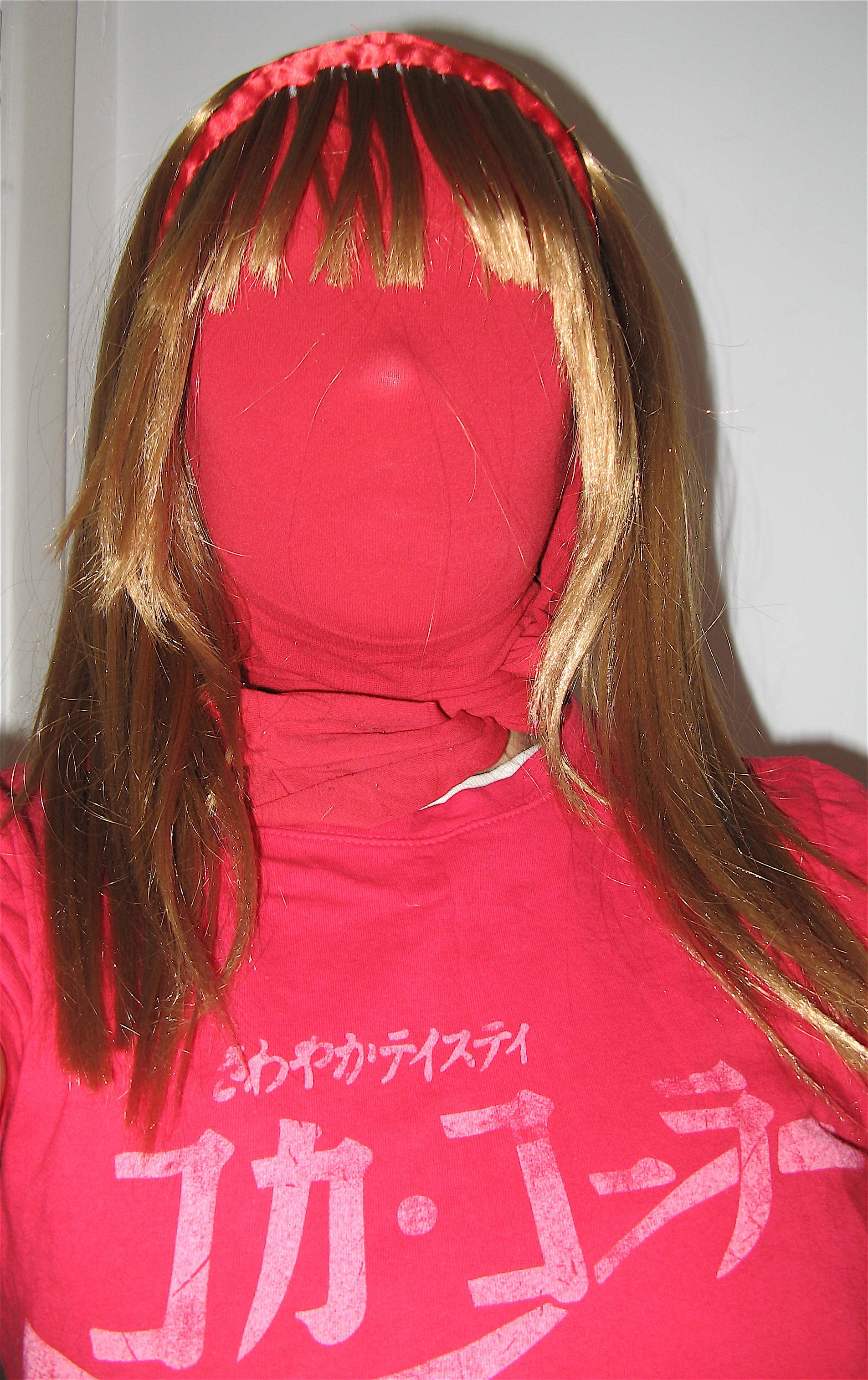
As all those other faceless writers out there in the wide world know, writing is pretty much a solitary craft. I’m talking about the craft here, not the promotion that comes after – the part of the work when the ideas stream out of your head onto a notebook or a computer keyboard. Where you write, how much you write, whether you do it to music or not is irrelevant; the process is an isolated one. You have to get that draft out before you can work on it. Whenever my young writers turn up at my office first thing in the morning, saying, ‘Miss, I have this great idea for a story, it came to me in a dream last night’, I always say to them not to tell me about it, but to get it down on paper. An idea in someone’s head is no good. A draft on paper can be taken in a direction.

The faceless writer... Leilanie Stewart as a blank slate

The faceless writer… Leilanie Stewart as a blank slate

And as for the extroverted side of the craft; the side that deals with publishers, editors, submissions, promotion and readers, this is where the writer turns agent. Until recently, I was using Facebook primarily as a promotional tool for my work. Out of 169 ‘friends’, less than 10 were interested in my writing. Of these 10, at least 7 were themselves writers, artists, editors, or avid readers. A writer considers their work to be their ‘baby’. My writing is my brainchild – when a person likes my writing, it’s not just professional it’s personal. Easy to sum up: 10 Facebook friends supported me professionally, 159 didn’t care personally. Conclusion: Facebook was a promotional waste of my time.

WordPress on the other hand is professional, so this last little bit is a happy note to my followers. All of you are artists, writers, editors, photographers or bloggers. Out of the 60-something of you (which is a small number compared with 169), I have met 1 of you in the ‘real’ world. That must mean you stop by my blog because you like my work. I’d rather have 60+ followers who like my work than 169 – 10 = 159 followers who don’t support me professionally or otherwise. Thanks for following my writing, readers! I do stop by your blogs to check out the work of all my fellow writers in turn!

June poetry in The Blue Hour

Has it really been a month? It seems like I was writing my ‘poetry this month’ about my publications in Boy Slut Magazine only the other day, but as it happens, that was 4 weeks ago!

Three of my poems are out in The Blue Hour this month. This lot are quite detached and dreamlike. Hold on a minute… my poems are always quite detached and dreamlike. A little bit of Greek mythology thrown in there somewhere? Oh well, I have an excuse, I was an archaeologist once upon a time in a land far, far away. And did I say detached? Only my head, that is. I’ve either had too much caffeine, or not enough.

Now that we’ve cleared that up, what a month! Is it just me, or do publishing schedules seem to come in waves? A few places I’ve looked into for submitting purposes are closed for their reading periods at the mo. I guess a lot of editors/ writers work in schools. Summer is the best time to get writing. As much as the papers always complain about working in education, at least the long holidays are a good time to knuckle down on one’s own projects. And of course, if you put all your eggs in different baskets, you never know how many will hatch – and into what. Personally I’d rather have an object that looks like an egg but is actually a lump of dalmatiner jasper. It might look spotty and it might be weird, but it sure lasts a long time.

An egg of every colour - don't put them all in one basket!

An egg of every colour – don’t put them all in one basket!

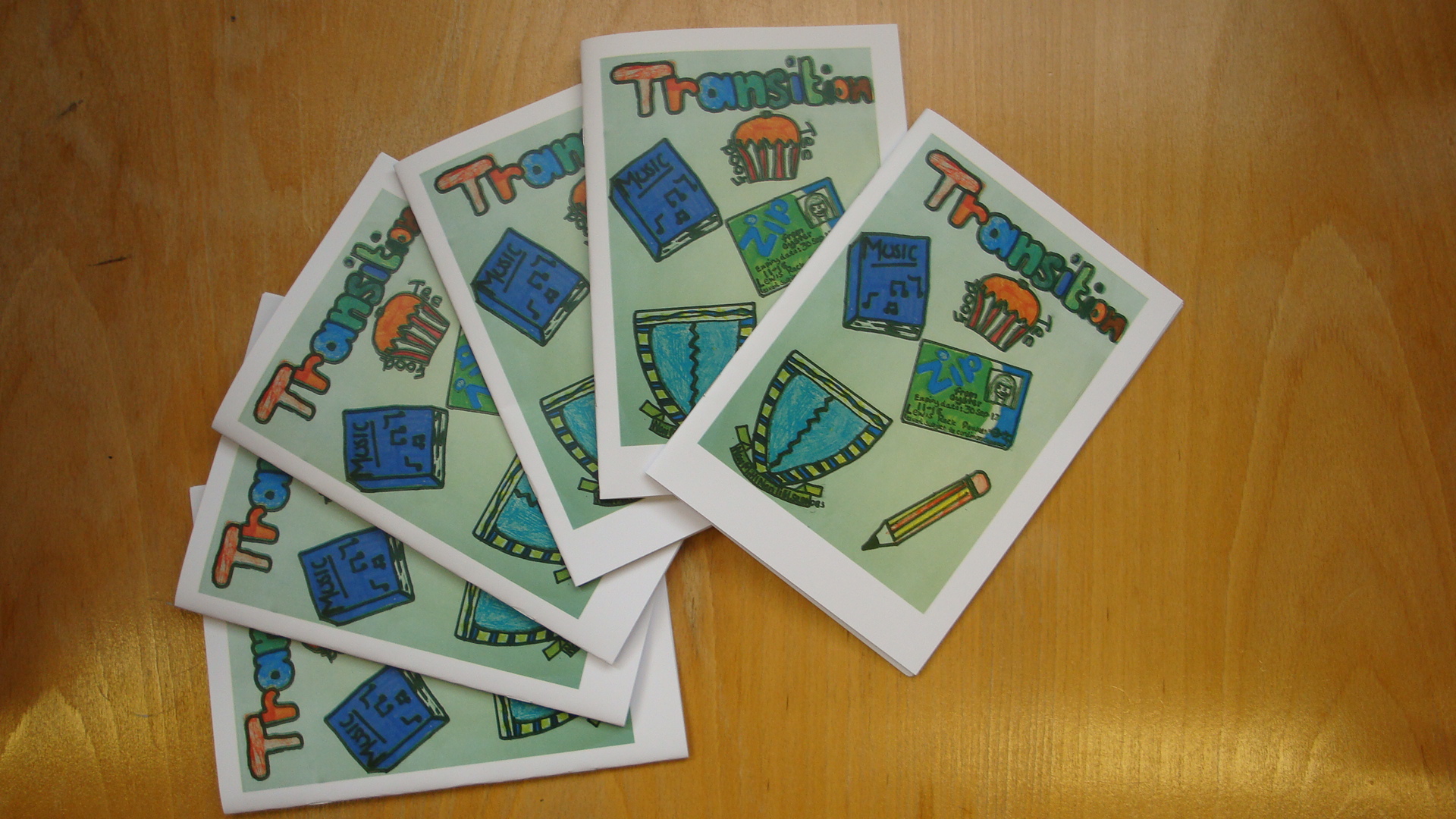
Transition anthology by my creative writing youngsters

Last week, my youngest group of creative writers finished producing their own anthology of poetry on the theme of transition. The move from primary school to secondary school is a rough old time for any kid and for our group, a prime opportunity to reflect on the changes: coming to a bigger school, dealing with new subjects and teachers, making new friends, contending with older and scarier students around school… a literary goldmine for my young writers!

Transition anthology

Transition anthology

Speaking of reflecting, out of all the different creative writing groups I run (11-12 year olds, 14-15 year olds and 17-18) it’s interesting to note that the younger the child, the braver he or she tends to be! My Year 7 kids are willing to read their poetry in front of an audience without being shy, or succumbing to peer pressure or awkwardness of any kind – it’s kind of like, ‘yeah, Miss, I’ll do it!’ That’s the attitude I like to see! This week, I’ll be taking four of them on a visit to a primary school to read their poems to an audience of up to 100 Year 6 pupils and their teachers, and show the younger kids the kind of creative writing opportunities they’ll be able to take part in when they come to secondary school.

A‘salt’ on our senses

Academic writing courses – stifling the creative community, or a way for generation-X to find its niche in an ever changing literary world and depressing economic climate? Before I a’salt’ you all with my opinion on this, let me give my disclaimer about how I’m only 10% hypocrite, 20% preachy and 70% corrupter of the young (Socrates, I would catch you if I could). First of all, by day (and by paycheck) I run a creative writing workshop for teenagers among other pursuits. Do I teach creative writing in my workshop? No. I harbour the belief that creative writing is a combo of a few things: talent+hardwork+perserverence+an open-minded attitude (criticism should help an artist develop their skills, not be used as an excuse to damage egos!) What I do do in my creative writing workshop is give teenagers the opportunity to develop their style, find their voice in an environment where they can feel safe to share their work, edit their writing, explore POV and characterisation (in terms of fiction) and try out new styles of poetry (last week they played with alliteration, this time we might write some fun, little, school-themed clerihew to indulge their childish sides).

This week, I read an anthology of up and coming younger poets, and a few things struck me about it. First of all, surprise – I didn’t realise that at 32, I’m considered part of this generation of ‘young’ poets. Secondly, given I had an expectation of a new approach to an age-old art form, I found the verse to be a disappointment, summed up by one word: bland. Poetry should make a statement, throw an insult, do something…anything! Academia, cronyism, nepotism… anyone with £££ can pay to do a writing course. Do the postgraduate connections into the publishing world necessarily mean the work has any literary merit? Nope! I reckon the best writing out there comes from only one university in the whole wide world… a BA in Creative Writing from The School of Life Experience. As for me? I have an MPhil in Writeology and a PHD in Writeonomy. Check out my portfolio (of sorts) for details of my full poetic license. In the mean time, try this on for size:

Woodlice hate salt! As a woodlouse myself, I like to throw it over my left shoulder to blind the devil

Woodlice hate salt! As a woodlouse myself, I like to throw it over my left shoulder to blind the devil

Two poems in Boyslut

This month my poems, ‘Amnesia’ and ‘English Litter-ature’ are in Boyslut. After all my fiction publications lately, I felt I’d get some more of my poetry out in the world. As all poets know, what happens if a poem gets stuck in your head for too long? Watch scanners and see.

First things first when you check out Boyslut – the woman in the cover picture isn’t me! She’s librarian-saucy, I’m more the tomato-ketchup kind of saucy: a bit sugary, a bit tangy and definitely red.

Gnome or misnomer?!

Gnome or misnomer?!

As for the poems, a little word-play here and there, with a lot of salt and flour and an egg or two thrown into the mix and what do you get? A wacky-pancake for breakfast. Enjoy!