
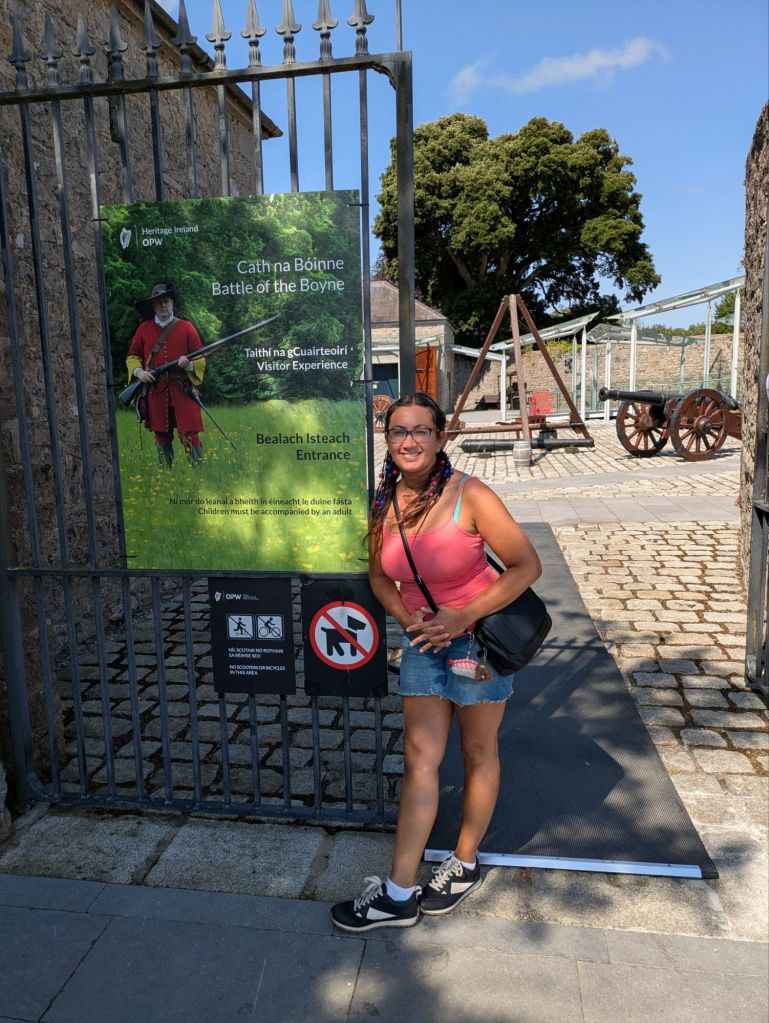
This week I’ve been away on a family adventure to Drogheda, Ireland for sightseeing and a hiking trip around the Boyne Valley for a good dose of history and archaeology. This meant no writing or reading time at all, though I always find inspiration in historical and prehistoric sites, so I’ll probably get round to using some of what I learned in a story at a later point.
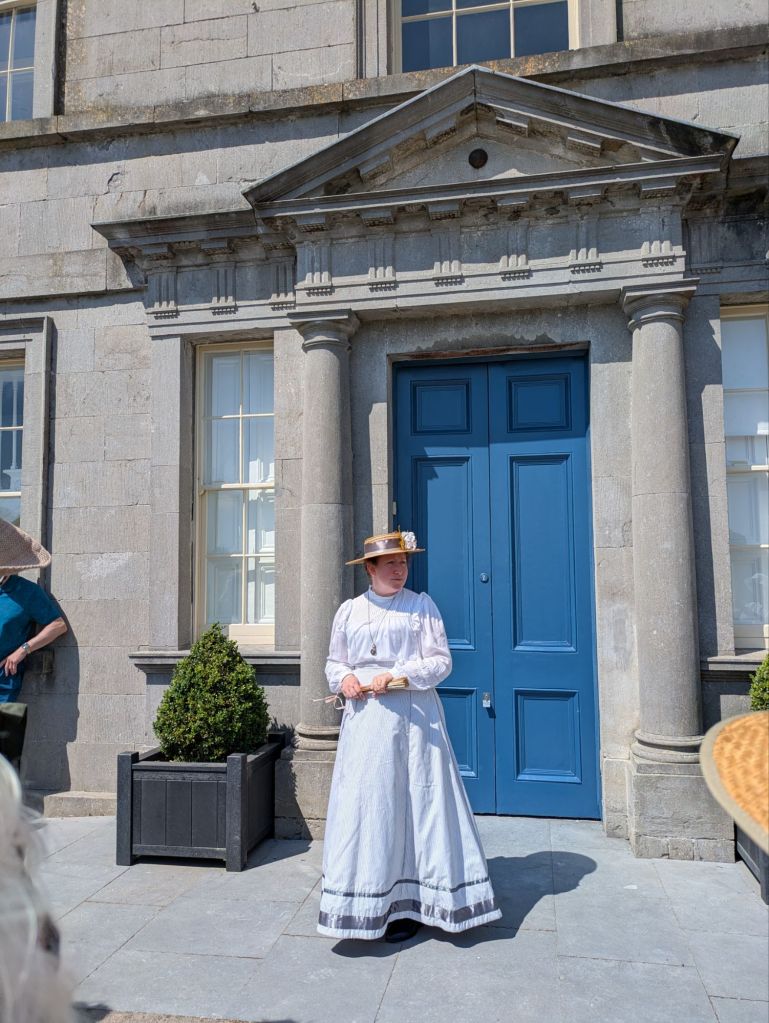
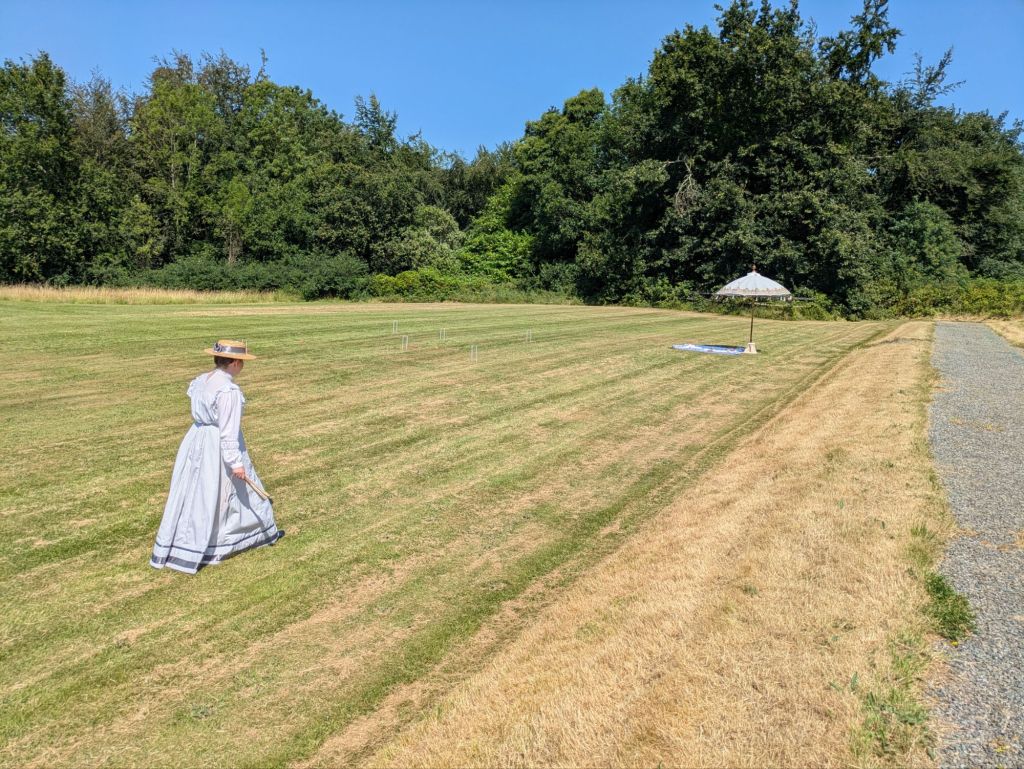
We were lucky to get ourselves booked on a Victorian tour of Oldbridge House, a Georgian manor house that sits on the site of the battle of the Boyne. The tour, presented by a guide in full Victorian dress and period acting, only happens twice a year so we were very lucky to arrive on one of those two days without prior knowledge; what are the odds. She hosted the tour as Lady Julia Coddington, who was wife of the owner in the 1890s, and spoke about the house, stables and gardens in present tense, telling us that our horses would be cared for by their stable boys while we attended a garden party for her orphaned niece’s birthday. The experience was so immersive that the children in the group fully believed we would be catching otters in the River Boyne and playing croquet.
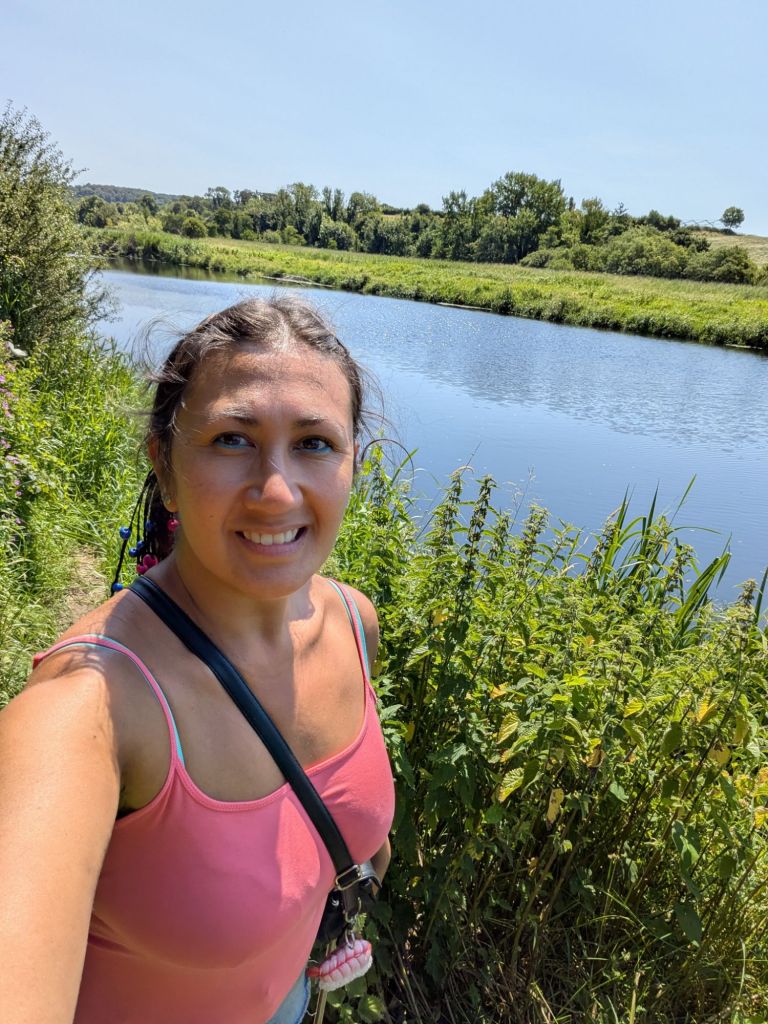
After our tour we hiked for miles along the path beside the River Boyne towards the bend at Oldbridge, where the Williamites, led by Protestant King William of Orange faced the Jacobites, led by Catholic King James the 2nd. At such a tranquil place, with dragonflies slimming low over the river, it was poignant to imagine 17th century soldiers carrying their equipment over their heads while crossing the river, able to identify friend or foe by either the green sprig (Williamites) or white paper (Jacobites) on their hats. After all, Oldbridge didn’t exist back then – the men had to cross up to their necks in the River Boyne.
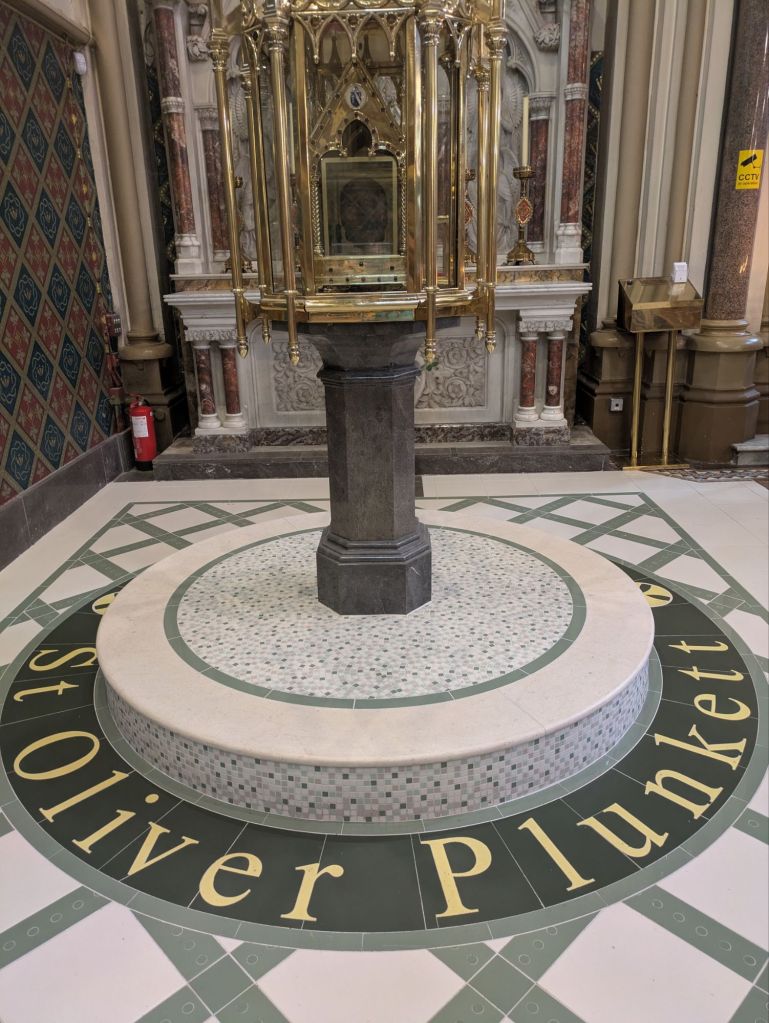
In Drogheda, we visited the severed head of Irish Archbishop and Saint, Oliver Plunkett, now displayed at St. Peter’s Church. He was captured and put on trial, essentially for promoting Catholicism during the Stuart Restoration, and was hung, drawn and quartered in London. Seeing his head on display really made the brutal reality of that era much more macabre.
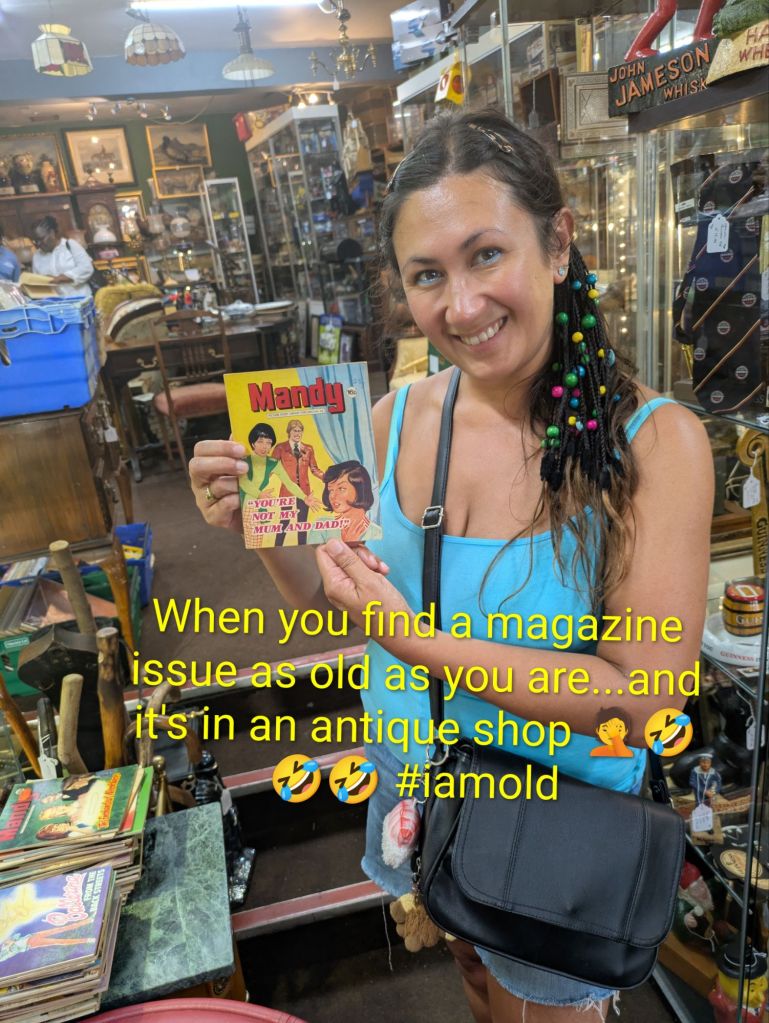
After sightseeing in Drogheda town centre, my son wanted to look at model trains in an antique shop, where I found an issue of ‘Mandy’ comic for girls that was published the year I was born. I guess that’s proof I’m an antique. I like to think that, like antiques, my value will increase with age and that I won’t end up dusty on the shelf, ha ha.
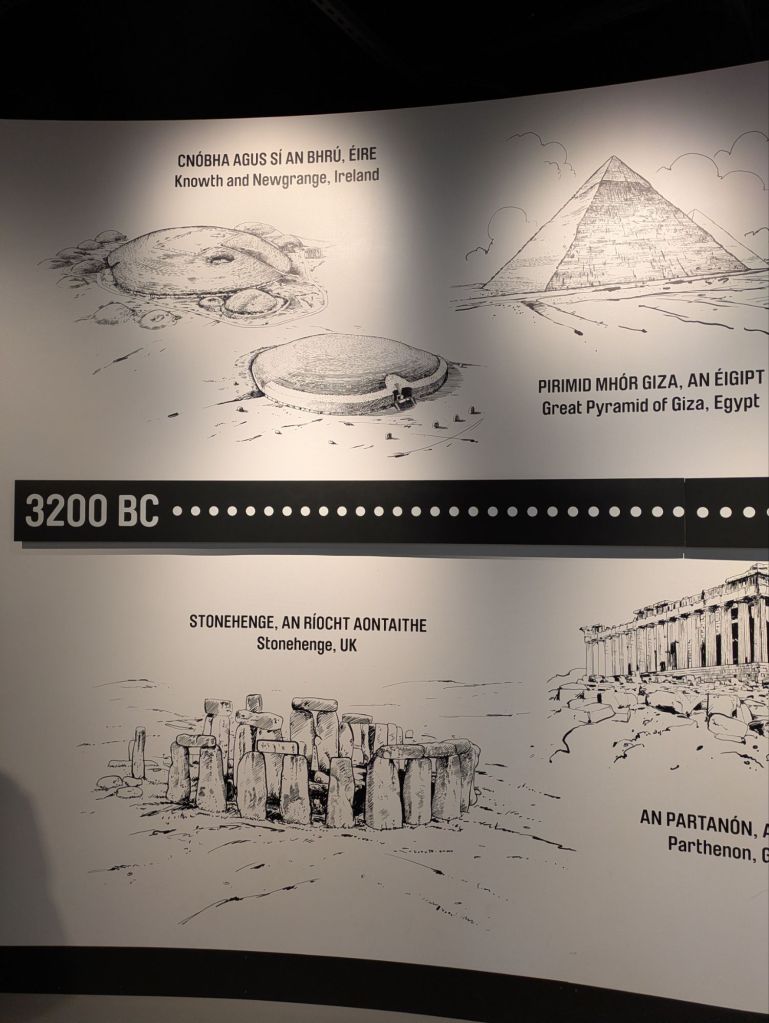
After all the 17th century history on our trip, we then booked a prehistoric tour of Knowth and Newgrange. A quick archaeological note for those who don’t know what time period we’re talking about: both Knowth and Newgrange are Neolithic passage tombs that pre-date the Great Pyramid of Giza and Stonehenge.
Obviously new research on Newgrange has appeared since my university days studying archaeology and palaeoecology at Queen’s University Belfast, the most fascinating being the DNA analysis of the bone fragments. It seems the people who built Newgrange were of Anatolian origin (modern day Turkey).

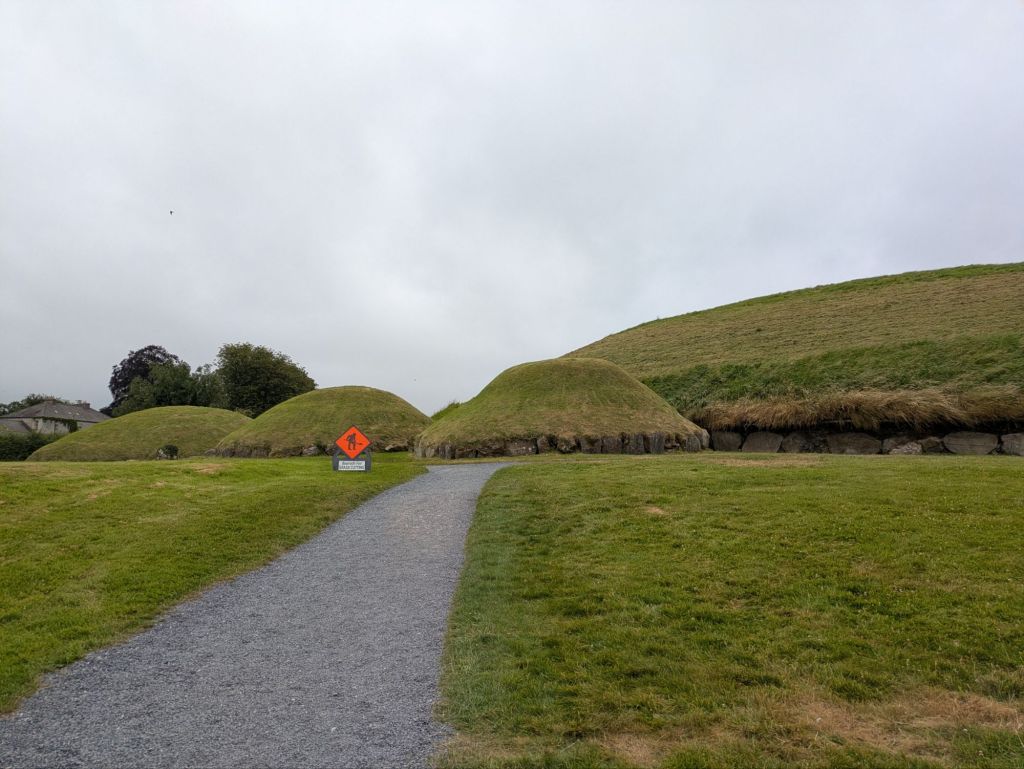
Our tour group of 30 was split in half to take turns inside the chamber at Newgrange, where the guide plunged us into pitch darkness to show with an artificial light how the sunlight at the winter solstice enters through the ‘roof box’ (which you can see in the picture above). The narrow stream of light reaches along the short, upwardly sloping passage to bring sun into the chamber holding cremated remains, only once a year on December 21st. Experiencing a recreation of this, for me, was the most incredible part of the trip. The Anatolian people in Ireland 5000 years ago were certainly advanced in science, astronomy and engineering; the structure of Newgrange has been waterproof since 3200BCE. Nothing short of amazing. I’m glad that the grassy mound remained hidden from Viking invasion, unlike nearby Knowth, which was sadly plundered, making entry impossible. Instead, on the Knowth tour, we were able to appreciate the decorated kerbstones on the outside of the main passage tomb and smaller satellite tombs, and were able to climb on top to enjoy panoramic views across the Boyne valley.
Hiking holidays are the preferred type of adventure for my fitness-focused family. Yesterday I got 23,489 steps while taking in all the history and archaeology along the way. I’m sure the prehistoric people of Bru na Boine (Irish for the bend in the Boine) would approve.


That’s a lot of culture in one trip, Leilanie; I hope you managed a bit of leisurely relaxation as well. But I guess if you want to visit the Boyne now’s the right time of year to do it. As to the preserved head of Oliver Plunkett … yeah. 😦 Glad you had a good time though, which is the point. 🙂
It really was action packed, but we definitely wanted that kind of trip. I really learned so much, even about topics that I thought I knew. 😄
Didn’t know the tomb-dwellers were Anatolian – fascinating. One on the things historical novelists always get wrong is to assume past communities were isolated and ignorant of the wider world.
My memory isn’t what it used to be, so could you remind me – is that contemporary with the Beaker people? I’ve a feeling Newgrange would be earlier.
Sounds like you had a wonderful time. I’m in no way envious, honest!
The Beaker people came a bit after – I think it was around 2400BC. What really blew my mind from the DNA evidence of Newgrange is that I really assumed they were the ancestors of the Irish people today, but turns out it was the Beaker people. I would love to know if they do a DNA test of the local population in Co.Louth to find out if the Newgrange people have any direct descendants, like they found out with Cheddar Man. 😀