Last week, I took 3 bags of old clothes to the charity shop as a gift aid donation. These were clothes that I had hung onto for over a decade, in the hope that I would one day fit into them again. For reference, these clothes were all a UK 8-10 and in the past 5 years, the smallest size I have managed to get myself down to is a UK 12; I am more comfortably a UK 14.
Body positivity matters, so instead of dwelling on how slim I used to be a decade ago, it’s more helpful – and realistic – to focus on recent health gains. If you have read my keto posts, you’ll know my weight yo-yos as a result of my sugar addiction and disordered eating.
However, since January 2023 I have managed to lose 16lbs/ 7kgs through slow, steady fat loss by eating low carb combined with occasional intensive exercise. I’m a fan of comparison photos, which I often use to highlight my keto diet weight loss journey on Instagram. Here are two 2023 photos, wearing the same outfit, which I took to highlight progress better than any bathroom scales could manage:
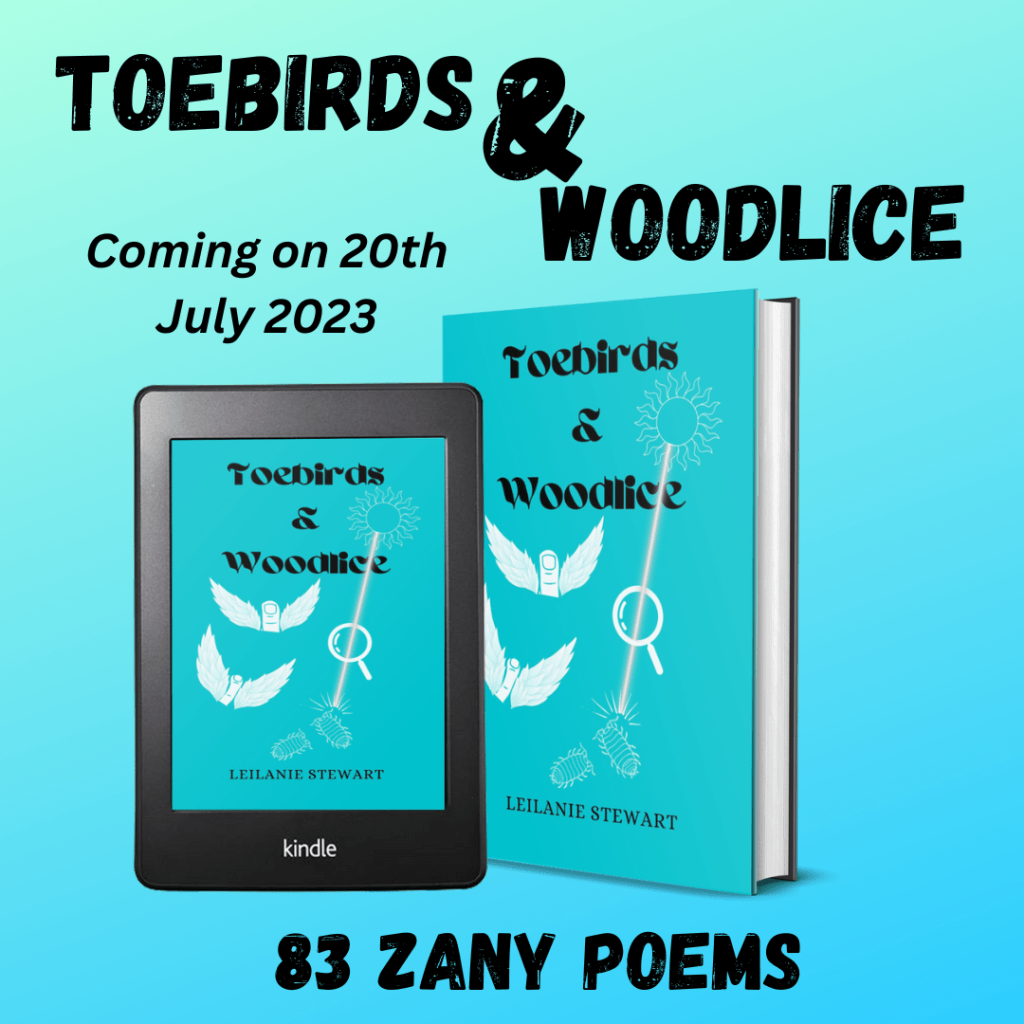
It’s release day! Toebirds & Woodlice is now available in Kindle Unlimited and as a hardcover.
Want to hear some sample poems:
Here’s the blurb:
Calling all day-dreamers, doodlers, dabblers and noodlers. This collection of 83 zany poems is for people who spend at least 60% of the day in their heads.
Some of these poems have previously been published in literary magazines. Some of the literary magazines that didn’t publish them may wish they had. Other literary magazines may be glad that they hadn’t – ever – published any of the poems in this collection. Some of the poems in this collection wish they had been published by literally any of the literary magazines in which other poems in this collection were published.
Disclaimer: The poems in this collection may induce headaches, nausea or nosebleeds. If this is the case, then please consult the help of your nearest noodlehead, who will advise the relevant treatment.
I love writing. It’s my passion. Heck, it’s more than that: if I didn’t write, I wouldn’t be me. I’ve scribbled stories since I just about got the hang of how to string letters together. Between writing, editing and marketing, writing is also my favourite part of the process. Why? I’ll try to break down for you on a difficulty scale what I think.
Did I mention that my third poetry collection is forthcoming on 20th July? Toebirds & Woodlice is a collection of 83 zany poems.
Weird, wacky, surreal and subversive
I first published Toebirds & Woodlice as a 39 poem pamphlet back in 2013. A decade later, I’m re-releasing it as a full collection including some poems from another photographic book of verse that I had self-published back in 2009. All the poems are wacky, some are surreal, and others subversive. Subversive verse? Why not?
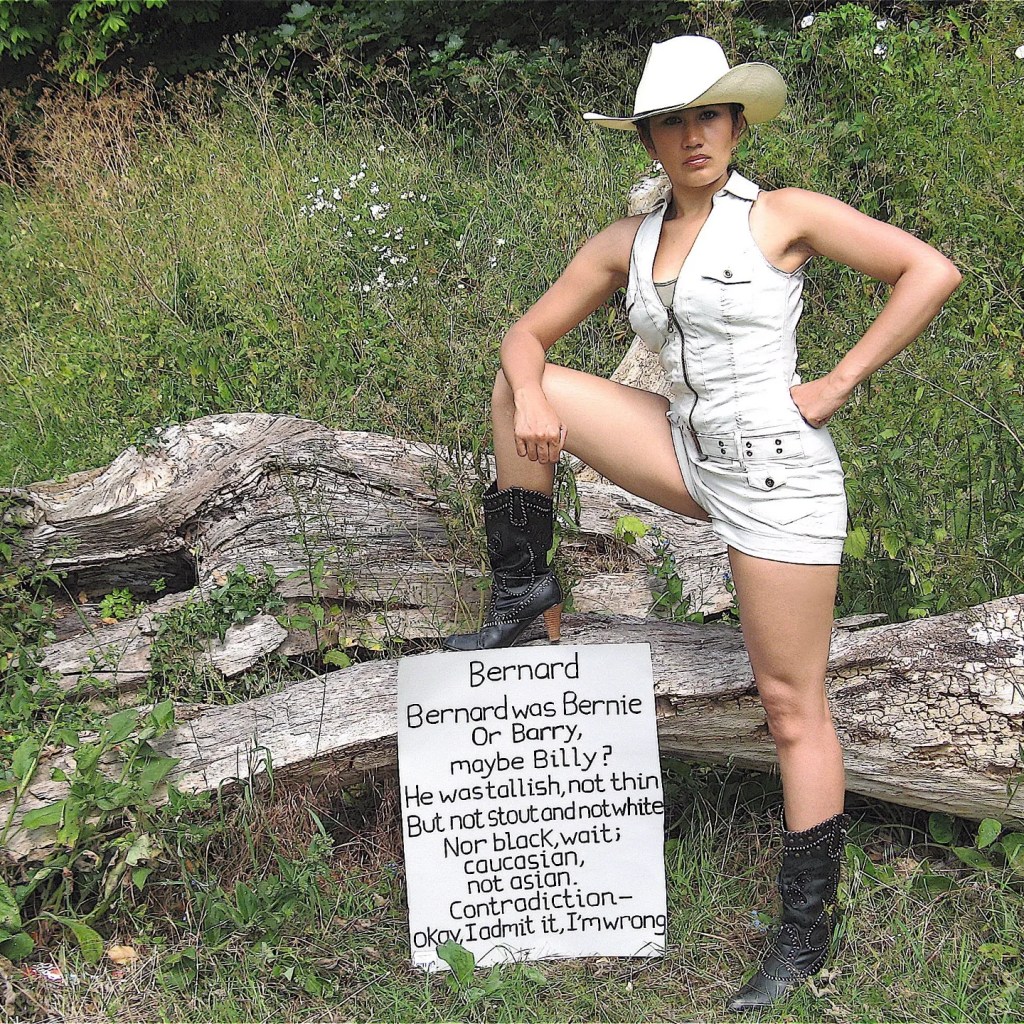
One of the poems to be re-released in Toebirds & Woodlice
Vocabulary is key to weight loss. As a writer I know the value of words, so I also know the impact that using the wrong words can have on not just mentality, but motivation too.
In 2020, before I lost 3 stone/ 18kgs/ 42lbs doing a ketogenic diet combined with intermittent fasting, I had many negative things to say about myself. I often referred to myself as ‘fat’, ‘fatty’ or a ‘slob’. As I began losing weight, I started posting ‘transformation’ photos on my Instagram. At first I used tags like ‘fat to fit’, but mulling this over, I decided to use more generic or body-positive tags instead, so I removed anything with negative connotations.
Why? Because apart from the fact that negative self body image isn’t helpful towards achieving weight loss goals, how many other millions of people may be having their own weight-gain struggles and succumbing to self blame? A recent article about ultra processed foods on Wired indeed talks about how blame lies with governments and medics who promote cheap, heavily processed foods as healthy because, of course, they get paid cash incentives to do so. Is it any wonder why overweight people blame themselves, thinking they have no self-control when in fact society is to blame by feeding them highly addictive junk food?
Believe me, it’s a hard habit to break. I struggle with carb and sugar addiction and have to be conscious and mindful each day about making healthy food choices. I’ve mentioned this in earlier blog posts about doing the keto diet and managing my sugar addiction, but I’ll say it again for reference – here is my golden list of clean eating and fat loss:
Going it alone – are you a chrysalis ready to emerge into the literary world?
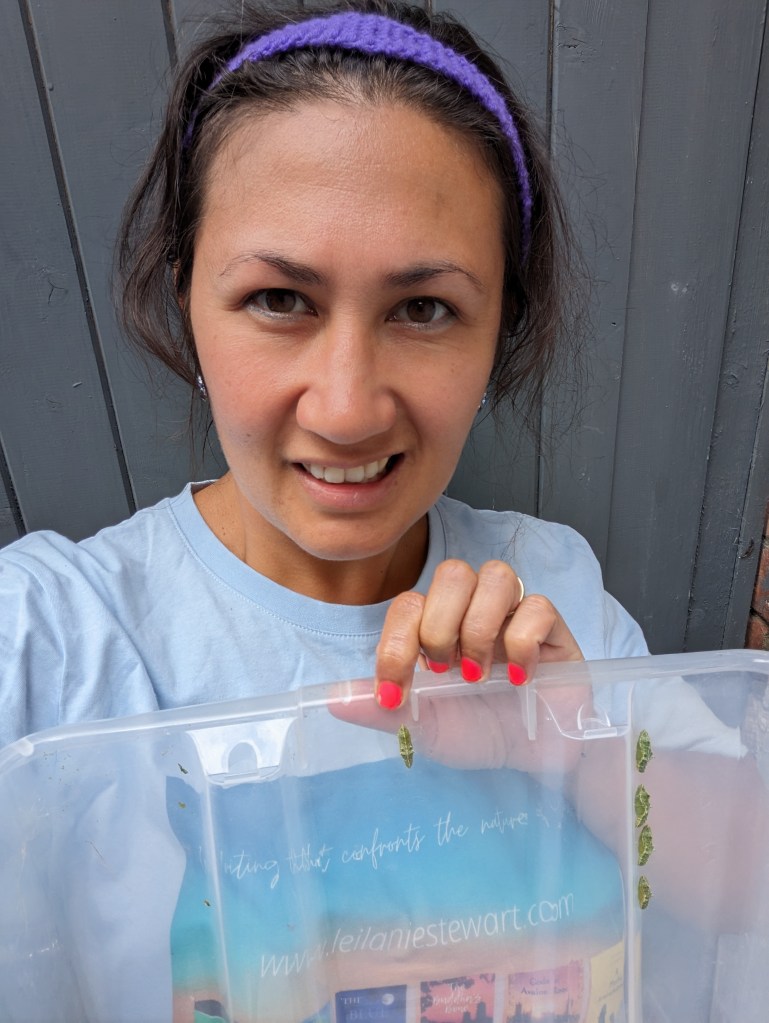
This summer, aside from having 8 weeks off while school is out for the summer, we have been busy raising tortoiseshell and cabbage white butterflies. Always one to see connections in things, I can’t help but feel that metamorphosis is somewhat symbolic of a writer’s life. A writer begins a new novel, poetry or short story collection by writing a first draft – the larva stage if you like. From there, it’s onto the chrysalis stage – the editing process – before the final, polished draft is ready to spread it’s wings and fly out into the big, wide world.
The caterpillar stage – believing in your own project
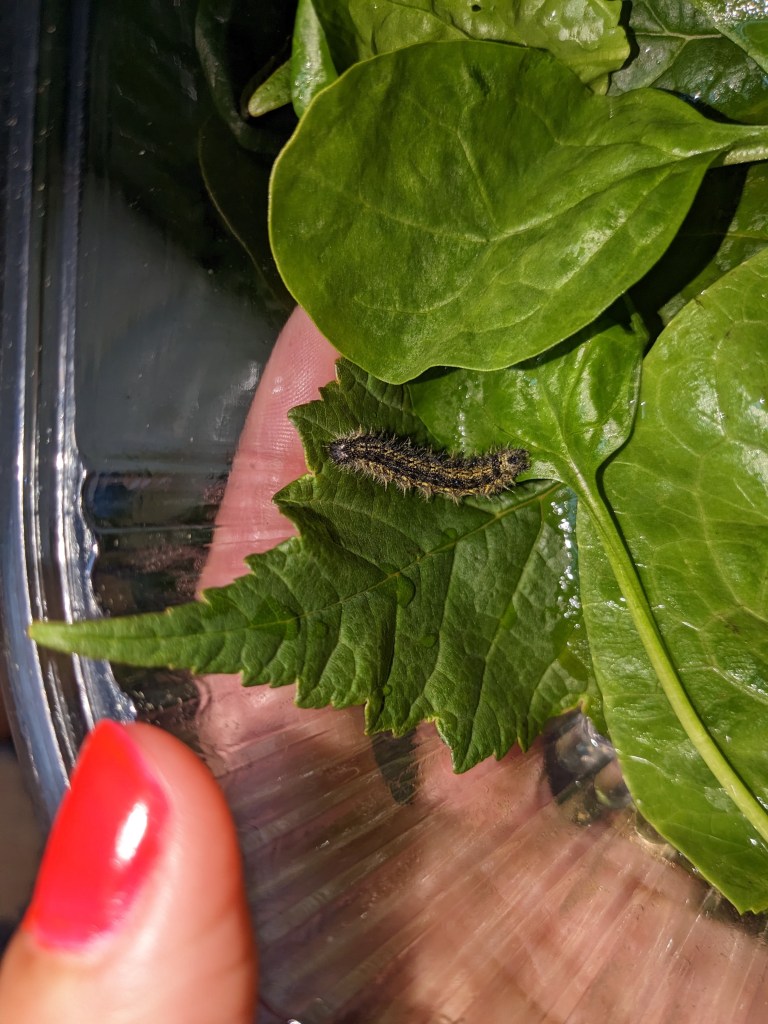
Our tortoiseshell caterpillar, dubbed ‘Fuzzy’
It’s your idea, so write it already… Ideas are no good stuck in your head… Get your draft written and worry about cleaning it up later…
With schools closing on 30th June, and the 8 week summer holidays looming here in Northern Ireland, it’s time for me to think about what I do every year: how to balance being an author with being a mummy.
Admittedly it’s easier now that I have a school age child, and not a toddler or preschooler. But it’s still a juggling act between managing my writing goals with balancing a fair amount of family fun activities to entertain an energetic youngster.
Write in the mornings
I can snatch moments of writing while my youngster eats breakfast, since I fast until lunch time. Intermittent fasting plus low carb/keto helps me to burn fat and get a few paragraphs written. Win-win.
Manage expectations
This one is harder for me to manage as I’m a perpetual planner. Over the summer I’m going to try to lower my expectations of getting some writing done everyday. There may be longer stretches of no work on my current novel drafts (I’m working on two at the moment – WIPs #7 and #8.
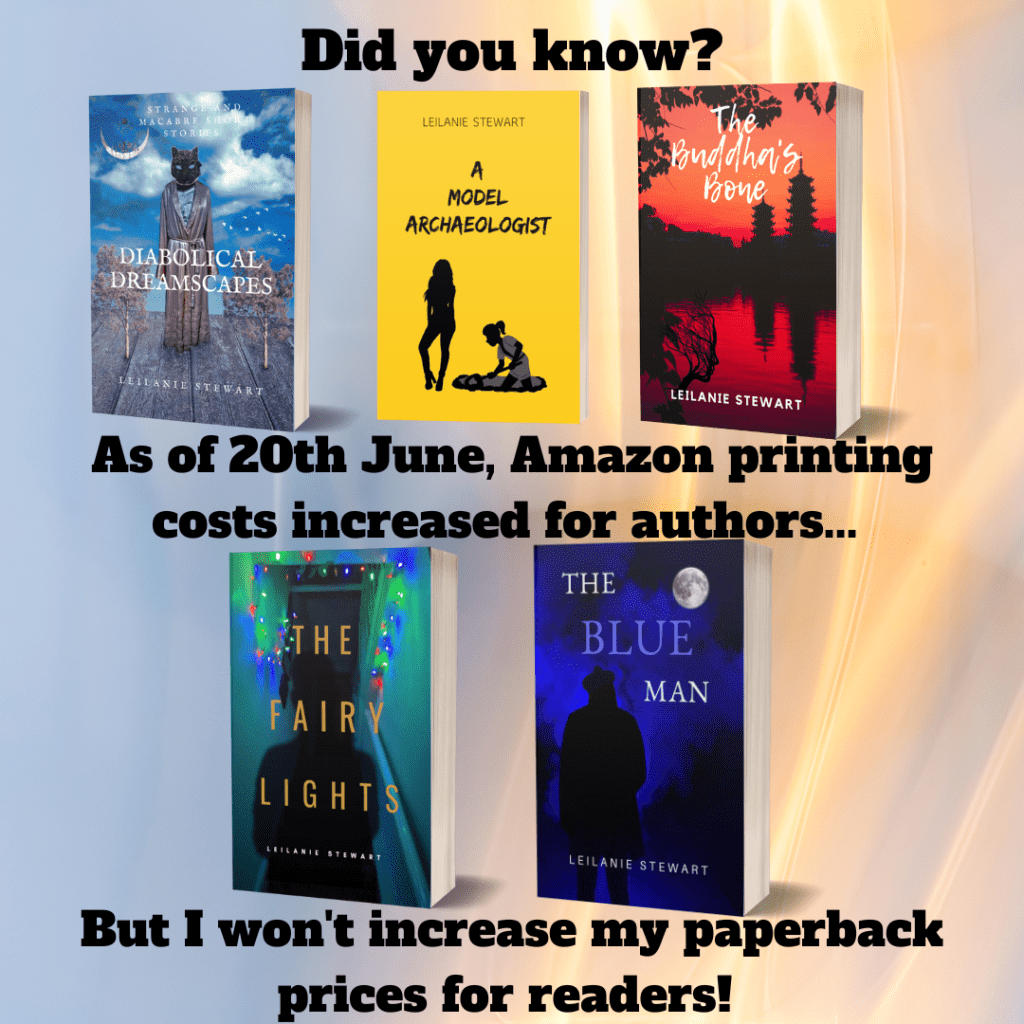
If you’re an Indie author, you may know that as of 20th June, printing costs increased, meaning that publishers/ self-publishers alike will be paid less in royalties – unless of course, they increase the retail price of their books.
Just to let you know that, although I understand why some Indie authors may make the decision to raise their retail prices – after all, writers should be paid well for their work – I’ve made the decision not to increase my own prices. Call me idealistic, but we’re also in the midst of a cost of living crisis, and I wish to keep my paperback and hardcover books at a competitive, yet affordable price for readers. It’s for this reason that my books will be staying the same price, as follows:
Aside from being an Indie and small-press author, I also work in a grammar school. My day profession provides a steady income that my writing doesn’t. Of course, that doesn’t mean I’m doing it simply to pay the bills; I enjoy helping to support young people academically and get them through their GCSE and A-levels with – hopefully – the grades they want to achieve.
When I was at school, Art and English were my favourite subjects. I spent a good deal of my break and lunchtimes in the school library either borrowing books on Klimt, or on Celtic art, or the newest horror additions to the library once I had read all of the Stephen King, Dean Koontz or R.L. Stine books. But in my early childhood, it was a different story…
No books for my hungry young mind…
Can you believe that I grew up in a working class household where books were not valued? In fact, when I was a pre-schooler, there were no books in my household at all. I have no memories of anyone ever reading a book to me in my early childhood. Isn’t that a shame? As you can imagine, I struggled when I started compulsory education and I was in the bottom reading group from when I was in P1 (age 4-5 years, for folks reading outside of Northern Ireland) through until I was P3 (age 6-7 years).
Getting books as prizes
Don’t worry, my boo-hoo-bookish story gets happier. Thanks to my teachers at school who pushed me to read, as well as my Nanny (grandmother for those outside N.I.), who gave a few old copies of Enid Blyton, A Child’s garden of Verses, and Grimm’s fairy tales that I began trying to read by myself. I was artistic as a child and started winning art prizes from an early age and my teachers always gave reading books for those prizes too. I also started buying books out of my pocket money from around the age of 8. My reading level improved until I ended up in the top set in class from P5 (age 8-9) going forwards. I got a top grade in my GCSE English in the end too.
Nurture children’s brains
As a parent myself, my hubby Joseph Robert and I spend time reading with our youngster everyday. Our eager bookworm is at an age where he can now read parts himself. Books nurture young minds. I’m happy to say that our house is coming down with books; in fact we could seriously do with more bookshelves to cater for the stacks of overspill on top of the bookshelves we already have. It’s a happy, bookish household where literature is valued, not scorned.
Plus, there’s nothing more nurturing for your parent-child relationship than cuddling up with a book, spending quality time reading and sealing that lovely bond you have with your kid. Can’t beat it!
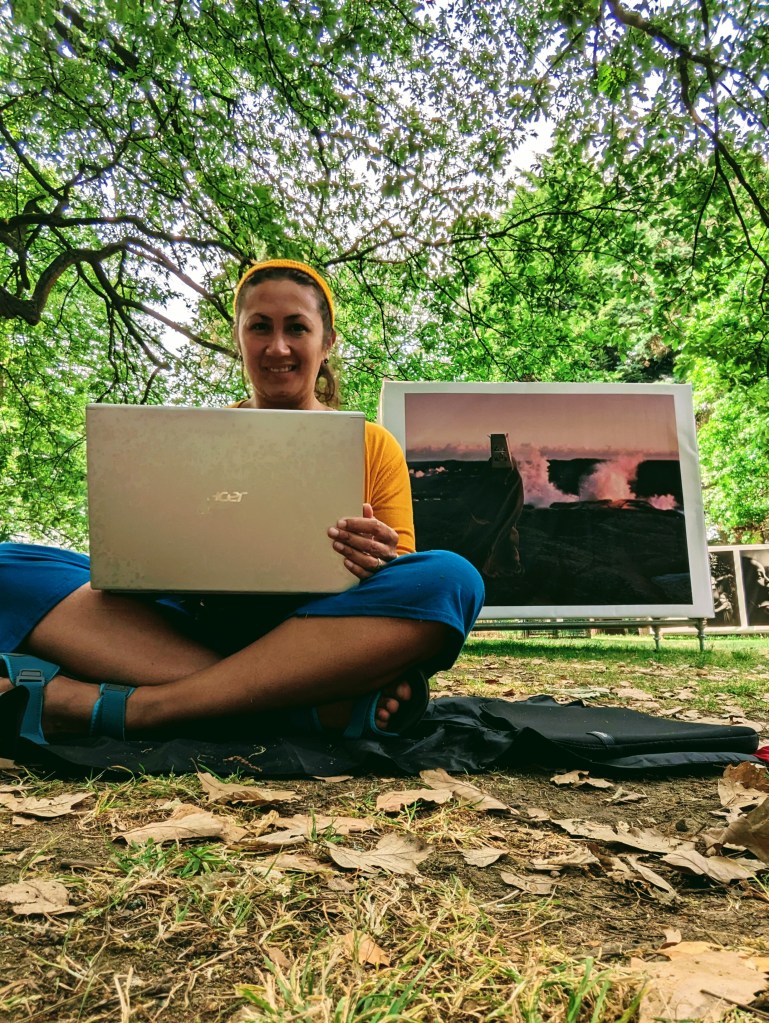
Writing in the park during the Belfast photo festival, June 1st to June 30th
Can I share a little writing secret with you? Despite the fact that I’ve had four novels published, every time I start a new novel manuscript, I find myself wrestling with the plot. To help keep my novels moving forward and stop myself from struggling to keep the thread of ideas, I’m going to let you in on a few tips that work for me when drafting a manuscript. This, for me, is especially important given that I’m currently working on two novel drafts. I’m up to around 6000 words on novel WIP#7 and 4000 words on novel WIP#8.
Use a chapter plan
I keep a notebook with a rough outline of each chapter, in little more than a few sentences. Lately I’ve also taken to keeping an e-chapter plan at the beginning of a draft, using the chapter heading formatting to make it easy to refer back to specific chapters as I go along.
Keep a list of character names
I tend to do this in a notebook, making it easy to use find and replace if I change my mind later.
Use find and replace for changes
As above, let find and replace become your friend! What I always do is check afterwards to make sure all changes are saved.
Skim read your back chapters to work through writer’s block
It helps to get the whole story back in your head again, in order to keep going forwards when you’re stuck.
Don’t necessarily trust that auto-save is doing its job
I manually save work, both online and locally on my desktop. I sometimes email a draft to myself too. Better to have too many copies than only one – which could be vulnerable to getting lost. Lots of backups is best for your book baby.
Put dates on drafts
This helps to make sure you are uploading your most recent revision. How awful would it be to accidentally publish an older version, with all its typos, by mistake? (Cue shudders).
Anything else?
Nope, that’s that. What do you think? If you have any other tips during the writing process, please feel free to share.



 Leilanie Stewart