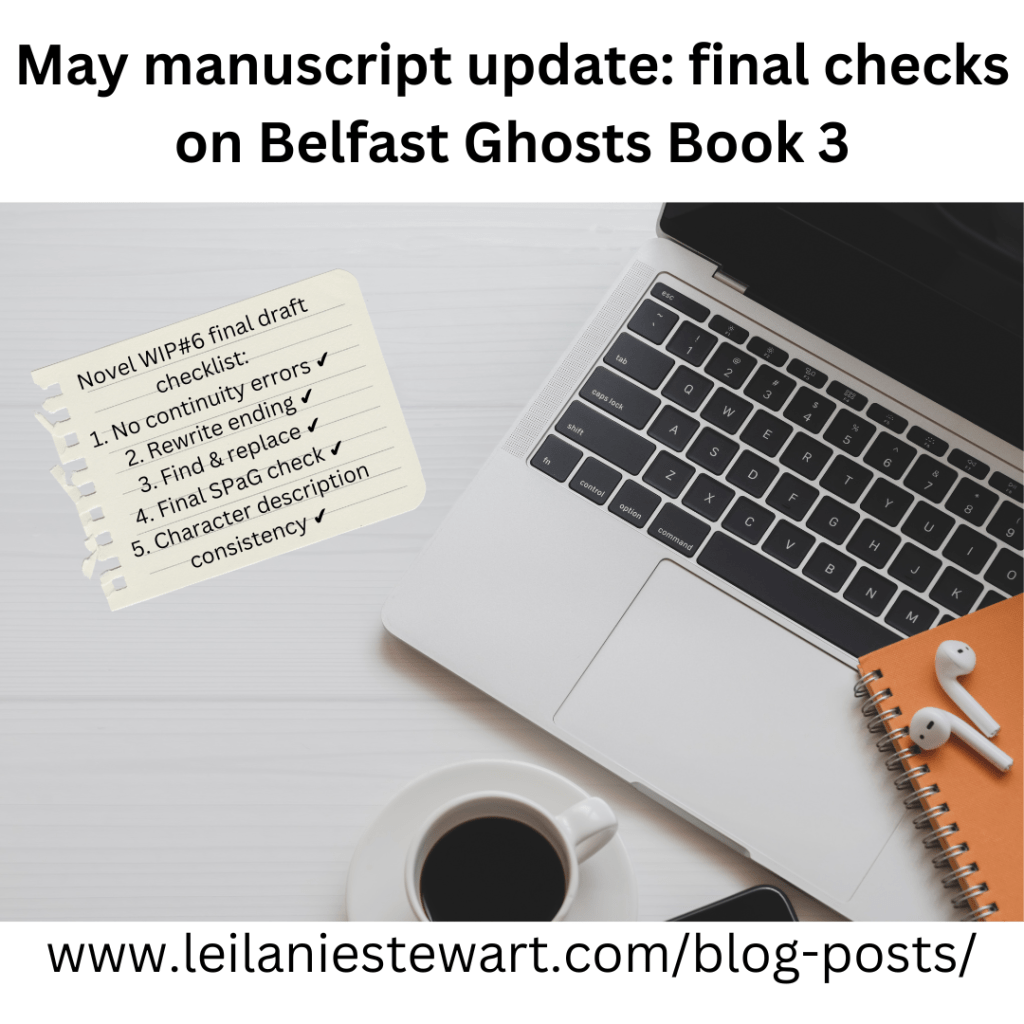
I’ve been chipping away at my current work in progress (novel WIP#6) since January 2022, so it goes without saying that I’m more than ready to see it finished. This one is particularly complicated because it has historical time skips, which is making it especially hard for me to keep the continuity straight between past and present. Why on earth did I do this to myself? Okay, I’m being a bit wry there; it’s a challenge that (I think) I’m up to. I’ll get this final draft finished eventually.
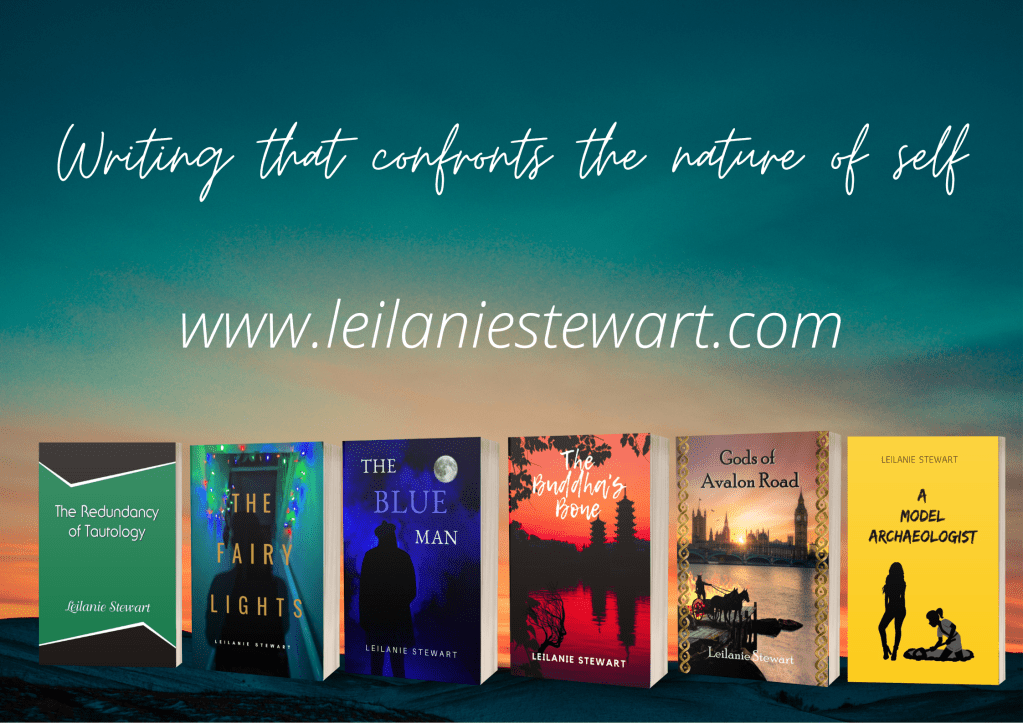
Author branding is something that I’m always mindful of. As a novelist, poet and short story writer, it’s important to have a logo, tagline and header for my website and author social media channels to encompass my work. Since I now have seven currently published books, and with another two more coming later in 2023, displaying all my book covers in one image is becoming quite the squeeze. Instead, I’ve developed a brand header that reflects my website tagline: writing that confronts the nature of self. Here’s the new header:
This way, no matter how many books I have in my ever growing back catalogue, the image above encompasses them all.
What do I mean by ‘writing that confronts the nature of self’? Simply that all my work features a main character who thinks they know themselves, goes through a crisis of identity and creates a new sense of self. Whether it’s a ghost story, psychological literary fiction book, occult horror or collection of poems, an exploration of the innermost psyche occurs. This usually uncovers a Pandora’s Box of the darkest demons for my poor, tormented main characters!
When I first started out as a writer with an aim to getting published, some creative friends and I decided to form a writing circle. We had a name for our group, which I’ve long-since forgotten, and we met once a week in a pub after our day jobs to exchange notes and feedback on each other’s current work-in-progress. It worked well for a few months. Illness, busy day-work schedules or other excuses often got in the way. In the end the group fizzled out, as life got in the way. At that time, none of us had yet been published. We needed each other’s beta-reader feedback as we were all starting out and wanted some reassurance about our work. Was it good enough? Did anyone know of any magazines that were open to submissions? What about writing competitions?
Joining a writing group is a good idea, both for those starting out, but also for more established writers. I think it’s good to assess what you want out of it and then weigh up whether you think a writer’s circle is best for you. To help, I’ve broken it down into the pros and cons as I see it:
Has it really been one month since Diabolical Dreamscapes was published? Whew, those four weeks really flew in!
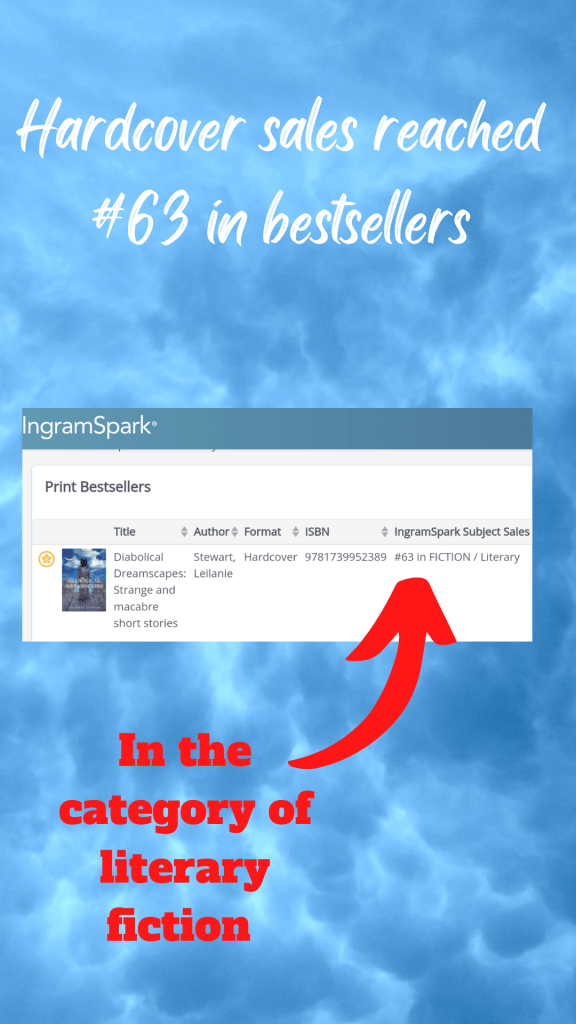
I’m very pleased with how well my first short story collection has been received. Hardcover sales have been the strongest, reaching #63 in bestsellers for literary fiction on IngramSpark.
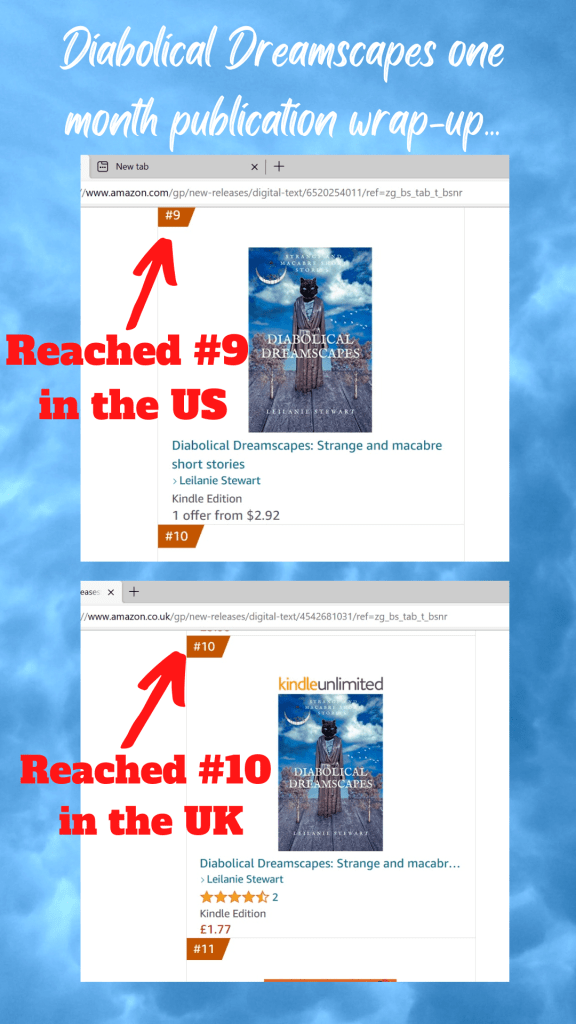
Kindle Unlimited page reads and eBook sales propelled me to #9 on the Amazon US Hot New Releases chart for Metaphysical fiction, and #10 for the same category on Amazon UK.
I also had a handful of reviews from the UK and US. If you’re one of the readers who left a review, then thank you so much! I especially loved the top review from the US, which gave me a giggle. Yes, I am definitely in need of both a hug and a puppy, lol. 🤣🤣🤣
I read an article a few days ago on The Guardian about a mainstream author who is refusing to sell her next book on Amazon in order to support local bookstores.
It’s well and good for those authors who are big-name enough to have the luxury of picking and choosing where to sell their books and can therefore afford to boycott Amazon. If like me you are an Indie or small press author, I’m sure you can relate when I say that the bulk of my sales are from Amazon, and Amazon sponsored ads have been essential in helping me reach new readers. In fact, my Amazon sales provide a nice supplementary payment of around £50-£80 a month, in addition to my day job salary, and it certainly helps in the midst of a cost-of-living crisis for small scale authors like me who aren’t so privileged.
I thought I’d write a blog post about this topic after a chat with a fellow Indie author, who wondered what percentage of published authors make more than minimum wage from their writing. He mentioned that the last time he had looked, it was about 0.0002% of published authors. I haven’t done any research to verify that stat or find the source, but it got me thinking about this topic in general, and so I decided to look up the data. The results make for rather depressing reading:
Being a writer, much like being a parent, doesn’t come with a rule book. Should you get a creative writing degree? Should you get a literary agent? Try to get a publisher? Self-publish your work? How do you go about marketing your book? The list of questions goes on.
Personally, I’m a fan of learning on the job. I think there is no harm in trial and error, provided I learn from my mistakes. Over the course of 14 years of publishing short stories and poetry in magazines and anthologies, then graduating onto poetry collections, short story books and novels, I’ve learned many things and made some mistakes along the way. One of the biggest mistakes I’ve made has been spending money on advertising without setting a budget, or considering the ‘return rate’ in terms of likelihood of sales – or at least value for money.
At the start of this year, a colleague asked whether I used Booktok. I’m a self-confessed ‘old fogie’ and didn’t know what this was. I had heard of TikTok, but thought it was a place to share homemade dance videos, or other funny crazes, and hadn’t considered it as an option to use for marketing; I already use Instagram, Twitter, Facebook, LinkedIn and YouTube, and wasn’t sure I wanted another social media account to manage. However, my colleague told me that some books had gone viral on Booktok and that you didn’t need a huge amount of followers to get a lot of exposure, so I decided to set up a TikTok account. What did I find?
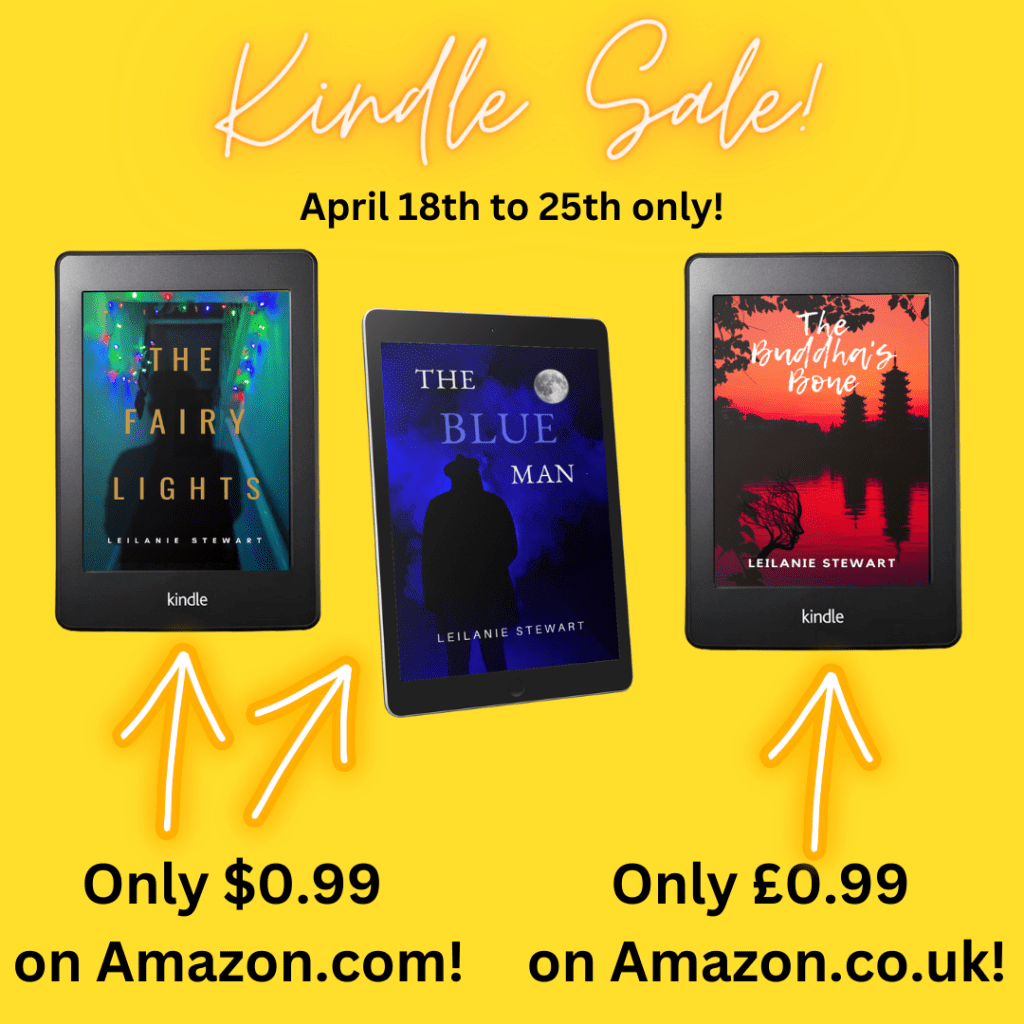
Hey UK and US readers! Great news this week: I’m having a Kindle eBook sale on my three most popular books. From 18th until 25th April, The Blue Man and The Fairy Lights are only $0.99 on Amazon US and The Buddha’s Bone is only £0.99 on Amazon UK. If you haven’t read any of these novels, why not grab a discounted copy while the promotion lasts?
Why are they at a promotional price? To celebrate the recent publication of my first short story collection, Diabolical Dreamscapes, I’m offering readers a chance to snap up my other fiction books while they’re on sale. Everyone loves a bargain, right? I sure do.
Enjoy the read, and if you do buy any of them, please do share a rating or a review. I always love hearing what readers think of my books. Having readers keeps me writing!
Click on the photo to see my keto diet archive posts
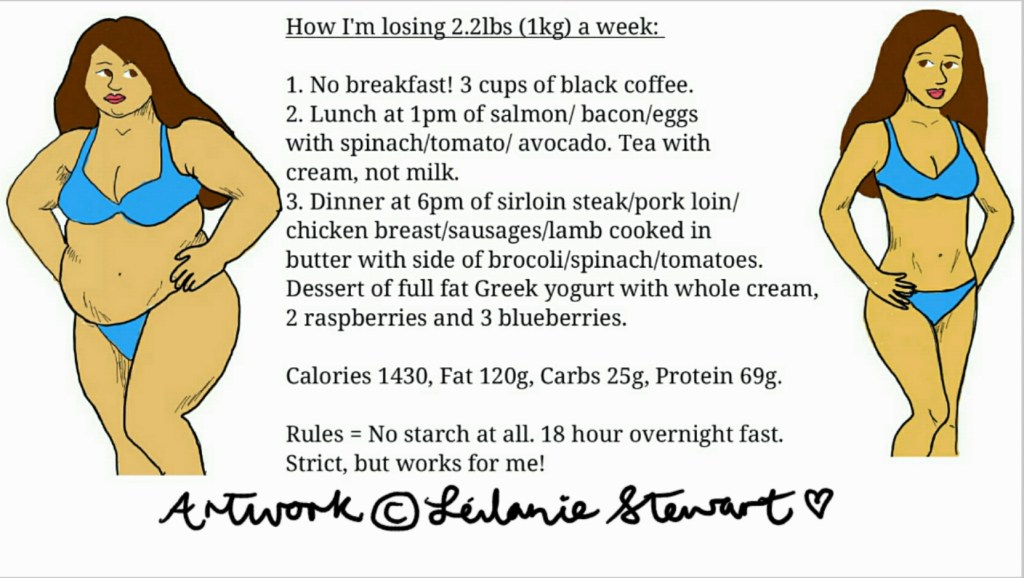
I haven’t written a health post in a long time, but that doesn’t mean that keto and my low-carb lifestyle are no longer a part of my life. If you are new to my health-related blog posts, I first discovered the joys of the keto diet back in lockdown in 2020. At that time my BMI of 31 categorised me as ‘obese’. I was having back ache and joint pain from carrying excess weight and struggling to do basic household tasks without having heart palpitations. I knew that a sedentary, house-bound lifestyle during lockdown would have set me on a slippery slope to serious health issues, so I embarked on a strict keto diet of less than 20g of daily carbs, combined with intermittent fasting and moderate exercise (daily walks in the park, and running after my then-toddler – who also sufficed as a living weight plate on my back to do squats and lunges). I lost 18kg/42lbs/3 stone in 5 months from a clean diet of whole foods, no condiments and no cheat days.
Since 2020, my weight has yo-yoed; every time I have weaned myself off keto and onto a regular diet, the weight has crept back on. As with anything in life, if there’s a problem, it’s good to analyse what you know and look for patterns. Here’s how I summarise what went wrong for me:
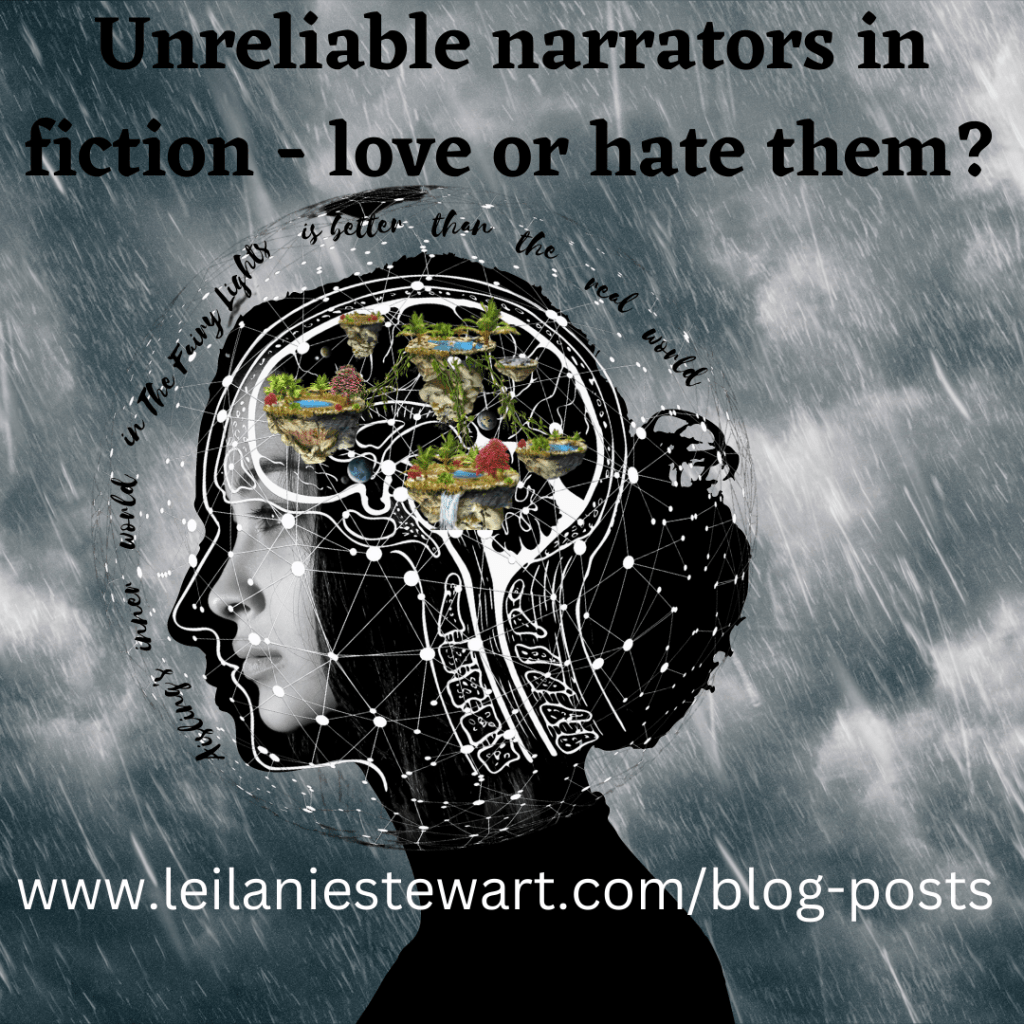
As a reader, and as a writer, I love books where there is room for interpretation. I’m also a fan of an unreliable narrator; I love having to question what is actually happening in a story I’m reading. I like to be challenged instead of having everything right there on the page for me.
Out of my own novels, The Fairy Lights is the only book I’ve written so far that uses an unreliable narrator. If you have read the book (no big spoilers if you haven’t), the novel starts as a ‘haunted house’ story but in the latter half, veers into a strange and surreal journey as main character Aisling ventures into the spirit world – or worlds, as there are many ‘realms’ in this book.
But what is actually real and what is actually a product of Aisling’s internal fantasy world? At what point does real life in the story veer over into a fantasy narrative constructed by my main character to suit the story that she has built up as her ‘safety net’ to avoid dealing with her past?
Is The Fairy Lights a fantasy book? No. How about a YA book? Nope. It is neither a fantasy story nor a YA book; though I imagine the premise may be confusing to some readers, together with the fact that it’s a short novel, which could possibly mislead some readers into thinking it’s aimed at a younger audience. The Fairy Lights is psychological literary fiction, as well as a ghost story. It requires you to question the reality of the tale. As a big fan of movies such as Brazil and Total Recall, I love how the twists at the end can be explained as much by psychology as they can by science fiction. Such stories, that can be interpreted in multiple ways, are an inspiration for my writing.



 Leilanie Stewart