The Ups and Downs of being a writer

...going up

Writers write. Simple as. Yet, I find writing to be the easiest part of the profession. The words come out of my head quite easily, flow along my arm and onto the paper. It’s not a boast – there are other aspects of writing which I find a massive stumbling block (I’ll get to this in a bit). I’ll admit some other writers I’ve spoken to find it hard to get their ideas, or a smooth plot, or character development onto a page with ease, and I guess I should consider myself lucky that a story will be pretty much fully formed in my head before I even start to write it longhand (I type up my work after finishing each chapter in a notebook).  But for me, editing my work is something I find extremely hard.
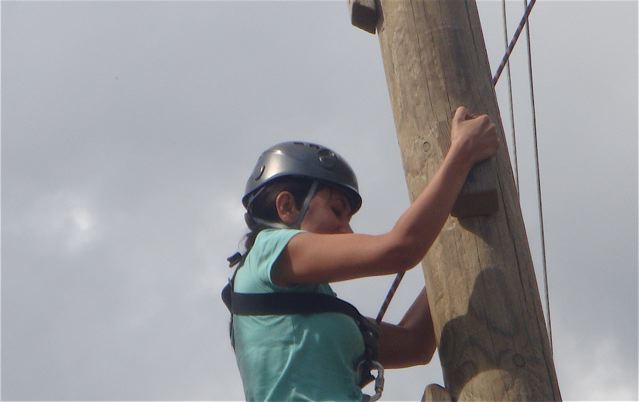
...up and away

Where to start? It’s hard when you’re so involved in a project to take a step back and see the corrections that need to be made. Also for me, the longer a manuscript, the more I lose sight of plot development – and so often there will be glaring big continuity errors, even in a draft which I thought was almost ready for a final copy edit.

...coming down

And then of course – rejections! This is something every writer goes through at some stage. Doing your homework helps of course… looking up the right place to send it, reading the work of writers they represent etc.


Still, it’s good to keep going and overcome the obstacles. For every up, there is a down and vice-versa. We wouldn’t be human if it was all a smooth ride!
Useful information

Short fiction and Poetry Markets in the UK, US and worldwide:

Duotrope is great – I’ve used it to find many of the magazines that my work has appeared in. It’s so easy to use… simply put all the information about your story or poem into their search: genre, theme, word count, the payscale you require and the medium you would prefer (print or ezine).

Personally, for a writer with no publishing history, I think starting with non-paying is perfectly fine. I’ve met other writers who said that if it’s a non-paying market, then it’s worthless on your CV. My opinion is that this is rubbish. Also, the thing to consider is that magazines which give you a contributor copy (a free copy of the magazine your work appears in) for your work doesn’t count as  non-paying – this is token. You’re getting a free copy of the magazine – so whatever it’s worth, may it be £2.50, £6.00, whatever – it’s the same as getting that money in cash! And besides, some markets that don’t offer a writer a contributor copy, may still offer you a free PDF of the issue your work appears in. Print it out… it still counts on your overall publishing track record. Of course, if you can get paid money (through paypal) for your story, even better. £££ and a contributor copy is a well deserved reward for all the hard work you’ve put into writing and editing your story – don’t you think?

Information on writing/ general writing advice:

I really like the forums on Absolute Write. You can get all sorts of advice here – everything from how to start your novel to the copyright laws for a certain country. I found it an invaluable source of information when I started out on a self-publishing venture a few years ago. Also, if you sign up, they have a newbie forum where you can meet other people in the same boat. It felt good when I realised I wasn’t alone… as writing can often be such a lonely business!

UK Poetry Magazines:

I’ve used this list many times as a starting point to submit my poetry. All of the magazines on the list are stocked at the Southbank Poetry Library, so if you live in London, it’s easy to go there and have a browse through their archived issues to get a feel for what type of work they publish. Incidentally, I was quite pleased the first time I found some of my previous work among their shelves… Carillon issue 27 (my short story ‘The White Kaleidoscope’).

Another way to find out if a magazine is a good fit for your work is to buy a copy. Of course, not everyone has money to spare to keep buying copies of every new magazine they hear of, but checking out magazine websites can help too. Some websites put free copies or PDFs of previous issues online for you to read.

Happy hunting!

Submission Tracker

I had to mention submission trackers since this is something I have struggled to make work for me. When I started submitting stories to magazines a couple of years back, I mostly emailed my work, and if I needed to refer back to check the date or market of a submission (to write query letters, for example), I simply checked my sent mail.

However, as my number of stories grew, and I began doing multiple subs, I found that I needed a more sophisticated method of checking my submissions. I tried using a spreadsheet, but found that after submitting work, I forgot to update my tracker. This ended in a couple of almost sticky situations where I simultaneously submitted work, unaware that the same pieces were being considered by different markets at the same time. Thankfully, in those cases, I was rejected and hence, off the hook – phew!

Through trial and error, I found a submission tracker that works for me – a table which I keep in my filofax and update by hand – that way I can do it on the go. I now use 5 columns: the title of the work, the market it was sent to, the date it was sent, the response (either a tick or a cross and the date), and how it was submitted (electronically or by post). This helps me to keep a check on my query letters, or subs that have slipped through my hands. At the side of the table, I keep a note of the word count for each story, so that I make sure I don’t send something that is either too short or too long to the wrong market – no point alienating editors, and looking unprofessional at the same time.

My advice to writers starting out in the business is to find something that works for you, but not be too hasty about getting your work out there. Slow and methodical is always best – plus it gives you time to really go over your work with a fine toothed-comb and make sure there are no grammar or punctuation errors.

Colour of my soul…

…in autumn is grey

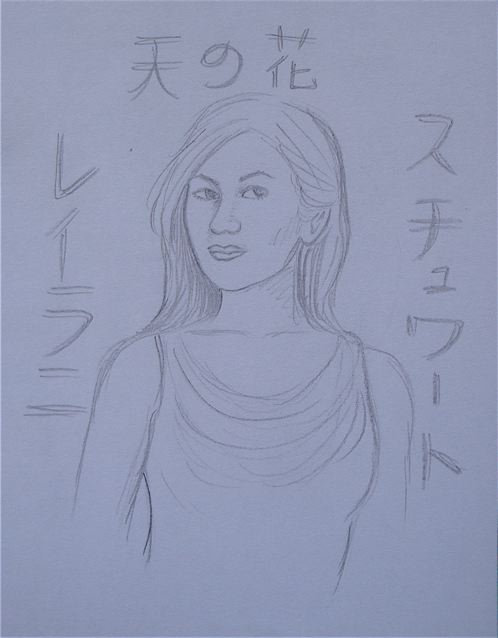
Self-portrait: pencil on paper


The Hole of Truth

reading Issue 110 of Weyfarers

Poetry this month – ‘The Hole of Truth’ in Issue 110 of Weyfarers

Hole = Hell, a gap, a cigarette burn in one’s soul…

Whole = Completeness. Totality. Denial.

The importance of writing Short Stories

When I wrote my first short story (in over a decade) back in 2007, I had my basic plot figured out, but really didn’t have a clue about characterisation and point of view. I remember when I had the first draft finished, I sent it to my beta readers and they wrote back utterly confused. It wasn’t clear which character’s thoughts were being shown, as I kept flitting between both with no discernible section breaks. After many revisions (and reading character and viewpoint), the story was eventually published in 2009 in Blood Moon Rising issue 39. Read it here

I really think short stories are so important to a writer for several reasons. If you want to write something of novel length, you can explore characters, POV, and iron out other writing issues in a smaller version first. Even better if you can get your short story published, as this shows you have a style that will sell, and builds your CV for a potential agent or publisher down the line. This is just my opinion, but I don’t think too many agents will take a chance on an unknown writer if they don’t have any credentials to their name – which is why I’ve been submitting my short stories to ezines and print magazines. It’s most important to write short stories for enjoyment, of course, but building up a track record and working out your style and story ideas in a more manageable size really helps too.

Background

1)  I first knew I wanted to be a writer when I was 6.

2) My first short story, The Land of Zoomba Boomba, was a sci-fi/fantasy story set in another world. I wrote it when I was 8 or 9.

3) My first Poem, Friday Night, was published in a book for young writers called, Write & Shine Regional Anthology, 1995.

Poetry Matters 2011 book

I’m so proud of my 11 year 8 students in the Writers’ Group I teach at school… they’re through to the UK finals in the Poetry Matters competition and will be published in the Poetry Matters 2011 – London & The South Of England anthology coming out on 31st August, which will be kept at The British Library and further libraries across the UK! Hopefully they’ll win the grand prize of £1000 as well. Fingers crossed 🙂

Jim

Short story this month – ‘Jim’ in Wufniks Magazine. Check it out here

Psychoanalysis: Read between the lines… if you want there to be more Jims in the world, you’ve got a major malfunction. Issues!

Writing tip of the week

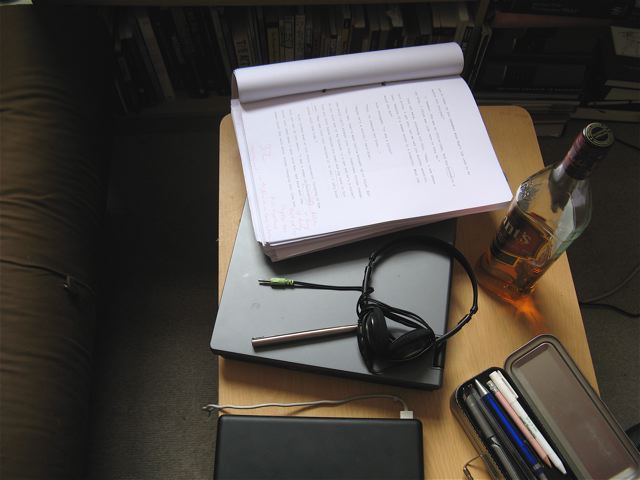
Whiskey + novel writing = lots of mistakes!

Manuscript & Scotch... a bad combo for editing!

Leave the whiskey drinking until after you’ve finished writing for the day, especially when writing a novel longhand! It’s not as painful as sewing and drinking whiskey (which leads to lots of bloody, pinpricked fingers and stained clothing) but it’s painful enough to have to see spelling errors in a nice hand-written manuscript!

Don’t make my mistake… save it for the toast after a hard day of work!