Ingredients for writing a novel

29 Nov 2013: Ingredients for writing a novel

Ingredients:

  • Coffee (optional, but it does keep one awake)
  • 2 notebooks (one for story research, the other for a chapter plan)
  • Camera (For details and location ideas… are you really going to remember the colour of that all-too-important bridge/ pub/ café/ house etc several months later?)
  • Computer (to type up that first draft – preferably on a chapter by chapter basis… it wouldn’t be good to lose your work now, would it?)
  • A red marker – for editing!

Recipe:

1. Sketch an outline of your story. Who is your main character(s)? What is the plot (if any)? Or, if none of the above, what is the basic concept of your story? Mix all of these ingredients well.

2. Drink coffee – get those brain cells in gear! A little liquid can soften the mix.

3. Chapter plan – you don’t have to have your opening, but it’s best to try for a rough order of events! Use a cutter and evenly arrange your story ideas.

4. Drink more coffee, or get the kettle back on – fast! More liquid will stop any stickiness!

5. Do research. Get rid of the writing ailments – finger cramp, sore eyes, writers block – by going out to bookstores, libraries or even (if relevant) location scouting. Write notes, draw pictures, take photos. Now you’re ready to stick it in the oven.

6. Get your chapters started before the ideas coagulate in your brain. It’s no good in your head – get it onto paper and you can work with it. Cooking time varies from dish to dish.

7. Once you’ve done the first draft, leave it to cool on a cooling rack for a week or two. Then get back to it, armed with a red pen!

Draft one: needs a lot of work!

Draft one: needs a lot of work!

Serving:

A first draft can take as short or as long as you like. My first novel (which I finished in 2012 and is currently being considered by a publisher) took me 6 months for the first draft, but the one I’m currently working on took 2 months. I’m currently at the red pen stage… but with a little whipped cream on top, this should turn out to be a tasty enough cake – provided it doesn’t deflate at the last minute!
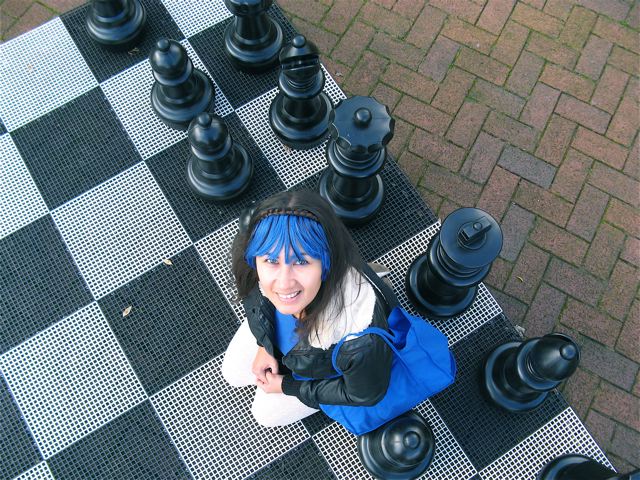
Stalemate

Chess

Chess

Metamorphosis of Woman/ Realms of Man – reversible poetry chapbook by Leilanie Stewart and Joseph Robert

http://meandibooks.bigcartel.com

Stalemate (page 6 – Metamorphosis of Woman)

You were playing chess with my soul

I saw you eat the pieces

As you went along

I watched the black and white squares

Slide into the abhorrent depths

Of my subconscious

You took my knight, but it’s okay;

I have another

I’ll have my revenge

I’ll stamp those L-shaped patterns

All over your sadistic mind

I can see that it’s going this way

So I’ll finish it off-

I didn’t checkmate your wicked heart,

That happened long ago

And anyway, it’s too cliché

My pawn’s at the other side now

Wait until my Queen brings forth

A whole new reign of terror

On your brutal, tyrannical ass.

© 2012 Leilanie Stewart

Choose a Path Book series – help for bored young readers

This week I’ve just begun a reading project aiming at helping teenagers struggling with low literacy. I came across the Choose a Path book series and immediately thought what a fun idea the whole thing is. Not only does the reader get to choose which direction the story takes (turning to specific pages depending on what choices you make), but there are vocabulary building activities along the way. I really think that even children who regard reading as a chore would have to love this idea – you’re given control over the story, you get involved with the protagonist (young people need to relate to the main character, otherwise they get bored quickly) and you get a deeper understanding of POV and characterisation because you’re in the story, as opposed to being dragged along for the ride. It’s also a good starting point for budding young writers who want to develop their storytelling skills, but aren’t sure where to start. Personally my favourite is ‘Time Traveller’s Treasure’. Anything with fantasy elements+dinosaur chases is always a winner for me!

Choose a path

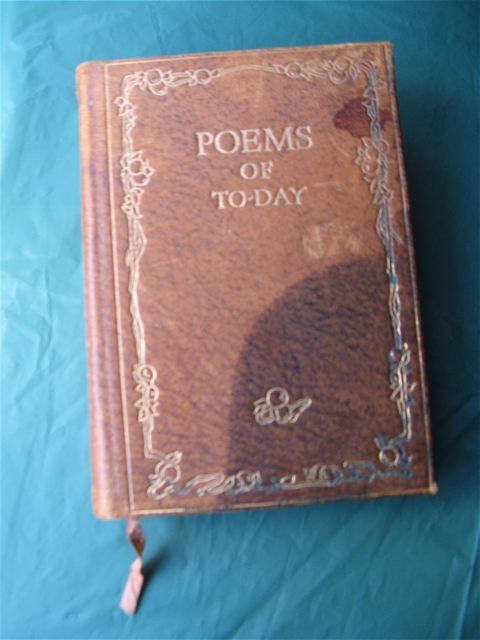
Poems of To-Day… from yesteryear

A while ago, I picked up a book of poetry from an antique bookstore. I often browse in secondhand or antique bookstores for hidden gems among the shelves and on this occasion I found a book called ‘Poems of To-day’ which was published by Sidgwick & Jackson Ltd in 1930. It was such a nice book bound in leather with rough-cut pages, even if tainted by what looked to be a coffee mug stain on the front cover. I flicked through to see if I liked the poems, then deciding that I did, bought it for £2. 

Usually old books of poetry can be hit or miss. I’m not fond of Iambic rhythms, preferring free verse over blank verse and I find that I often have to dig for poems that I enjoy reading, in old books. But as a former archaeologist, I have to admit this makes the discovery of a good read among the rubble even more satisfying!

Poems of Today...from yesteryear

As I was sitting down to my morning coffee, I decided to give this good ol’ mildew-ridden book some attention. It happened to fall open at a poem by Robert Bridges called, ‘I never shall love the snow again‘. If you read it, you might think this a melancholic way to start the day, but I thought the poem quite fitting, not with the weather outside (just because I’m a poet doesn’t mean I have to get melodramatic with it all!) but with the mildew on the cover (but because I’m a poet, allow me to get metaphysical with it all!). Anyway, I suppose poetry trends are ephemeral. Rhyming poetry isn’t as popular these days, at least not with small press print journals and ezines that I’ve read – but is still preferred among my young writers in the workshops I run. Of course, the students are honest that the reason for this is because it saves them having to root around for metaphors or meaning – they can simply take the lazy way out of an assignment and throw together a bunch of rhyming words (I always discourage this as much as possible and instead have them experiment with different forms!) Still, as a writer, I think it’s best to read as much as possible and learn something from even the work you don’t like to read. After all, it can help you gain an outside perspective on your own work.

Resources for Writers and Poets

As every writer knows, it’s easy to spend hours searching for new magazines either to read or to submit work to. I could easily browse the archives at the Southbank Poetry Library for hours, or look about at ezines and while that’s all well and good – after all, a writer needs new markets for their work – sometimes I find the time spent can eat into my writing time. So, to make life easier for myself, here’s a few places where markets, competitions and advice for writers is all just a click away:

Write Out Loud Directory – for poetry resources, festivals, competitions etc.

The Poetry Library – competitions, magazines, publishers (small and major press).

Absolute Write – forums which offer support to all writers, whether novice or pro.

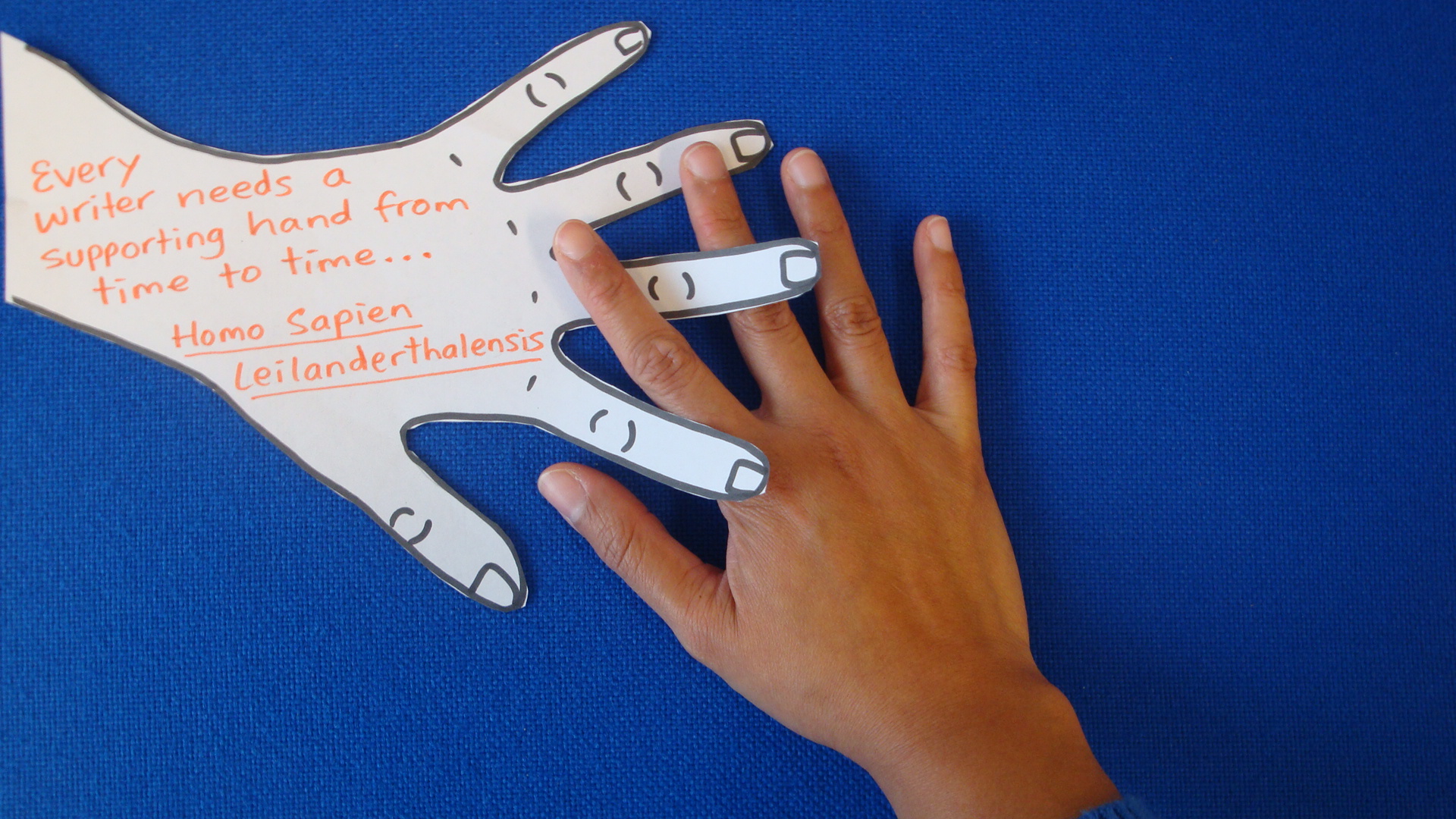
After all, every writer needs a supporting hand from time to time!

A Helping Hand - support for writers and poets

A Helping Hand – support for writers and poets

Insert Coin Here Anthology

Joseph Robert’s latest poem, ‘Chapter Skip, Track Forward, Pause, Rewind, Freeze Frame’ is out in the Insert Coin Here anthology, published by Kind of a Hurricane Press. As an eighties child, I recall (through the mists of time and bad hair cuts, bomber jackets and ra ra skirts) playing computer games until the wee small hours in the attic on an Atari 2000, which was considered the height of technology back in the Stone Age of computers. Nowadays kids would scoff at the idea of a huge box for a computer. Maybe it’s a sign of my impending old age, but when they talk about playing their PS3 all night (it’s probably out of date as I write this, I’ll bet it’s now a PS4), I haven’t a clue about all these modern games. Bring back the old days… who remembers the Star Wars game, or Indiana Jones? I loved blasting aliens and flying around in a spaceship, shut away by myself. I could’ve easily believed I was on another planet…

Back to poetry, before I get lost in zero gravity! Insert Coin here is a good mix of poetry and stories. Joseph Robert’s poems deal with the frustration of rapidly changing technology, which I would agree with and tend to deal with by casual indifference! If I can push buttons and nothing blows up/ breaks down them it’s a win. Apart from Joseph’s poetry, my favourites in this collection are, ‘Poem to the Asshole Blasting Angry Birds on His iPad’ by John Grochalski, ‘Not a Game’ by Linda M Crate, ‘Broken Controller’ by Benjamin Eaton and ‘The End of Folk Songs’ by Darren C Damaree.

Forward Prizewinning poems read by actors

A couple of days ago while I was on my homeward commute, I read an article about the Forward prize for poetry, which was held yesterday at the Southbank Centre. What struck me wasn’t the interest about the prize winners, or even the poetry itself, but rather the outrage from a minority in the poetry community about famous actors reading the prizewinner’s poems.

Hmm. Where does one draw the line between writing verse → perfomance poetry → acting? Some might say it’s different aspects of the same thing. On the other hand, there are many poets (my writer and poet hubby Joseph Robert being one) who refuse to ever read their work live. In this case, I definitely agree that there is a need for actors to read the poems. I don’t think it’s simply about throwing glamour on the whole poetry business  as some poets argued (although admitedly, it doesn’t hurt to have polished professionals publicise poetry – the alliteration was unintentional!) but rather the package as a whole. A few years ago, I watched a professional storyteller read spooky tales to a pub-load of people for Halloween. It wasn’t about his charisma (of which he had plenty), but how he carried his voice, how he engaged the audience, not to mention how he had memorised his lines. Recently, I watched poets reading their work at a literary event, and a few didn’t even glance at the audience once – they simply kept their heads buried in a crumpled up text held by shaking hands.

Of course, not all poets who read live are nervous wrecks, but performance is a bridge between writing and acting, and in that sense I agree with the Southbank Centre’s  decision to use actors. Entertainment is entertainment and I’m sure there were many viewers in the audience who were exposed to poetry they otherwise wouldn’t have bothered listening to, all because a select group of famous people chose to read it. Why not?

Writing groups and forums

About a decade ago, when I was researching publishers to submit to, the best place to find writing advice and support was the Writers and Artists yearbook. No doubt there were forums for poets and writers online but I didn’t know the existence of such things, never mind how to go about finding them. About half a decade ago there seemed to be more and more writing circles; mostly groups of friends or academic poets reading their work to each other for critique. Recently, online groups and forums tend to dominate.

A few times I’ve noticed, on poetry groups in particular, that people tend to post poems for people to leave comments, but more often than not get completely ignored. In one instance, a member had commented about how less and less editors and publishers tended to join such groups. Nowadays, I think people like to find freebies on websites or blogs. They hunt about on their ipads for anything free and downloadable. This is good in the sense that it brings poetry to the wider community, but on the other hand, does anyone apart from other poets read it? And then there’s the stigma attached to freebies; if it’s free does this mean the quality is lower?

Writing groups - to support and inspire you or to make you skim?

Writing groups – to support and inspire you or to make you skim?

It doesn’t have to be so. There are many ezines, which are free to peruse, but yet the work included has one BIG difference from free poetry on online groups – it has a stamp of quality from an editor. Anyone can post a freebie poem or snippet of writing on a community page, but stories or poems appearing on an ezine have been filtered by a publisher, who has painstakingly separated the wheat from the chaff. That isn’t to say that everything posted directly by an author without having gone through an editor’s sieve is of poor quality. But in my personal opinion, if an editor has given the thumbs up, chances are there will be more work worth reading properly and less that merits only a quick skim (at best), which is what I tend to do when browsing writing groups. The work in such places ranges from unedited rough drafts to a polished pieces and everything in between.

So what does it all come down to? A question of time. Since we have become a nation glued to our phones and other various gadgets, it is better to know what is worth an eyeful, and what will only cause an eyesore.  My personal view is that, if it’s an ezine, read it. And if it’s a writing forum, skim for the links to magazines or publishers and skip the free stuff. Then again, it’s a matter of taste.

Booker Prize soon open worldwide

Some interesting news for book lovers recently – as of 2014 an author of any nationality will be able to enter the Man Booker prize. Personally, I think it’s about time. As a firm believer in judging fiction for its literary merit rather than from what country the writer comes from, I’m glad to hear the news that such a huge prize is going equal-opportunities. I feel exactly the same way about other prizes too. I don’t believe that any literary competitions should exclude people based on reasons of sex, age, nationality or any other silly reason. Words on a page are words on a page. Some of those pages have been written with skill and some are a bunch of rubbish, depending on one’s subjective opinion, just as a writer has skill with a pen, or doesn’t.

I can understand the concerns some of the judges have, who worry that if British authors have to compete with a few American giants in the literary world, they’ll not even make it onto the longlist. Why not? That would either bring to mind one of the following: 1) Cronyism is rife and people are hoping to keep things confined within a small controlled niche, or 2) There is a fear to compete with something outside of the box. These are thoughts that cater to writers, not readers. As most editors might agree, many writers can be ‘precious’ about their work. But clearly, the people behind the Man Booker prize are concerned more with what the readers think, not the writers.  At last there seems to be a bit of sense. After all, who buys the books? Not normally other writers.

Readers buy the books and readers read them. I have to admit that the ‘reader’ side of me is inclined to stay clear of anything with ‘Booker winner’ or ‘shortlist’ or any of those advertisements on it. Maybe that’s because as an indie author, I like something a little bit ‘outside the box’. Or maybe I’m a hypocrite, guilty of the very thing I condemned in the paragraph above – discrimination! Whatever the analysis, as a ‘reader’ I prefer to read a book for its craft and its content, not for shiny ‘prizes’. And as ‘writer’ I avoid entering competitions that are for ‘UK residents only’ or for ‘women only’. I might be both of those things, but it doesn’t mean I have a label on my head!

Not a bug bear, but the Book Bear of the Booker

Not a bug bear, but the Book Bear of the Booker

Writing: an introverted job or showbiz?

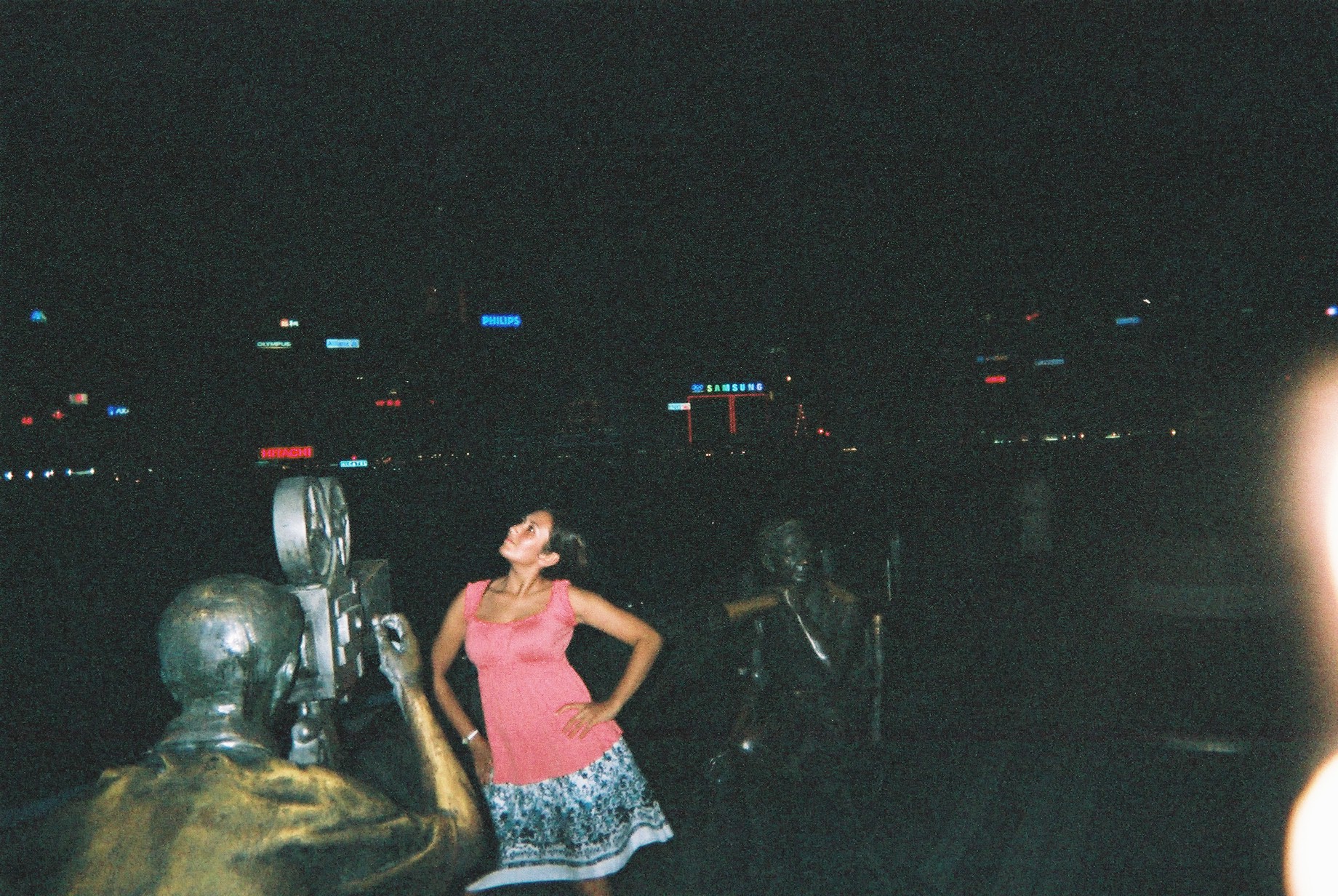
Nowadays it seems that many authors are promoting their work, whether it’s fiction or poetry, at live events. In London, there are so many open mic nights that this isn’t a problem for big city people, but in smaller towns, there might only be one or two events once in a while. As with any profession, there are many pros and cons. The pros are: getting good publicity for your work and selling copies of your chapbooks/ work. The cons are: stage fright! A lot of authors enjoy writing in the comfort of a nice, quiet spot at home, but can be reticent to get out there and promote their work (I procrastinate at this myself). In fact, it brings the question to mind, is writing an introverted profession or is it a minor kind of showbiz, a bit similar to acting? In my experience, the best performance poets or prose writers were actors, or people who were used to reading on the radio. It takes skill, not only in entertaining the audience, but in rhythm, timing and delivery. And then there’s book signings: talking to the public, engaging their interest in your subject matter. Get used to muscle cramps in your cheeks from smiling and be prepared to skip your lunch break!

Writer at work: an introverted job

Writer at work: an introverted job

Not to complain, however, it’s all part of the fun. I suppose with any profession a good balance is key. Take the introverted side as it comes with the extroverted promotion: after all, a writer might write, but if they don’t promote, they don’t sell.

Writing as showbiz: in the limelight or not?

Writing as showbiz: in the limelight or not?