
This summer, among other things, I’ve been focusing on my health. Travelling is always tricky for maintaining a low carb diet, particularly when raised cortisol from lack of sleep doesn’t help matters, and convenience foods tend to be high carb. Cortisol increases fat storage in the body, and high-carb convenience foods fuel glucose-burning. So, what can be done to counter all the holiday-mode foods?
In my case, some educational reading in the form of non-fiction weight management books, post-holiday. Recently I’ve read two. Here are my thoughts:
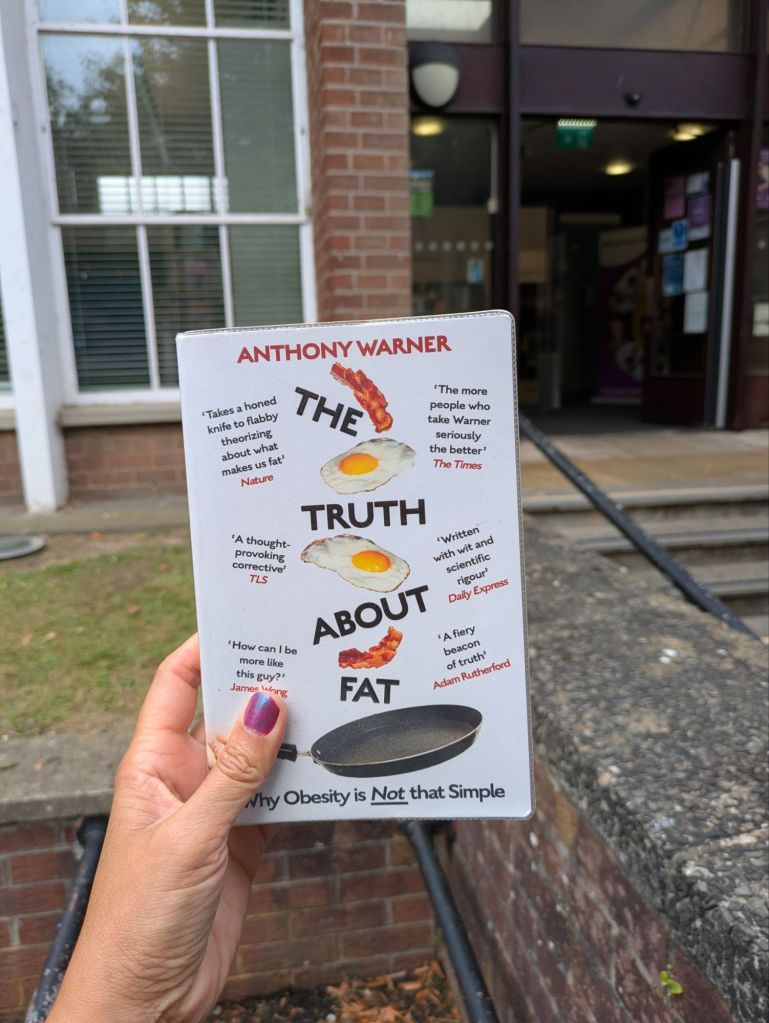
The Truth about Fat
I borrowed ‘The Truth about Fat’ from the local library. I picked it up because, rather than being written by a doctor, dietician or nutritionist, the author is a chef and I wanted to know the perspective of someone who makes a living from preparing food on the root cause of obesity. My biggest takeaway (err, pun intended!) from the book was how the World Health Organisation changed the BMI category for overweight individuals from 26 down to 25, for the simple reason that 25 was an easier number to remember. Making doubtless millions of individuals feel that they are overweight simply to lower a number to something easier to remember is reckless; it causes untold psychological damage, even to a logical-thinking person who knows that BMI should be taken with a pinch of salt. I myself fall into that category as my BMI tends to be around 25.5 or so, unless I go on a very strict keto diet combined with intermittent fasting. The Truth about Fat thankfully raised awareness of this sly change on the part of the WHO.
A downside of the book was that I felt it focused more on ‘fat acceptance’ than looking at ways to lose weight and improve health. Whilst I think it’s important to stop body shaming larger physiques, I think that stating how some people are overweight simply because of genetics, and therefore can’t fight nature, isn’t going to help people to lose weight. It’s an undeniable fact that obesity leads to health problems; I myself had blood pressure and joint issues when my BMI was over 30. Losing weight is choosing health, not body shaming larger people. It’s also interesting to note that the chef author admitted that he has always been a healthy weight, and therefore can’t speak from the perspective of an obese person wanting to lose weight or feeling unhappy at their size.
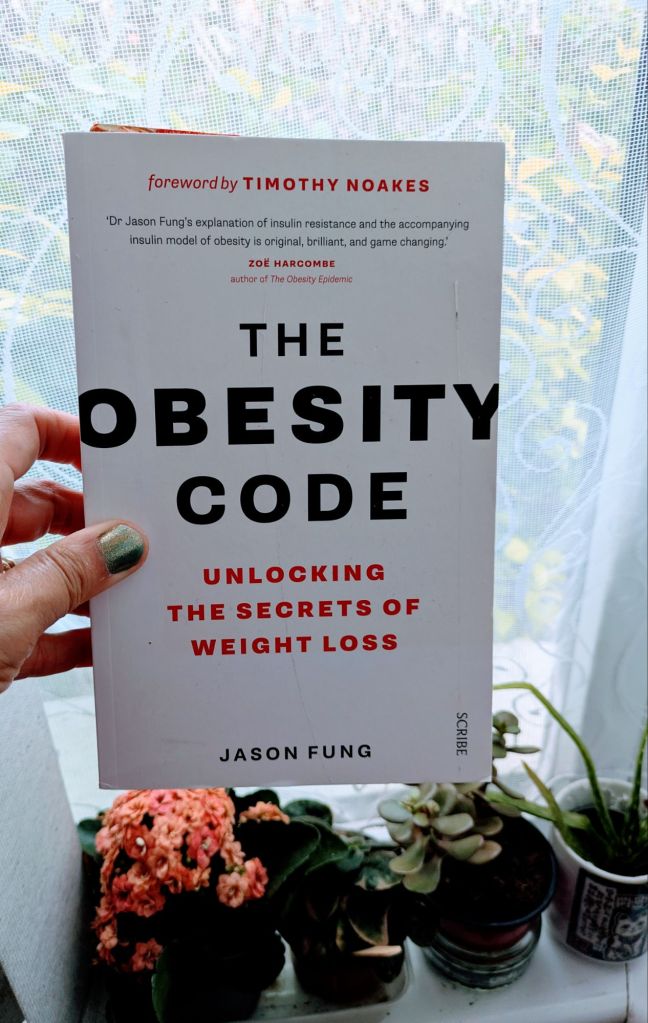
The Obesity Code
The Obesity Code is a much better book for understanding and tackling obesity. This is written from the perspective of a doctor who, at one point, was overweight himself and concerned about his health. Most of the book details the reasons why obesity has become a problem since the 20th century as well as considering genetics. As someone who has insulin resistance and struggles to keep my weight at a healthy level, I found the advice in the last third of the book of most use. Here, it discussed intermittent fasting including studies done in Minnesota and Pennsylvania on calorie reduction, starvation experiments and fasting for extremely obese patients. The argument for me is convincing that not only will longer fasts of 24 or 36 hours not be detrimental for muscle loss and mineral depletion, but will actually help to overcome insulin resistance and weight loss plateaus. I have been following some of the suggested recommendations for building up to a 24 hour fast. I haven’t been hungry, haven’t had any brain fog and I’ve been sleeping better since increasing the length of time I’ve been fasting. I’ve also had energy while exercising during my prolonged fasts. It’s important to note here that, after breaking my fast I continue to eat low carb foods in small portions; studies that have stated how fasting contributes to weight gain not loss are based on individuals who binge-eat junk food after their fast. Of course anyone would gain weight if they eat high carb and sugary junk regardless of whether they fast or not.
Results of my prolonged intermittent fasting plus low carb dieting?
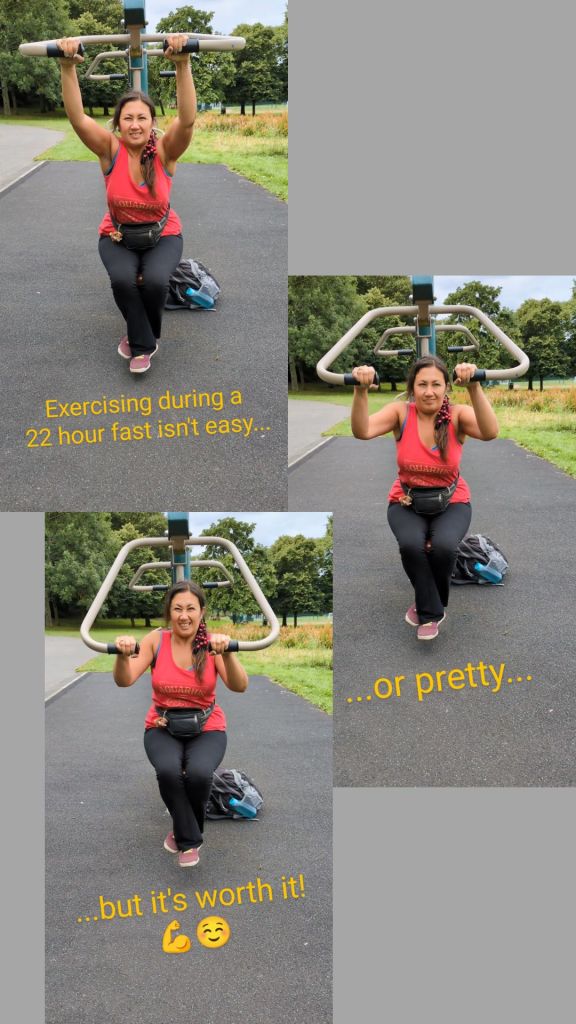
It’s too early to say whether I’ll lose weight from my extended fasts combined with keto dieting, but I’m hopeful – or maybe desperate, since my weight has been steadily increasing this year. I’ll add an update at a later point about the results of my eating plan to let any curious readers know.

 Leilanie Stewart