How to be a good novel writer

You know what? This post is mostly a checklist to myself to keep me on the straight and narrow, but if it helps you – great! So, here goes:

Read widely:

This might seem self-explanatory if you wish to be a writer, but you wouldn’t believe how many writers I’ve met who have said they don’t read much; instead they want to write the books that haven’t yet been written. It’s true that a prime motivation of a writer is to write a story that hasn’t yet been told, but in order to become good at your craft, a writer should read often and widely. My preferred genres to read are psychological fiction books and supernatural horror, but recent reads have included Sci-Fi/dystopian and Urban Fantasy.

Write regularly:

I would be lying if I said I wrote everyday; having a young child often means that childcare takes priority. When I have time to write, I try to squeeze in a minimum of a paragraph. I don’t tend to set time constraints, as I find that a rather rigid and inflexible aim. Instead I aim to progress the plot by even a smidgen; I also count cutting parts that I feel irrelevant to the plot or characterisation as progress towards the ultimate goal of finishing a novel-length manuscript.

Use your chapter plan:

In my blog post on Outlining and planning a novel, I talked about the importance of using a notebook to plan chapters, characters and research. I always refer to my chapter plan notes to avoid straying from the main storyline (one or two red herrings can enhance a story. Too many can detract from the plot and annoy the readers). Once I have finished a chapter I tick it off in my chapter plan notebook and mark the date. Doing so also makes for a satisfying record of completion.

Accept feedback:

Once finished, find yourself an editor, or at the very least a competent second set of eyes to look over your work and catch mistakes. I find that after six months or so of writing a first draft, I ‘burn out’ on the story in the sense that I can no longer see the flaws. A good editor will lovingly point out any inconsistencies in the plot, characterisation in addition to spotting any typos. All writers need an outside perspective to improve their work.

Outlining and planning a novel

Do you want to know something really crazy? I have written five novel manuscripts (two of those published, one binned, one on submission and one forthcoming later this year) and it has only been a few months since I finished writing my most current novel work in progress (WIP#4, my supernatural horror), but I still find novel planning hard. It doesn’t get any easier, no matter how many books I write.

A friend recently asked me, on behalf of her daughter who wishes to become a writer, what advice I could offer about the writing process. This got me thinking about all that is involved in writing a novel, which is no small endeavour, let me tell you. Since it got me thinking about the process, I’m in the mood to be systematic, so let me share my experience with you.

1. Basic synopsis/premise

My first piece of advice is to always carry a notebook, as you never know when inspiration may strike. I have a dedicated notebook for all my novels and jot down any ideas, however great or rubbish they may turn out to be. Get it out of your head or you might well forget it. Now, what is the story about? Jot down a few sentences as a summary of your concept. You don’t even need to have decided on a title at this stage – work in progress is fine. As an example of the premise for my recently published novel, The Buddha’s Bone, I jotted down that a university graduate goes to Japan and is out of her element with culture shock and the language barrier. Of course, this story took a darker turn as the book unfolded, but my basic premise was about the main character navigating her new life in a foreign country.

2. Chapter planning

Once I’ve got my basic premise sketched out, I like to start chapter planning. I don’t always plan in order, but I try to jot down what I want to happen in each chapter in a few sentences. Leave gaps or a few blank lines under each title number so that you can write ideas later as your plot unfolds. Here’s a sneak peek into the chapter plan for my debut novel, Gods of Avalon Road, an urban fantasy/paranormal romance book, which started life with the working title, Kerry’s Flat:

Chapter plan for Kerry’s Flat, which became my debut novel from Blossom Spring Publishing, Gods of Avalon Road

3. Character development

What age is your main character and, if relevant, main villain? What is their job? What country/city/place do they live in? What is their primary motivation in your story? What do they look like and is their appearance relevant to the plot? I like to think that I know my characters as if they were real people. You should know things about them even if you aren’t going to use those details in your story; it gives your characters more emotional resonance in the book if you know why they react as they do.

4. Point of view/style

Are you going to write in first person (I) or third person (he/she/they)? I chose to write Kimberly in The Buddha’s Bone in first person as, being literary and psychological fiction, I wanted it to feel personal, almost like a soliloquy at times, whereas I wrote Kerry and Gavin’s alternating POV’s in Gods of Avalon Road in third person to capture the action. What about past tense or present tense? What fits your story best? Did it already happen, or is the reader experiencing it in the moment?

5. Research/notes

I like to flip to the back of my notebook to jot down research. For Gods of Avalon Road, I had to research occult rituals and pagan incantations. I also had to brush up my knowledge of the Roman occupation in London and life in ancient Britain. I took photos of artefacts at the British Museum and Museum of London and visited locations, timing the distance to walk between streets.

Research back in 2013: Battersea sheild at the British Museum, used for description in Gods of Avalon Road

Once I have done all of the above, I like to get stuck into typing my first draft. A work in progress can change a great deal from the first concept to the finished manuscript, but if you have sketched out your ideas at every stage, you can use that as a checklist later. I tend to go back through my chapter plan later and write in red pen the date on which I finished each one, as this gives me a time frame later for my own reference. Hope all this helps you too on your own writing journey.

Novel research for WIP#5 and WIP#6

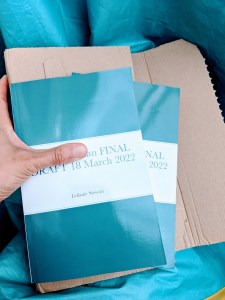
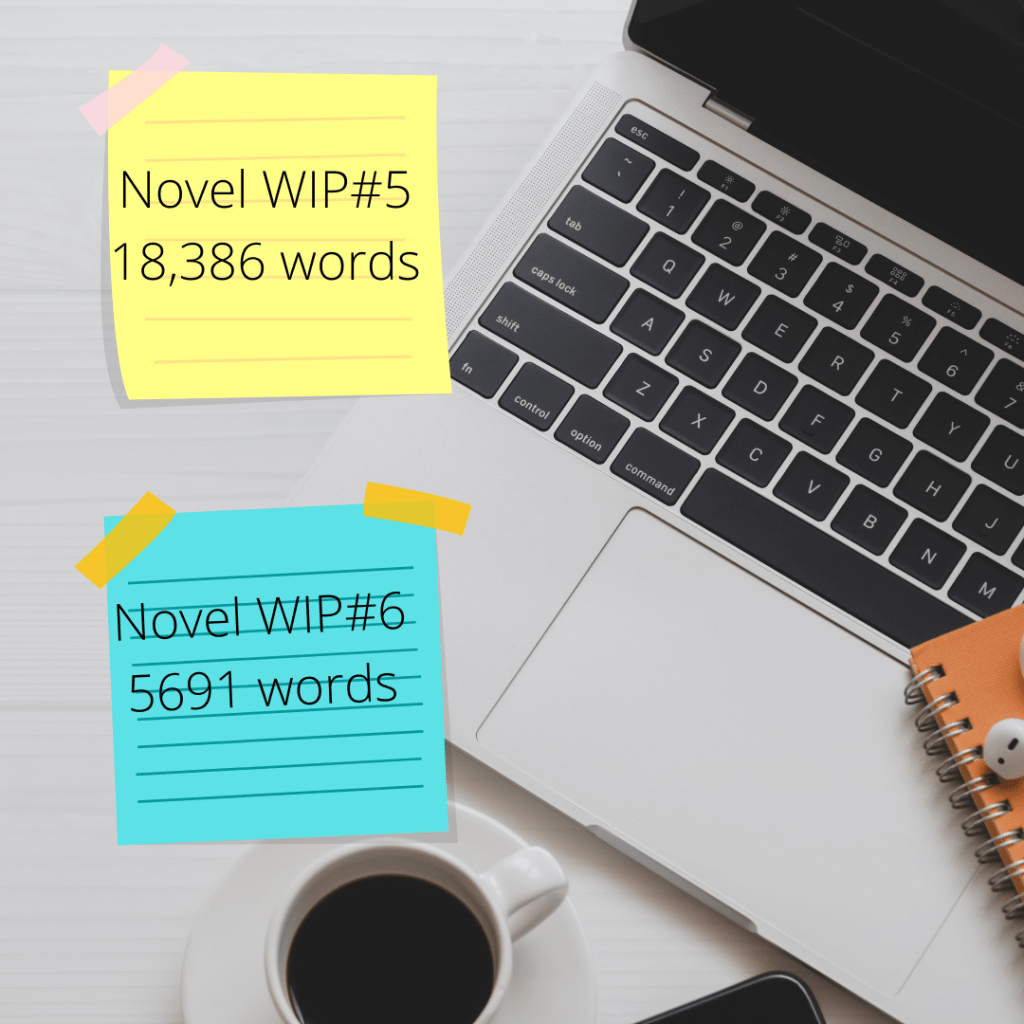
Now that my supernatural horror manuscript (novel WIP#4) is complete and off to the printer for my editor to check, I have begun research for my next two novels. Did I mention that novel WIP#4, 5 and 6 are all part of a supernatural series set in Northern Ireland? Well, now you know!

Pictured above is the product of an afternoon spent doing research in the library. I have a lot of homework to do for background on the forthcoming two books in the series. If you read the titles, you might have an idea of some time periods that will be appearing in these books. It has been a long time since I studied John De Courcy and Edward the Bruce’s conquest of Ireland. But it has also been 9 years since I have done any historical research for a book – the last time being my research on Roman Britain back in 2013 for Gods of Avalon Road – and so I am excited for my new projects.

I haven’t decided the order in which I’m going to write these books. I might begin both simultaneously and see which grabs me the most. For now, I’m getting stuck into my reading homework and planning my chapter outlines in the notebook pictured above.

I’ll keep you updated on my progress. Novel WIP#4 will be released in October this year. If all goes to plan, novel WIP#5 should be ready for publication in 2023 and #6 in 2024. One thing for sure is that, no matter what, it’ll be a literary adventure.

Sugar withdrawal and brain fog – bane for a writer

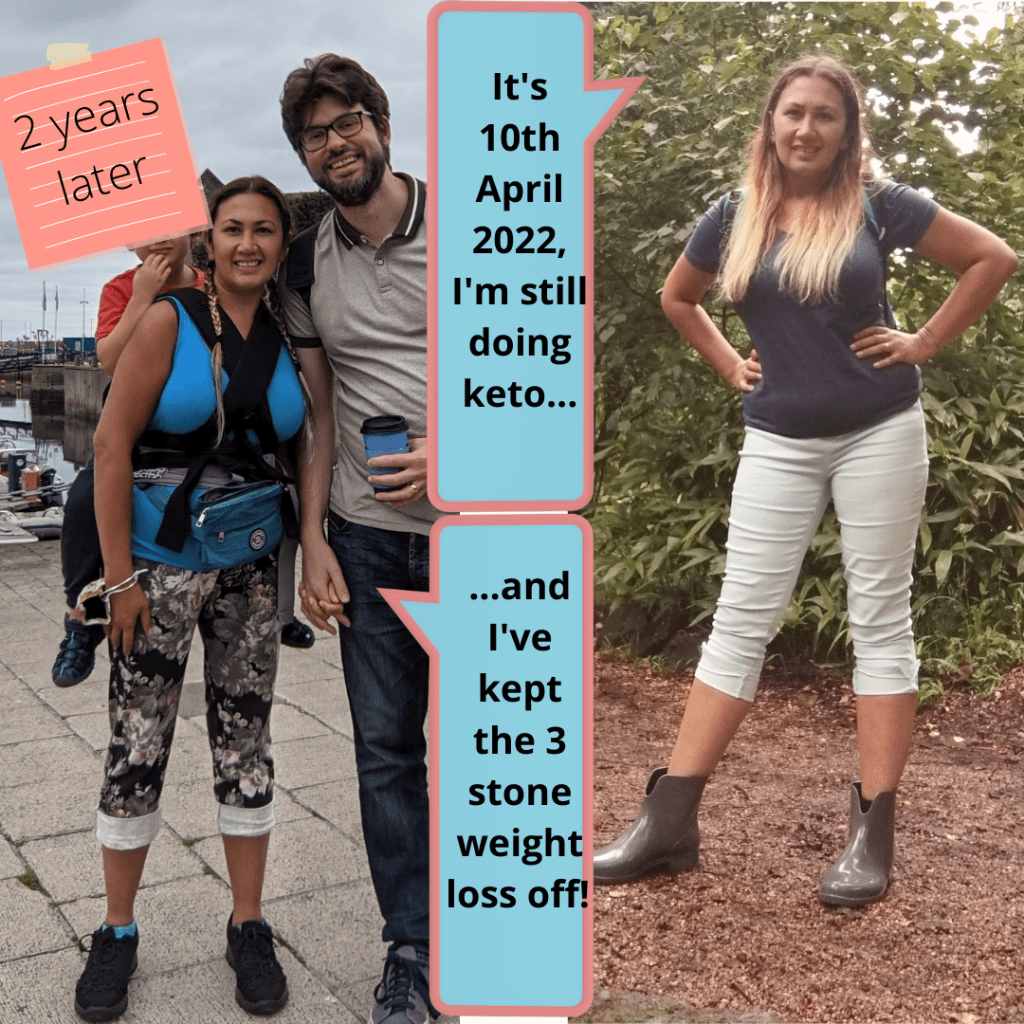
Since last Tuesday, I’ve been back on the keto diet now that my birthday cake from last weekend is behind me (on my butt, literally, as I’ve gained 18lbs in weight since before Christmas 😭). To date, getting my body into ketosis is the only way I have found to manage my sugar and carb cravings.

Sugar withdrawal is horrible. My brain, deprived of its fix, has tried to trick me into eating sugar by subconsciously swapping the breakfast bowls so that I could eat my husband’s sugary one – luckily I caught this at the last minute. On Friday at work, while distractedly chatting about dayjob related things, I absentmindedly walked away from the staffroom table with a box of biscuits ready to hog them all myself – and consciously had to return them (uneaten) to the table. My cravings have ramped up so that I’ve almost cracked and given in a few times and it’s getting harder to stay strong. Since Thursday, I’ve had the worst fatigue and leg cramps from electrolyte imbalance; drinking salt tea has helped. I’ve also had horrible brain fog; I haven’t been able to concentrate enough to write, or even read. Other symptoms I’ve had are nausea, shakes and cold sweats, not to mention mood swings that put PMS to shame.

Weight gain in isolation is not the impetus for me to control my sugar addiction; I am not superficial enough to care about an expanding waistline alone, frankly. However, getting fatter is a visual reminder that I am now, at this point in my life, insulin resistant. In a way, my weight gain has done me a favour by highlighting that I have a problem.

This weekend I’ve been working on eating regular healthy snacks that are still low in carbohydrates: Greek yogurt with a small amount of berries, walnuts and Brazil nuts when I’m peckish. Once I’m past the keto flu, I’m planning to incorporate intermittent fasting just to give my digestive system a detox. But it’s early days yet. One step at a time. For now, I need to get my body out of the metabolic mess that my sugar addiction has caused.

The difficulty with sugar addiction is the social pressure; in many situations, if you refrain from sharing in sugary junk food, you’re treated as a health-food nut and therefore a social pariah. Can you imagine telling someone who has recently quit smoking that they absolutely need to have a drag – just one – it won’t hurt? No, of course not! But we don’t hesitate to shake the biscuit tin under a sugar addict’s nose and tell them to, go on, have just one – only one won’t kill.

I have come to accept that I am going to struggle all my life with fluctuating weight gain and loss as a result of struggling to control my sugar addiction. It’s not an excuse for bad eating habits; in our modern society, sugar is in everything. It’s in condiments. It’s added into jars of sauces. It’s hard to abstain completely without eating only whole foods everyday indefinitely. Unfortunately that simply isn’t practical for me in reality. All I can do is try to manage my addiction. As much as I love keto, it’s not realistic for me to stay on it long term as it’s so restrictive. I might try to stay on a modified paleo diet in the long term, but it may take a while to find the right balance. Wish me luck. 🤞

Read all my other posts on my keto journey and struggles with sugar addiction here.

Writer Promo Friday – part 1

This is my first post for Writer Promo Friday, just to give back to recent followers I have met through Instagram, in the spirit of authors supporting authors. All of these writers have supported my writing through either following me on Instagram (@leilaniestewartauthor), engaging with my posts, or writing reviews of my books and I want to promote and share their books with you too. So, here are the links to buy their books:

Haints by Meghan Palmer

Game of Mass Destruction by Chloe Gilholy

Temple of the Storm by Robbie Ballew

Free Me by Megan A. Dell

Becoming Ruthless by Rita H. Rowe

Comma by Hope McCain

Selling poetry versus selling fiction – a world of difference

I’ve had a few interesting conversations recently with fellow poet and novelist connections, after I wrote my recent post on Author promotion and social media, and it got me thinking about the differences between selling poetry books versus selling novels, novelas or short story collections.

If you aren’t familiar with my published work, I’ve had three poetry collections traditionally published, one novel hybrid published, and one novel self-published. In my experience, there has been a vast difference between the marketing strategies that worked, or didn’t work for each book. Since it’s easier to explain things if you can see them visually, take a look at this table I’ve made:

You can see here what worked and didn’t work for me. For the purpose of the data comparison above, I haven’t included sales by friends and family, only new customers. Let’s have a look at the break-down of the table above and why some strategies work for poetry, but not fiction – and vice-versa.

Open mic nights

This one is simple: open mic tends to be for poetry and not fiction. This could be because poetry is generally shorter and therefore easier to read within a time limit, or because it evokes an emotional response from listeners – I could digress theorising – but the fact of the matter is that I’ve read poetry, short stories and novel excerpts at spoken word events, but have only ever sold poetry, not prose, at live readings. I have sold many dozens of poetry books through open mic nights, book launch readings at pubs, libraries and literary festivals – but no fiction. Since my recent second novel, The Buddha’s Bone, is a novel with poetry interspersed throughout (as the main character is a poet) I experimented recently by reading my character’s poems at a poetry event. This went down well with the audience, and gained me some publicity, but didn’t sell any books.

Book signing events

For the purpose of this comparison, I’ll look at both my debut poetry collection and my debut novel. This is hard to compare as honestly in my experience, it depends on the book store running the event. For my debut poetry collection, held at Borders Books in Cambridge (which, sadly, has long since gone into administration) I sat at a desk for eight hours and sold eight copies of my book to eight strangers. For my debut novel, Gods of Avalon Road, I held a signing event at Waterstones Belfast, and was allocated an evening slot of two hours, during which I sold ten copies to friends and family (I only had 10 copies with me… and had to direct a few to buy online), but sold none to new customers. Do sales by friends and family count? Since writing is my business as well as my passion, I’m going to say no, for the purposes of this blog post – which is about reaching new readers through trying different marketing techniques. Why my poetry books have fared better than my fiction at book signing events could be because, as a niche interest, maybe poetry lovers and readers who saw the event advertised made the trip specifically to buy it? That would make sense if you consider the size of the poetry section in a bookshop; there could be a personal factor to a poet doing a signing, perhaps? Is it more of an intimate experience for a reader to hear a poet read sample poems aloud, maybe? Whereas with an author sitting alongside a table of novels, maybe customers see yet another novel in a store full of novels. Or is it simply not as interesting for customers to listen to a novel excerpt generally; is a book something a reader would rather pick up and read a snippet of alone, perhaps? Who knows?

Online retailers

Isn’t it interesting how readers are willing to buy novels by a new/unknown author when book shopping online, but not a new/unknown poet? All of my sales for my second novel, The Buddha’s Bone, have been entirely through online retailers – none have sold through live events. Yet the opposite is true for all three of my poetry books: I have primarily sold my collections at live events and very few through my own online shop. I’d be interested to hear from any authors who are poets as well as prose writers who have had different experiences – feel free to comment below.

Local bookshops

Over the years, I’ve had a few copies of my poetry books and novels stocked in various local bookstores in whichever city I happened to be currently living in at the time. I can honestly say that my poetry books haven’t sold, with the exception of one that was stolen (as told to me by a rather embarrassed book seller). I suppose that’s a compliment since someone clearly liked my book, but it left me out of pocket because they were out of pocket and didn’t pay for it! On the other hand, my debut novel sold all of the copies that I had left in stock at the local Waterstones over the Christmas period in the year it was released (2019). I’m guessing that the difference is that poetry is a niche interest for most folks, whereas my urban fantasy novel, filed in Sci-fi and fantasy, offered wider appeal. These are just my thoughts, but that seems as likely an explanation as anything. Or it could be for some of the reasons I highlighted above: that if poetry is seen as more intimate and personal, part of the experience of buying it is to hear the poet read it first in order for a reader to really immerse themselves in the book as a whole, whereas a novel becomes yours in the sense that the reader uses their imagination to bring the characters and settings to life. What do you think? This might be a topic that requires a poll. The results could be interesting; or at the very least, shed some light on reader habits that might help authors to target their marketing campaigns.

The Buddha’s Bone on Bargain Booksy

The Buddha’s Bone is up on Bargain Booksy today under Literary fiction deals. If you haven’t already grabbed yourself a copy, you can check it out here.

If you’ve already read The Buddha’s Bone, please consider leaving a review on any of the online retailers where you got your copy. It really helps my book reach other readers and gives it more visibility. Even a star rating on Amazon.com, Amazon UK or Goodreads makes a difference!

Supernatural horror manuscript update

I’m happy to say that I have finished my red-pen revisions for novel WIP#4 this week. They aren’t typed up yet, but it’s a relief to have finished those – and just in time for a well-earned family mini-break this weekend to celebrate my birthday.

I think I’m a bit cruel to myself. Check out the number of sticky-tabs marking the pages with red pen. I’m being glib, of course. As a writer, how can I expect to improve my craft if I don’t give it the red-pen treatment?

I have come a long way with my approach to editing a manuscript. About a decade ago, I hated editing with a passion. Back then, I enjoyed writing a novel, but not revising it. Once a final draft was complete I wanted it done – finished – published. Out into the world and onto the next project.

Producing a quality book simply doesn’t work that way. Wouldn’t it be worse to find typos, or worse – plot holes – in a book after publication? It sends a shiver down my spine to even think about it. Luckily I now have myself an editorial team ready for my current manuscript, to give it the once over after I have typed up the red pen amendments – next week, of course!

The Buddha’s Bone reviewed on Rita H. Rowe’s blog

Many thanks to Rita H. Rowe for her fantastic 5 star review of my book, The Buddha’s Bone. You can read it on her blog, on Goodreads and on Amazon.

Overall, Rita felt that The Buddha’s Bone was “a sometimes confronting and thought provoking piece of work that enmeshes the reader in the darker side of life”.

Rita is also a fellow author of novels, Becoming Ruthless, The Bad Seed, Never the Moon and She Remembered. You can follow her on Instagram and on Goodreads too.

Author promotion and social media

This week I’ve been getting quite philosophical. The beginning of a year is as good a time as the end to reflect. I had been thinking about twenty years ago at a time when I had been submitting a children’s novel I had written during my second year of university. Back then, it wasn’t a requirement for authors to have social media platforms to promote their work; in fact, most of the usual platforms such as Facebook and Twitter, didn’t yet exist back then. Nowadays it’s quite a different story. If an author approaches a small press publisher, more often than not, they’ll be asked for the URLs for their social media accounts and a brief run-down of how they intend to promote their work. I can’t count how many times I’ve had to provide links to all my social media accounts when submitting a novel manuscript to a potential publisher.

Personally I use Facebook, Twitter, Instagram, YouTube and Goodreads to share updates on my writing; but by no means do I expect this to result in guaranteed sales. Social media is what it is – social. I enjoy mingling with the writing community on Twitter and Instagram. I’ve found some of my ARC readers through those platforms, which has been very helpful for an Indie author. As an introvert, I enjoy the social connection with book bloggers, readers and writers who I don’t otherwise know in the real world. I’m happy that my Instagram and Twitter accounts have organically grown over the past three years since I’ve set up both accounts. Check out my first introduction post on Instagram yesterday for my new followers.

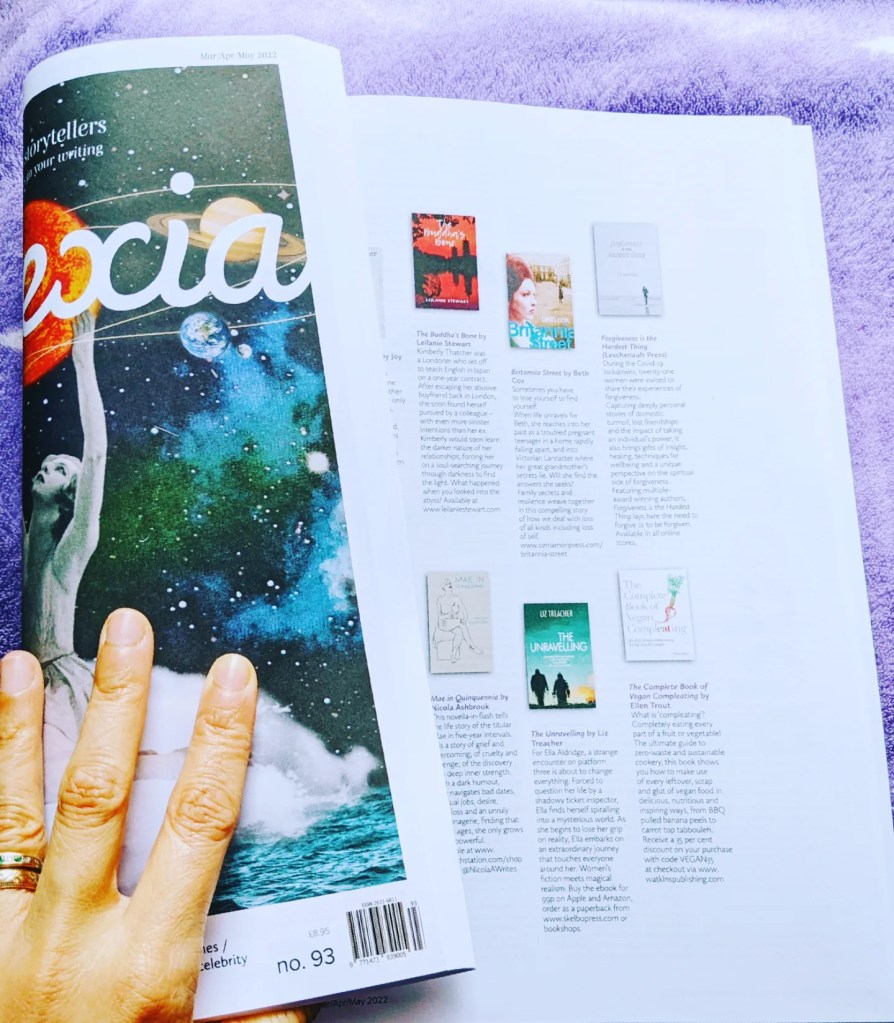
I still do feel however, that if an author wants any real sales, investing in advertising is the best way forward, rather than relying on social media. I’ve made some awesome bookish friends through Twitter and Instagram, but ultimately I channel my energy into KDP ads, Bargain Booksy promotions, Ingram Advance advertising and more recently an upcoming print ad listing in Myslexia (which will be appearing in the March 2022 issue), to sell books. Is social media necessary for an author though, in this day and age? It’s hard to say, since I don’t personally know any authors who haven’t at least got a website. The fact of the matter is, if a reader wants to know more about a book or an author, the first place they’ll look is on Twitter, Instagram or Facebook. I know I do, so having a digital footprint does matter; at least, to a certain extent. It’s hard nowadays to be truly reclusive anyway, isn’t it?