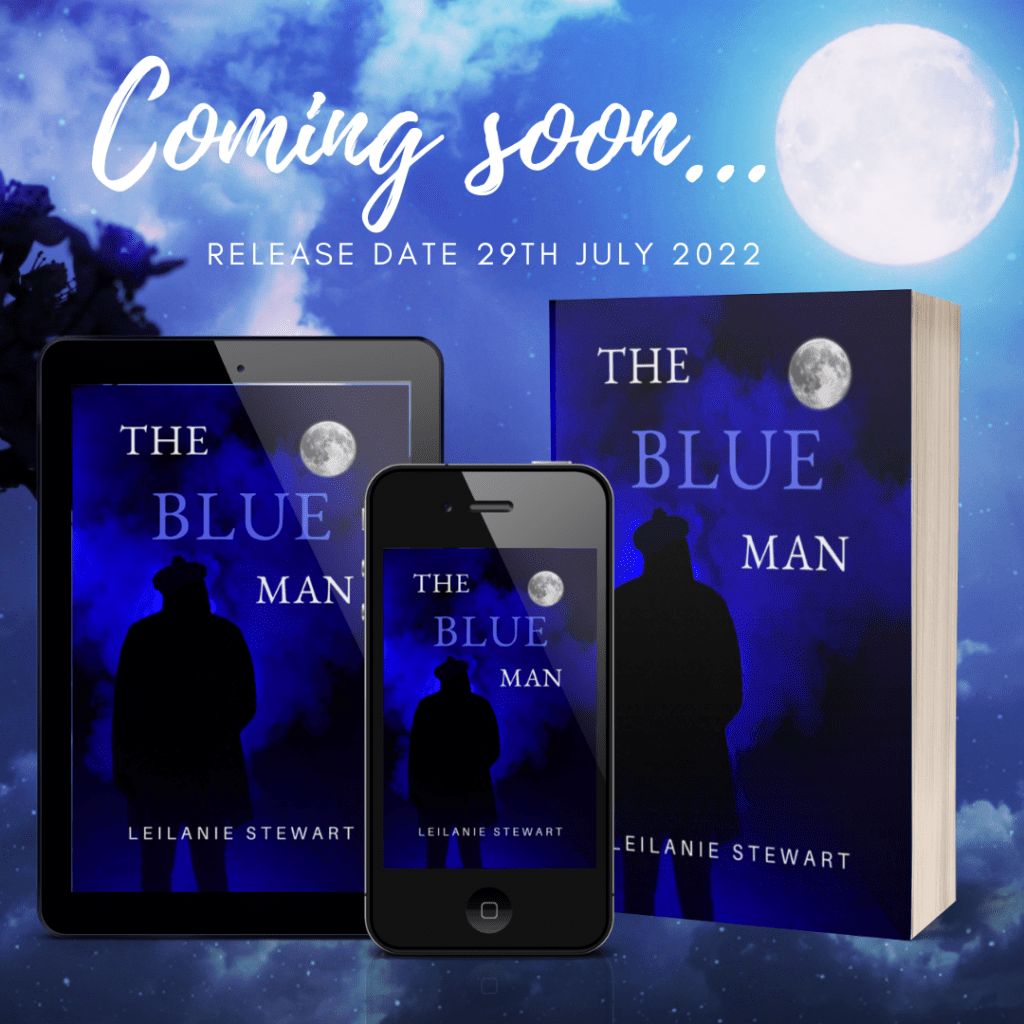
Cover reveal! My third novel, The Blue Man, is now available for pre-order.
It’s a psychological horror – here’s the back cover blurb:
Two best friends. An urban legend. A sinister curse.
Twenty years ago, horror loving Sabrina told her best friend, Megan, the terrifying Irish folk tale of the Blue Man, who sold his soul to the Devil in vengeance against a personal injustice. What should have been the best summer of their schooldays turned into a waking nightmare, as the Blue Man came to haunt Megan. Sabrina, helpless to save Megan from a path of self-destruction and substance abuse as she sought refuge from the terror, left Belfast for a new life in Liverpool.
Twenty years later, the former friends reunited thinking they had escaped the horrors of the past. Both were pregnant for the first time. Both had lived elsewhere and moved back to their hometown, Belfast. Both were wrong about the sinister reality of the Blue Man, as the trauma of their school days caught up to them – and their families.
Why did the Blue Man terrorise Megan? Was there more to the man behind the urban legend? Was their friendship – and mental health – strong enough to overcome a twenty year curse?
The Blue Man will be released on 29th July. More soon…
Finding ways to promote your work as an author with a book in an endless sea of new books is rather like getting caught in the swash and backwash at times. How do you ever get your book out into the wide ocean if it can’t even leave shore?
Since The Buddha’s Bone was released back in October, I’ve placed a few advertisements in KDP Sponsored ads, Ingram Advance Catalogue, Bargain Booksy and Myslexia. These have helped to get my book in front of readers, and my sales peak on days when I run promotions – though sadly I have no money tree in my garden to keep doing this on a regular basis.
Recently I decided to enter a couple of novel competitions too, in an attempt to garner more publicity for my work: the Rubery Book Award and the Bath Novel Award. I chose these two after considering the balance between payment and expected outcome: the reasonable fee for each was worth the opportunity to get my work in front of a new audience; in this case a panel of judges. For reference, I paid £44 for the Rubery Book Award and £29 for the Bath Novel Award.
What now? The longlist for the Bath Novel Award is due this month, and winners for both will be announced in July, so it’s a short wait for me. Regardless of the outcome, it was an experience worth doing as I have learned about the process involved in relation to entering future books into novel competitions. Either way, I’ll be writing another post on the topic, if you’re interested.
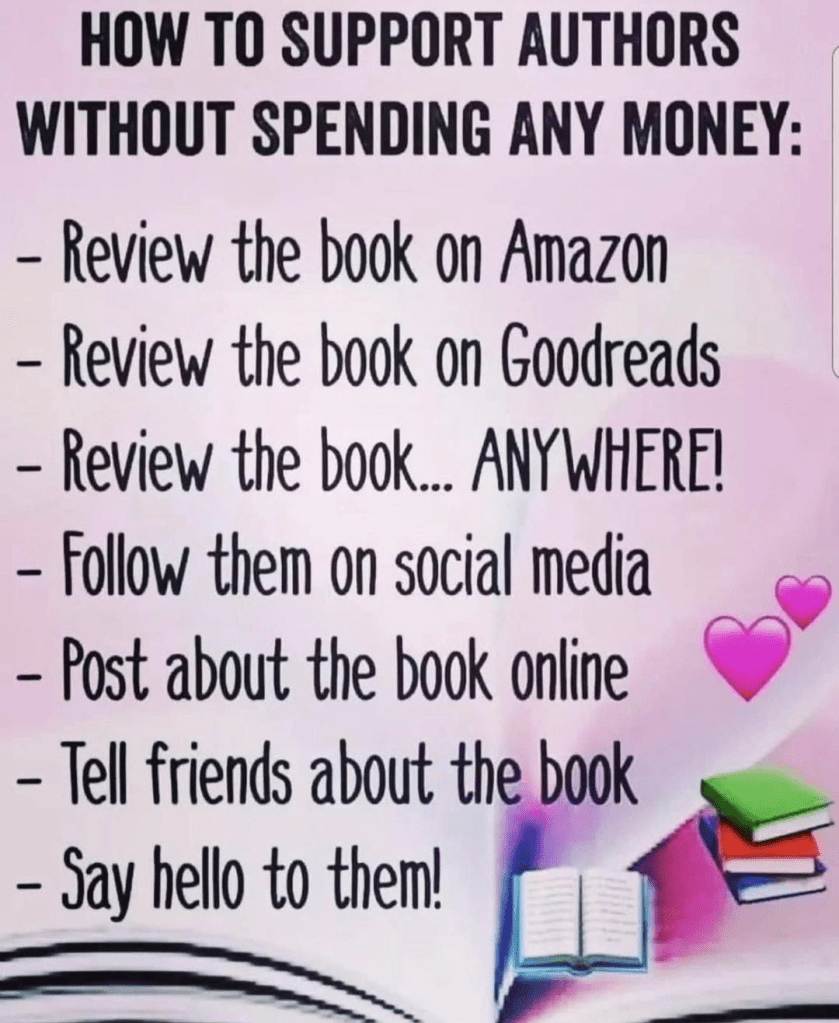
What constitutes supporting an Indie author? Let’s ponder a few scenarios, shall we?
1. If you buy a book by an Indie author you know, but don’t read it, are you supporting them?
2. If you buy a book by an Indie author you know, and read it but don’t leave a review, are you supporting them?
3. If you buy a book by an Indie author you know, read it then tell a friend about it, are you supporting them?
4. If you buy a book by an Indie author you know, read it and write a mediocre review on Goodreads/Amazon, are you supporting them?
5. If you don’t buy a book by an Indie author you know, as it doesn’t sound like your thing, but you like their posts on social media and help promote them, are you supporting them?
Read on down below if you want my thoughts…
Number 1 = Heck no! If I buy a loaf of bread, but don’t eat it, it goes to landfill and damages the environment. An unread book is similar; you’re wasting precious resources. Give it to someone who cares.
Number 2 = Yes, somewhat. Actually reading it supports their writing, though you could do one better and help spread the word.
Number 3 = Yes. Hooray for you, what an awesome Indie supporter you are!
Number 4 = Yes, absolutely. Even a mediocre review shows that you engaged with the book.
Number 5 = Yes, and you’re supporting them also by not patronising them – if you don’t read their genre, but you still help promote them, that’s a better tip of the hat!
About a decade ago, I was working in a secondary school in London and running a creative writing group for gifted and talented young people. The teenagers for this group were recommended to me on the basis of their skills in English. They were all A grade students for a start. A few were interested in becoming writers, or had already been dabbling in poetry and fiction. All showed talent in the group and were knowledgeable about the basics: point of view, characterisation and plot for fiction and the different forms of poetry when writing verse. Yet after the group ended, only around 3 or 4 out of say 10 would continue writing when I checked in in subsequent years until they finished their high school education. Out of all the many dozens I worked with over the years, two contacted me to say that they had since been published: a poet in a couple of print and online literary journals in the UK and US and a crime fiction writer who enrolled to study creative writing alongside her main degree in Criminology at university, who then went on to have stories published in her university’s creative writing magazine.
Am I proud of the young people I have worked with over the years? Hell, yes. Do I take credit for their published work? Absolutely not. Does talent in creative writing matter? It certainly helps. But is it the only thing that matters? No way!
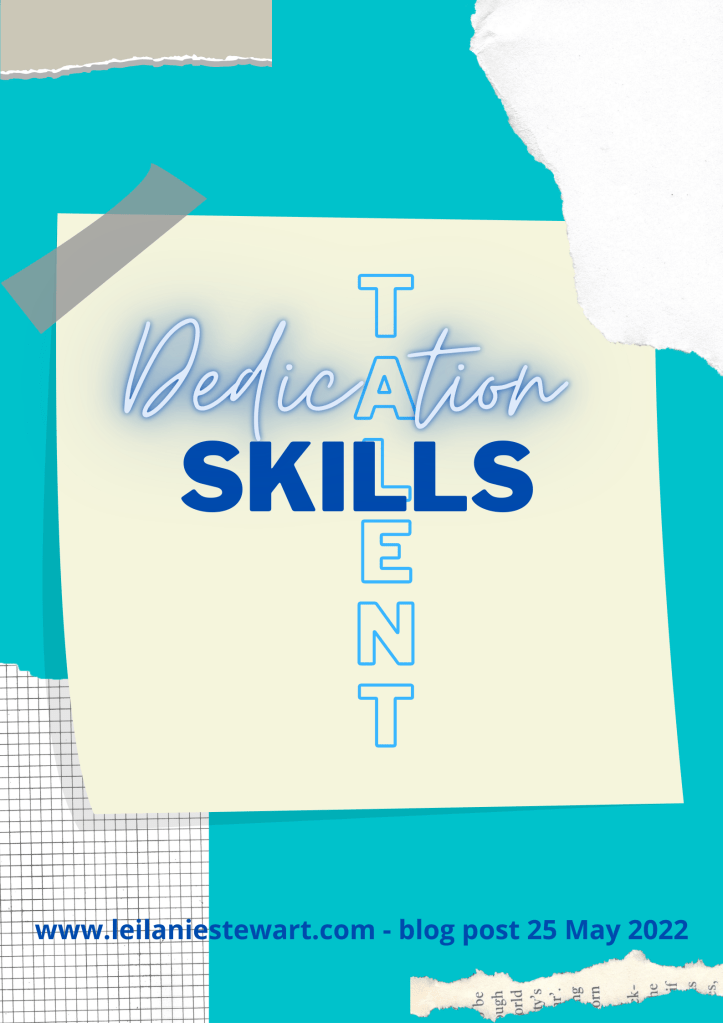
In my experience, skills are more important than talent. If you have raw talent as a writer or poet, but don’t bother to put pen to paper often, you won’t develop as an author. You won’t learn from your mistakes if you have no experience. The same can be said of writing often, but not getting any feedback for your work. A second set of eyes is essential for any serious writer, if they want to improve.
When I was a small child, I showed talent for painting and drawing. Teachers picked up on my propensity for art from a very early age. I spent a good many hours doodling in my books at school and at home, would sketch and colour well into each evening. I developed my skills and became very good at art, eventually achieving the top grade at A-level. Nowadays, I barely draw anything. I don’t have half the skills I had previously acquired. This is because talent alone isn’t enough; taking the time each day to practise and improve is much more important.
Writing is hard. It isn’t simply a case of being inspired by a creative vision and flooding a Word document with your fully developed story. Writing a good short story doesn’t happen overnight; never mind writing a quality novel. If I had £1 for every person who has said to me “oh, you’re such an inspiration, maybe I’ll start writing a novel too.” Would I say to an architect, “oh, that building looks so great I think I’ll just design one myself.”? Not quite so straightforward, is it?
It’s easy to finish summing this post up by saying that skills outweigh talent by a large margin, but I haven’t mentioned the thing that’s even more important than skills. But, I’m sure you’ve guessed what that is already. Yep, it’s dedication. Making the time to write, even when you’re not feeling it, even when it means pushing through writer’s block – that’s what matters. If you don’t make it happen, it’ll never happen. What good is a story when it’s stuck in your head where no one can read it?
Since 25th April, I’ve been back on a strict low carb eating plan. It’s clearly working as I’m having no cravings at all for chocolate or baked goods; this is the only surefire way to manage my sugar addiction. I’ve also done a huge check-in with myself about my approach to food, as I know I’m in this for the long-term; it’s more of a lifestyle overhaul than a diet, if I’m honest. These are my tips for things that I’ve found to work for me.
A change of vocabulary
What’s that got to do with eating, I hear you ask? Everything. In the previous couple of years since I first started keto to manage my weight gain and sugar addiction, I used to beat myself up if I had a ‘cheat day’. Recently I’ve decided that I don’t like the term ‘cheat day’ as it implies something naughty and only served to make me feel guilty for not staying on my strict diet. Nowadays I prefer to say that I’m ‘carb cycling’, which is the same thing, but framed in a more positive way. Lately I’ve been very strict on weekdays then will have moderate amounts of carbs with meals on weekends, when I’m also more active playing with my child too. It agrees with me and makes sure I don’t feel too hard done by about my restrictive eating habits during the week. These days I try hard not to use negative language about myself either. I try not to call myself ‘fat’. It’s hateful, not helpful to do so.
Increasing my portions of fruit
Small amounts of berries are fine for a strict keto diet, but high GI fruits are out. Since my goal is to control my addiction to refined sugar, I haven’t been too worried about eating moderate amounts of high GI fruit with my yogurt for breakfast. Mangos, grapes and bananas are back on my menu. Not only do they give me a nice dopamine boost, but they serve as a satisfying dessert after a savoury meal. I’m very much a person who likes something sweet after a meal; fruit is far better than chocolate or cake. If it stops my cravings for unhealthy junk, then it’s fine for me.
Whole foods are best
The general rule in my family is, if it has more than five ingredients, it should be an occasional treat and not a staple. Generally I prefer to eat things that have one ingredient: in other words, whole foods. My waist line has thanked me for this, not to mention my teeth, which have fared better during my last few dental appointments.
Sixteen eight eating schedule
Most of the time I eat my two, or three meals in an eight hour window between 11am to 7pm. I fast for the other sixteen hours. It’s easy as most of those hours are overnight, so I simply delay my breakfast until 11am the next morning. Of course, on days when I feel under the weather I make sure to eat breakfast with my hubby and child. The body definitely needs more nutrition when it’s unwell, so I never skip meals when I’m feeling sick.
Acceptance
Being realistic is the first step to having a positive mindset. I’ve accepted that my sugar addiction is a lifelong battle that I’m going to have to manage. I’ve accepted that refined sugar is going to be hard to abstain from completely as it’s in many foodstuffs and even medicines, so I’ll have to find a balance that works for me. I’ve accepted that my weight gain – and loss – has changed how I look. But you know what? It’s better to be honest than in denial about things.
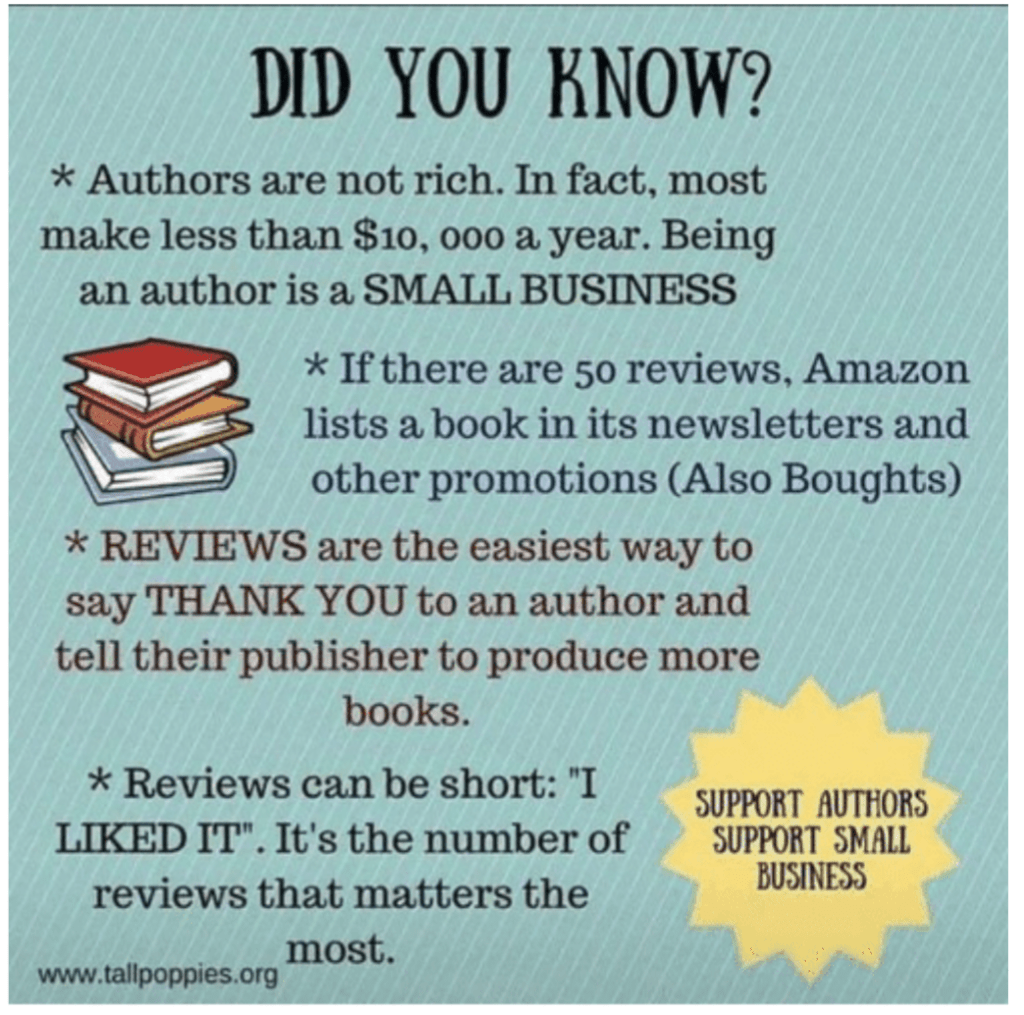
Do you want to know the first thing that people say when I tell them I’m a writer? “I hope you make lots of money”. Is that what it’s all about: money? Not for writers, it isn’t.
No, I think a serious writer cares more about the craft than simply cranking out a hastily written book just to try and make quick cash. For the majority of writers, the money doesn’t roll in each month, it trickles. I’m happy that it’s a steady, monthly trickle; but a trickle it is, not a flow. Apparently the likelihood of becoming the next JK Rowling or Stephenie Meyer is like winning the lottery, in any event, so it’s best never to delude oneself.
I’d be lying if I said I didn’t want to become a professional writer (professional defined in this context by it becoming my full time work – I’m definitely a serious writer, not doing it as a casual endeavour). What writer wouldn’t want to make a living from their passion? But the desire to make enough from my writing to pay the bills with is not what motivates me.
So, what’s my motivation? Well, considering I’ve been writing regularly since I was seven (first through a daily diary, later through short stories and poetry and eventually on to novellas and novels) I’d say that having a creative outlet is what motivates me the most.
Does that mean I don’t write for an audience? Of course not. Just because I don’t make a living from my writing doesn’t mean there aren’t readers for my books. I’ve written about this in past blog posts, but it’s always good to reiterate that I’m a writer like many others: I write the first draft primarily for myself, though the published book will have been honed for an audience.
Since the days of the Epic of Gilgamesh, or the Iliad, storytelling has been a way to tell a tall tale, to pass it on down through the ages and share a slice of artistic culture. If I were living in Sumer in 2000BC, I imagine I’d be a poverty-stricken bard orating a narrative poem to all and sundry. Or maybe an eccentric shaman.
In my experience, writing a novel is the literary equivalent of acting: an actor has to do research to prepare for a role, in order to become the part. Depending on the genre of a book, an author has to do something similar, although as preparation for their character and not themselves. But, where to get ideas or inspiration in the first place?
Everyday conversations
Snippets of conversations can spark ideas. I’ve taken inspiration from conversations I’ve heard on the tube in London, while out doing the grocery shop, or by random passers-by in the park. Of course, it’s always good to fictionalise everything you jot down in your notebook: real life can make for a good source of inspiration, but unless you’re writing non-fiction, it’s best to put your own spin on the yarns you hear.
Recruitment sites
Browsing the job listings can sometimes unveil a huge source of unusual occupations that might just suit the profession of main character in your story. In my second novel, The Buddha’s Bone, I did plenty of research into Clinical Psychology, the training of my main character Kimberly before she changed career to teach English in Japan.
Movies, TV and books
Okay, so I’m not suggesting you rip off the things you watch or read! But whenever I’ve had writer’s block, or been stuck with what direction to take a particular chapter in a work-in-progress, I’ve turned to films or books to critically analyse the ideas or plot. From time to time, this has led to an idea developing off on a tangent, or even sparked a new idea altogether.
Travelling abroad
Visiting or living in other countries can provide the perspective we need for our writing. Other cultures and customs that are different from what we are used to is a great basis for a story; or even simply a change of scenery for our main characters. I’m from Belfast in Northern Ireland, but having lived in other places such as London, England and Tottori, Japan has inspired my novels and poetry.
Dreams
Channelling your dreams – or nightmares – into short stories or working them into a novel scene can be a productive use of the subconscious brain’s activity, and a good way to make our nocturnal hours part of our diurnal work. Why not?
Bad experiences
Turning a bad situation into fiction is a great remedy not only for processing a learning experience, but for making lemonade out of lemons (or maybe cider out of rotten apples). Bottoms up!
The takeaway
Take inspiration from everywhere and carry a notebook at all times so you don’t forget those ideas. No idea is a bad one; better to run with it and edit it later than have a blank page. I’ve used all of the above to find fuel for fiction – hope it’s useful fodder for you too.
During the dozen years my work has been published in magazines and by book publishers, I’ve become accustomed to receiving beta reader feedback and editorial criticism of my work, as well as developing a thick skin to negative reviews. It’s all part of the job to take it in your stride as writers; our books are our babies, yes, but writing is subjective. Not everyone is going to love what we write.
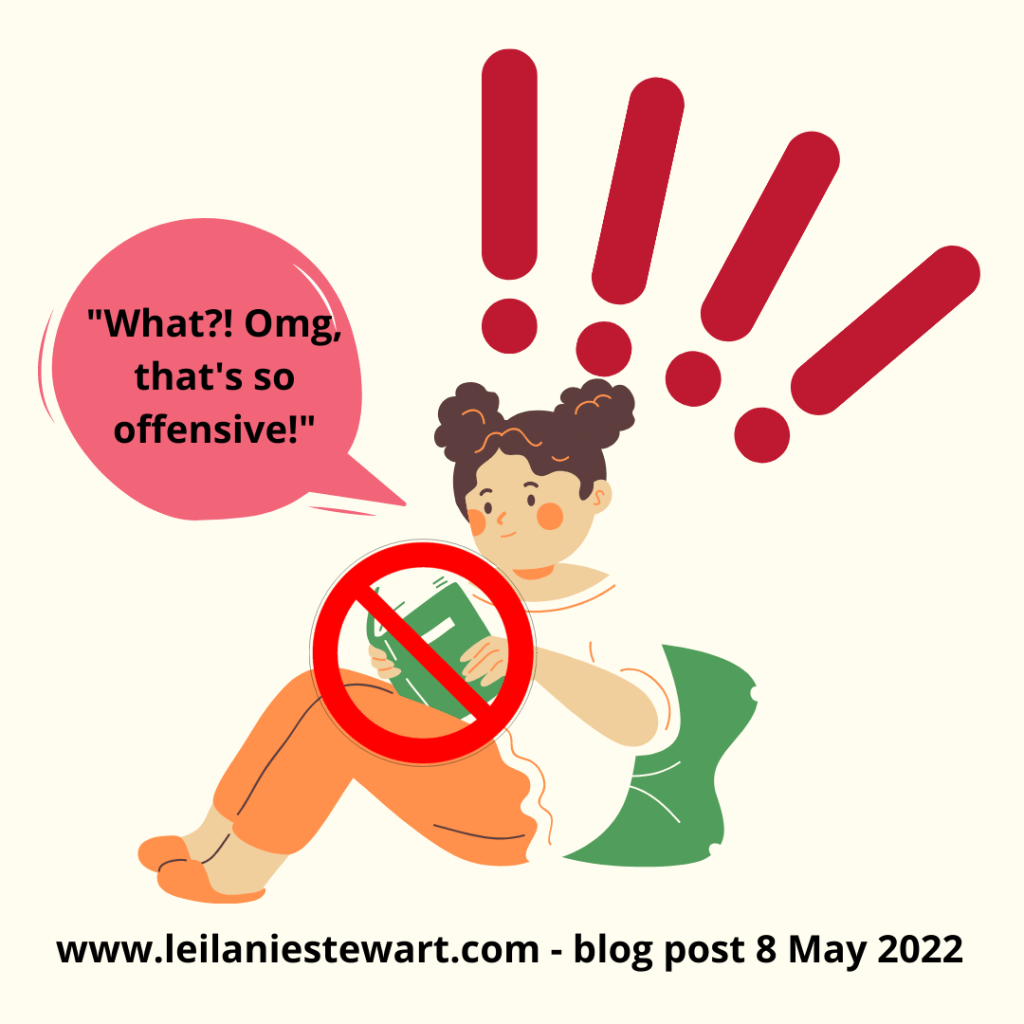
As an author of serious and sensitive issues in my fiction and – dare I say controversial topics, given recent reviews – over the past year I have learned about the need to include trigger warnings in promotional materials for my books. The Buddha’s Bone has numerous trigger warnings: racism; misogyny; sexual assault; domestic abuse; mental health issues; miscarriage; substance abuse. There are probably more that I have missed in that list. The trigger warnings appear on the description blurb for online retailers, but not within the book itself. Why not? Personal preference: when I’m reading a book I don’t want anything to influence my experience of that story. If a trigger warning were big enough to put me off a story, I’d prefer to know at the buying stage; once I’m settling down with a cuppa, ready to read, I don’t want anything to interfere with my suspension of disbelief. (Note: not much puts me off, with the exception of “child in peril”. As a parent of a young child, I have a thin skin when it comes to babies or kids getting hurt in fiction or movies. I recently had to stop reading a horror story when it wasn’t made clear that babies were getting sacrificed to a Cthulhu-like creature. I couldn’t read on!) In books I prefer no author note; no thank you. It’s for that reason I don’t provide any similar disclaimer in my own books.
What about at the editing stage before a book is even published? I’m talking here about the use of sensitivity readers. Did the thought to use a sensitivity reader for The Buddha’s Bone ever cross my mind? Yes, briefly. The main antagonist in my book, the abusive boyfriend of my main character Kimberly, is racially bigoted and makes offensive slurs against Japanese people when he visits her. The language is intense and the racist rhetoric is strong. Do I think such a character should have been screened by a sensitivity reader prior to publication? No. Unfortunately racism exists in modern day society. If you have not personally experienced it then please consider yourself lucky to be in a priveleged position; or maybe simply sheltered. Same difference. I myself can testify firsthand to the accuracy of the language used by my fictional character in The Buddha’s Bone, as the slurs are typical of those used in the UK today. Does it make for upsetting reading? Probably to some readers, just as the sexist treatment of Kimberly by certain characters may upset others. Although fictional, I tried to make scenarios in my novel a raw and honest reflection of situations that can arise in real life. To tone this down, or censor it, is to deny reality. If we deny reality, are we not at risk of adopting magical thinking? Fiction is not always fantasy; I write psychological literary fiction and I intend to make it as authentic as possible, even when telling a make-believe story. Hopefully my writing comes across as honest and compassionate, even if the characters in my books aren’t always the same.
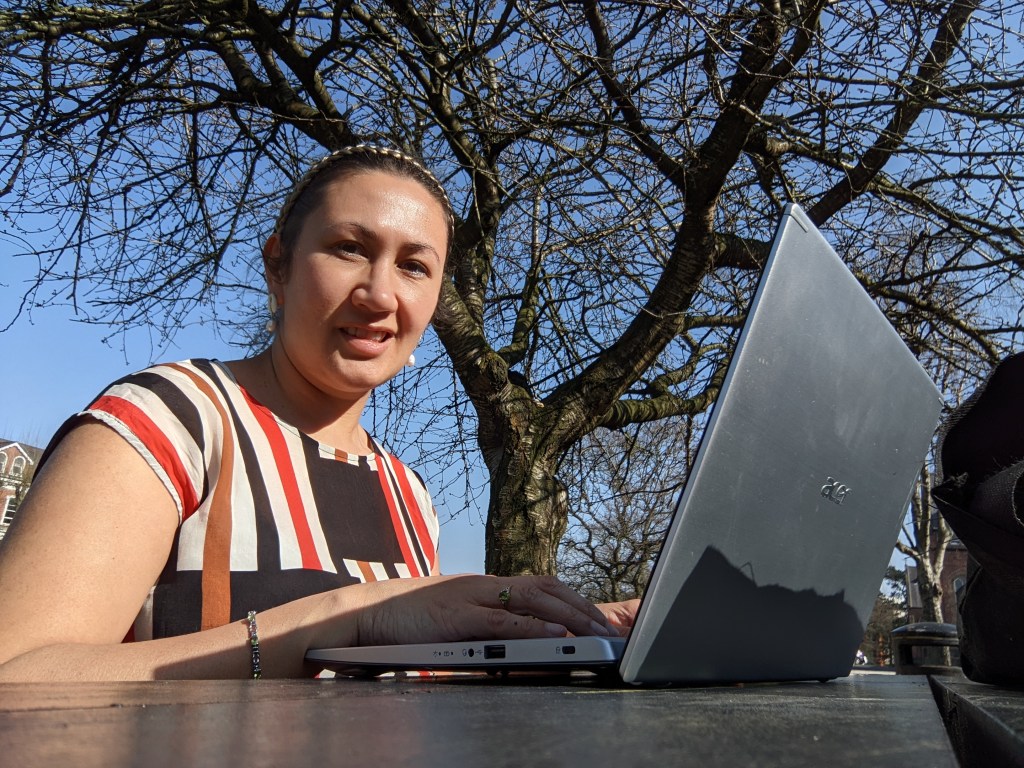
Write often and write everywhere…here I am writing on the go
Creative writing is a skill. It’s a craft that takes time and effort to learn a set of skills and to hone those skills. Some folks choose to learn by studying creative writing: maybe a Master’s degree or by doing a general writing course. In my case, I have learned ‘on the job’ so to speak; I don’t have any formal writing qualifications, but I have worked hard to teach myself everything from the basics to beyond, over the past fifteen years of writing short stories and poetry for publication in literary magazines and through the novels I’ve had released.
Learning point of view:
I learned from studying books as I read them. I decided that I didn’t like omniscient pov as much as first or third person, as I prefer to follow a character closely and really get inside their thoughts, rather than the cinematic view of following everyone and switching between characters, yet not delving deeper into what makes them tick. For my debut, Gods of Avalon Road, I chose third person for my two main characters, Kerry and Gavin to show how each reacted to the supernatural events happening. For The Buddha’s Bone, I chose first person to give it more of a personal, travel-diary feel especially as the story deals with sensitive issues.
Learning characterisation:
Again, I learned this from studying the books I bought or borrowed from libraries and by reading widely in the genre in which I was currently writing. I decided that I like my main characters to be flawed, but ultimately likeable as I very rarely finish books if I don’t like or can’t relate to the main character. I also found that depending on the genre, character growth follows certain rules: for me personally, my characters go through a crisis of identity and by the end of the story, create a new sense of self. It’s the central theme in all of my books, regardless of the genre.
How to work out your plot:
From reading widely I noticed that regardless of whether a story is a standalone book or part of a series, all plot points that occur throughout should be resolved by the end of the novel. Personally, I use a checklist when drafting my own manuscripts to make sure my characters deal with any crises or react to the major storyline as I can’t stand it as a reader when anything is left unresolved. Happens rarely, but there have been one or two books that I’ve thrown across the room in frustration for leading me down the garden path in terms of build-up and expectations – and I don’t want my own readers to ever feel that frustration with anything I write.
What genre to write:
I tend to write what I read: mostly psychological literary fiction and character driven stories. My advice is to read widely and figure out what you like or don’t like in a story. No point writing fantasy if you’ve never picked up Lord of the Rings, for example. It took me several years of trying different genres to figure out what worked for me and what I liked to read. I was reading the Harry Potter series, the Hobbit and Inkspell, etc. when I was writing my YA fantasy novel, but ultimately decided that my writing is too dark for kids and so I archived that manuscript and started writing adult fiction novels.
Writing devices – how, when and what to include:
I’m not a fan of red herrings in stories as I find them frustrating, so I don’t tend to use them myself in my writing. I like cliffhangers at the end of chapters, and I’m happy to use this as a device myself, but never at the end of a book. I really can’t stand a cliffhanger at the end of a novel; instead of making me want to read the next book, it will put me off a series. Thankfully I haven’t come across this much at the end of a novel. As for literary devices, every writer knows not to use many adverbs and to show not tell. But how about writing no-nos? I dislike reading about ‘flashing eyes’, as nobody’s eyes blink on and off like a siren on an emergency vehicle. I’m also not a fan of exclamation marks in stories; too many and the writing strikes me as amateurish. I could say the same for characters stuttering too much when nervous, or using other characters’ names repeatedly in dialogue – in real life, how many times do we address the person we are having a conversation with by name? To me, if I read this in a book it makes the novel appear clunky and not properly edited. All of these no-nos are things that I make sure not to do in my own writing.
Developing a thick skin – getting feedback from beta readers and editors:
If a writer wants to improve their craft, they need to get outside feedback; there’s no other way around it. In the early stages of my writing, I asked friends and family for feedback, with mixed results. Not everyone has a good eye for literary criticism, after all. Nowadays, I have an editor and suitably qualified beta-readers: two of the three beta readers I use have PhDs in English Literature.
How to know when a writing project is finished:
A tough call! Is a book ever finished? You could argue not. I don’t read through my published backlist much as I find myself nitpicking and thinking, ‘ah, I should have done this’ or ‘I could have added in that’. Admittedly, I have rustled up ideas for sequels to both of my published novels by re-reading them, although these are just in the outline stage at present; other more pressing ideas have kept me busy for forthcoming novels.
Finding and approaching publishers:
Twenty years ago when I was first submitting my finished YA Sci-fi novel to publishers, I used the Writers’ and Artists’ Yearbook for a starting point. I’d say this resource is still a good starting point for authors beginning their publishing journey, but over the past five years I have turned to Google searches for lists of publishers open to unsolicited submissions by non-agented writers as a starting point. In the past year I have stopped searching altogether as I am happy writing and publishing as an Indie author now, at this stage of my career.
If you are approaching a publisher, you’ll need to have a polished cover letter, a catchy one page synopsis of your book including all spoilers and three chapters prepared in whatever size and font your chosen publisher wants, along with word count and personal details on the first page and usually your surname, key word from your book title and page number in the top right of the header.
Going it alone – learning how to self-publish:
Last year in summer 2021 I hadn’t a clue where to begin on my Indie author journey. I felt very overwhelmed by the options and didn’t know what would be best for me. I am lucky that my day job in a grammar school gives me eight weeks of annual leave over July and August as the pupils are off for the summer; I used this time to educate myself through watching YouTube tutorials by successful self-published authors and reading articles to find out which platform I wanted to use to publish my book. As a starting point I decided on a few things: I wanted to publish Ebook, Paperback and Hardcover versions of my book; I wanted to ‘go wide’ with all of my books (not exclusive to only one marketing platform); I wanted to own the ISBN for my books rather than use a free one provided by, say, Amazon or Lulu so that I could control the metadata of my book and have my own publishing imprint; I wanted to design my own cover rather than use a graphic designer and I wanted to set my book to pre-order so that I could start building up ARC reviews and generate publicity. I used Amazon’s KDP to typeset and distribute my paperback, KDP and Draft2Digital to format and distribute my Ebook and Ingramspark to typeset and distribute my Hardcover. Through these distributors, my book is available to buy via Amazon, Waterstones and all other major online retailers.
Marketing a book – skills as an Indie author:
This is another skill that I had to learn once I had figured out how to format, design and publish my book myself. I decided to run sponsored ads on Amazon, buy one-off print ads in the Ingramspark advance catalogue and Myslexia magazine and run occasional promotions on Bargain Booksy as these were all within my budget. All have been a worthwhile investment in terms of helping my book to reach a wider audience. I’ve also advertised my book on social media – Twitter and Instagram have been good to find interested ARC readers and keyword searches on the WordPress reader has helped me to find book bloggers.
Other tips:
Read widely, not only in your genre but in others as there’s something to be learned from everything. Carry a pocket notebook with you in case inspiration strikes while you’re on the go. Try to write regularly; even a few sentences everyday is better than nothing as it keeps the story fresh in your mind. These are all things that work for me. Hope they help you too.
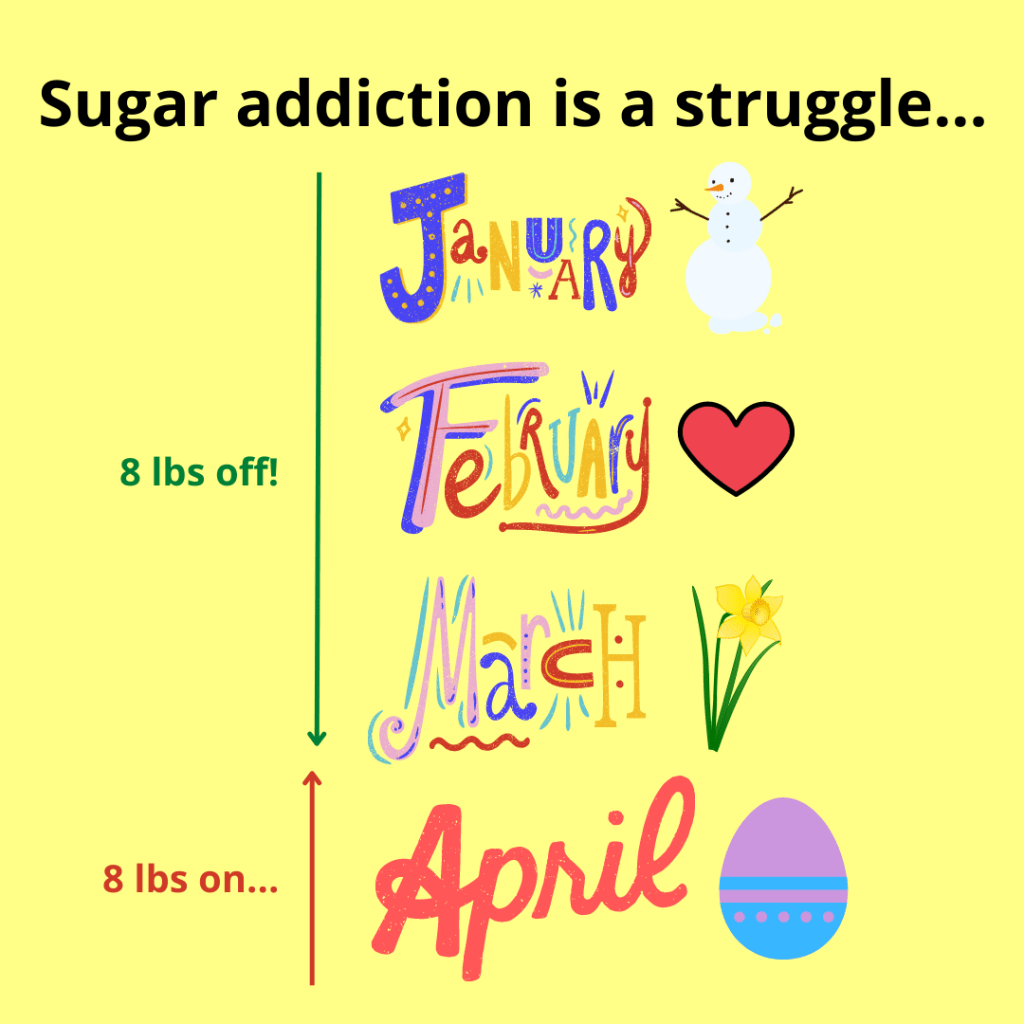
Easter is over and I’ve gained 8lbs to show for it. That’s 8lbs in 2 weeks, by the way. Considering it took me 3 months to lose those 8lbs in the first place, it’s not so great, huh? Yep, that’s the reality of insulin resistance, carb intolerance and sugar addiction. I overindulged on Easter eggs, desserts at the hotel during a spa break away and binged on starchy carbs generally. I’m not perfect – far from it. When I stop keto I really have disordered eating. I go from very strict to bingeing with no gauge (I don’t get sugar rushes or crashes like a normal person, I could stuff my face on chocolate all day). I’ll be honest, I’m at a loss about how to manage my sugar addiction in the long term. For now, I’m doing what I can. Back on the bacon since 24th April and I’m not beating myself up either. Guilt is a useless emotion.
At low moments when I’ve had to put on my social face at work or elsewhere in public, at times I’ve made light of my sugar addiction. I’ve joked about why can’t I be addicted to broccoli or celery; why do I have to be addicted to something as devilishly delicious as chocolate? The truth is, giving in to self pity just before my 2 weeks off work for Easter break (I work in a grammar school) was what got me into trouble. I had been on strict keto since 25th January and had successfully made it through both Valentine’s Day and Mother’s Day without any cravings, when suddenly I felt that life was unfair; why shouldn’t I be able to have a little piece of chocolate egg. Just a teensy bit. You can guess what happened once I had myself convinced. One piece is never enough.
Where does it end? Yes, I am self aware enough to know that this battle will be a lifelong struggle and – cheesy spring pun intended – I’m no spring chicken. The older I get the more my hormones will be against me. I need to find a balance between managing my sugar addiction and allowing myself treats on social occasions. This is good in theory, but how it will work in reality is another thing. Nevertheless, I have had to eat a huge slice of humble (chocolate) pie this month since I had only recently been celebrating my 2 year keto anniversary and feeling proud of how far I have come. Whilst that remains true, I still have a long way to go on the road to sugar addiction recovery.


 Leilanie Stewart