Can self-publishing lead to a publishing deal?

Recently I found the first book that I’ve binge-read in the longest time. Abberton House by Debbie Ioanna is the best written ghost horror I’ve come across in a long time. I literally couldn’t stop reading it and finished it in two days straight; no mean feat when you consider I had a small child to take care of while school was still out for summer. I discovered Ioanna through Amazon’s bestseller Top 100 list for ghost horror and after finishing her page-turning book, decided to look up her back catalogue. It turned out that Abberton House was Ioanna’s first horror, the rest of her back list being romance. Abberton House also happened to be her first book with a publisher, with Ioanna sharing on her Instagram page that the book had previously been self-published, now being re-released by Bloodhound Books. She didn’t mention whether the publisher had approached her with an offer of publication, or whether she had approached them on the basis of self-published sales or the number of ratings/reviews. What she did mention, however, was that being with a publisher had turned her book into an overnight best-seller and she wasn’t wrong: Abberton House stayed at #1 for many weeks.

I’ve also known other self-published authors who have, on the basis of sales or the number of reviews, been able to have books re-released with small to mid-scale publishers. It certainly does send a message of hope to other authors aspiring to have their work traditionally published. In my own case, the opposite currently holds true: my debut novel was published with a small press publisher, but I have chosen to self-publish subsequent novels through my own imprint, mainly to learn more about publishing and marketing myself. I’m happy with the results: my current novel, The Blue Man, stayed on Amazon’s Top 100 Hot New Releases for Ghost Horror for a month, reaching #10 at its peak. That’s not to say I wouldn’t consider submitting to a publisher again in the future; the right publisher could definitely propel my book further than my own marketing budget would allow for.

Self-publishing nowadays doesn’t have the same stigma as it did a decade ago, when it was seen as a pathway for authors who couldn’t get a publisher to touch their work. Today, it’s seen more as a preferable option for authors who want to skip the slushpile and often lengthy wait for a response – usually a rejection – from publishers who are taking less risks on new, unknown authors in the face of tough economic times. Of course, there are stories from decades ago of famous authors who self-published their own books even in a more profitable publishing climate, which you can read in this article about ten famous authors who self-published their books. The most surprising names for me on this list were Stephen King and Margaret Atwood, though knowing that any of these writers at one point self-published certainly gives a boost. Not only is self-publishing not a barrier to publication later with a publisher, but may even enhance a writer’s chances, if they can show how well their self-published book has been received and how much marketing they’re willing to do. After all, authors are expected to do much legwork to move books, and proving that you have a book that readers want is half the battle, even if the marketing budget doesn’t necessarily match.
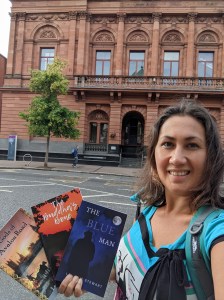
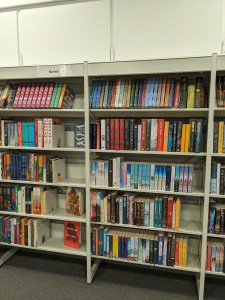
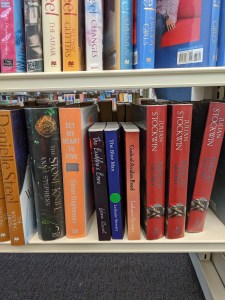
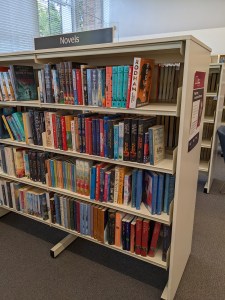
My novels at Central Library Belfast

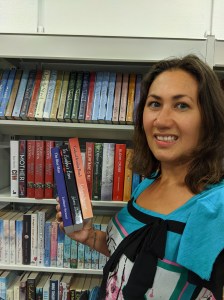
This beautiful historic building, the Central Library in Belfast, is now home to my novels. They’ve just been added to the catalogue and were put out on the shelves today.

Having my books in Libraries NI is a major milestone for me. I was used to sending legal deposit copies to the British Library, Bodleian Library, National Library of Scotland, Cambridge University Library, Trinity College Dublin and the National Library of Wales, where they are made available in the reading rooms, but to have them accessible for loan by the general public in Northern Ireland is very exciting.

It’s also a lovely moment when you check into the online catalogue and find out one of your books has already been borrowed! ☺️

My books are available to borrow at Libraries NI

Many thanks to Allison at Ormeau Road Library for having my books on the shelves. Copies are now available through Libraries NI. They can be reserved through this link or are available to browse if you’re at Ormeau Library in Belfast.

For me as the author, it was lovely to take a wee dander over to Ormeau Road Library and see my books on the shelves. They were added to the catalogue on Saturday, so are literally fresh on the shelves.

If you choose to borrow any, hope you enjoy the read!

Remember, if you like what you read, you can always buy a copy and support my writing too. Links to order from Amazon, Waterstones and more are on my novels page.

Author misconceptions: books in retail stores versus available to order online

Do you want to know one of the first things people ask me when they find out I’m an author? “Can I buy your book in Waterstones?” (A large retail chain in the UK, for folks reading this elsewhere).

Do you want to know what I tell them? My books are available to order from Waterstones as click and collect, but not on the shelves in every branch.

But, what’s the difference? Some of you reading this might already know: available to order as click and collect means the book will be listed on the retailer’s website, whereas in stock means physical copies will be present in stores. The difference comes down to money and connections.

If an author is published under any of the big 5 publishers (Penguin, Hachette, Simon & Schuster, Harper Collins and Macmillan) they’ll be taken care of by a massive marketing budget, part of which is having their books appear in all the chain bookstores, and many small independent bookshops, across the country.

If, on the other hand like me, you have only been published by small press publishers (Blossom Spring Publishing, Eyewear Publishing, Cyberwit, Fowlpox Press) or self-published, your book *may (more on this below) be available to order from major online retailers where readers can collect copies in store, or have them delivered. If you’re particularly keen as a writer, you can ask local bookstores to stock copies of your book. I have managed to sell copies of my books through the local Waterstones branch in Belfast this way; though bear in mind that for any introverted authors out there, this requires a good deal of schmoozing on your part, so save your social-energy bank for this endeavour.

Do small press publishers always make their books available to order from major online retailers?

Not always. If having your book available to order for click and collect from Waterstones, Foyles, Blackwells (UK) and Barnes and Noble (US) etc. is important to you, rather than only Amazon, then check where the small press publisher’s books appear. In the UK, if they have an account with the book wholesaler Gardners, then yes, your book will be available from all of the above. Or, if you are self-published but want to ‘go-wide’ (sell books from a wide variety of retailers, not just one distributor) then you can set up a Gardners account through Waterstones – though you will need to own the ISBNs for your book yourself. You can buy them first from Nielsen in the UK.

One month of publication for The Blue Man – Top 10 Amazon chart, Author interview on Jaffa Reads Too and Bargain Booksy

Wow, has it really been one month since The Blue Man was published? What a ride these past four and a half weeks have been! Let’s look at all things good and all things bigger-picture. Book marketing is an ongoing learning journey for me, so let me share the highlights and things I’ve learned along the way.

Author interview in Jaffa Reads Too

My author interview by Jo at Jaffa Reads Too

You can read my latest author interview, hosted by Jo, on Jaffa Reads Too. It’s a fun interview styled as an author picnic, and was fun to answer. Thanks to Jo for having me on her site. A forthcoming review of The Blue Man will be appearing on Jaffa Reads Too – more on that when it happens.

Bargain Booksy promotion

My book is featured today on Bargain Booksy under literary bargains. Last month on release day it was featured under horror. The difference? The Blue Man is both: ghost horror and literary fiction. The difference in sales? Literary fiction ads seem to work better for me, probably because there’s a bigger readership on Bargain Booksy than horror, so maybe it’s reaching more readers. I’m not sure, just guessing.

Making the Top 10 in Amazon’s Hot New Releases chart for Ghost Horror

My insomnia really paid off as I awoke in time to see my book at #10 on Amazon’s Top 100 Hot New Releases for Ghost Horror on 26th August, the highest ranking I’d reached. The chart updates hourly, so even by lunchtime, I’d moved to twelfth place. However, I stayed within the Top 100 for an entire month, an achievement I’m proud of. By the end of the month I was at #66 by the time I disappeared off the list, no longer a new release. The ‘newborn’phase is only for one month.

Reaching #55 on Amazon’s Top 100 Horror chart too

I also made it onto Amazon’s general horror chart, reaching #55. Considering what a broad category this is, encompassing countless tens of thousands of new horror books, this was another celebration-worthy achievement. I only landed on this list for one day, but I was up alongside some best sellers in horror that I love, so that was a great moment too.

Not to mention #190 for Ghost Horror in the Best Sellers Rank!

The more niche your book category on Amazon, the higher you can reach on the sales ranking. For example, my poetry collection, A Model Archaeologist reached as high as 27 in British and Irish poetry. However, Ghost horror is a relatively broad area, as horror generally is quite popular. Reaching 190 out of how many thousands of books out there was a happy moment for sure.

One month publishing summary: advertisements and sales

Amazon sponsored ads have been my biggest driver of sales for this book, which is different from The Buddha’s Bone which saw most sales through Bargain Booksy. Overall though, same as with The Buddha’s Bone, my hardcovers are selling the best through Ingramspark, with eBooks second and paperbacks third. I have no insider bookselling knowledge, so I can’t say why this is the case – maybe some of those hardcover sales were bought as library listings, as they were nearly all in the US?

The importance of reviews for new books and Indie authors

As any author knows, reviews help readers to find books, and I’m happy that readers and book bloggers have posted on Goodreads and Amazon. So if you’re one of the readers who has left a review for my book, thank you as your feedback matters. I read every review and value your thoughts!

Professional writer versus non-professional writer: how to know which one you are?

Professional writing, non-professional writing, serious writing, novice writing, hobbyist writing. So many terms, it would make your head spin. I’ve heard some arguments that professional writing relates to money: if you are earning enough to make a full-time living from your writing then you must be a professional writer. I beg to differ. In my opinion a professional, or if you like, a serious writer differs from a non-professional writer in a few distinct ways that are nothing to do with money. What are those ways, I hear you ask?

Professional:

1. Makes time to write on a regular basis, even when not in the mood.

2. Takes editorial feedback well and improves their craft based on advice given from proofreaders and beta readers.

3. Works to deadlines if doing work for other people, including editors, copy editors, etc.

4. Views writing as their profession and takes a serious approach to advertising and marketing their work.

5. Has a thick skin: takes rejections in their stride and not as a personal attack (if submitting to publishers) and does not brood on negative reviews. It’s all part of the job.

Non-professional:

6. Writes occasionally and/or as a hobby.

7. Afraid to share poetry/stories due to fear of rejection or worried about what others may think.

8. Writes mainly because it is required as part of a creative writing course, or class and not because they view it as their profession.

What do you think? Any more you could add to the list? Do you disagree with my differentiation between the two? Feel free to comment if you have any thoughts.

What services to pay for as an Indie author

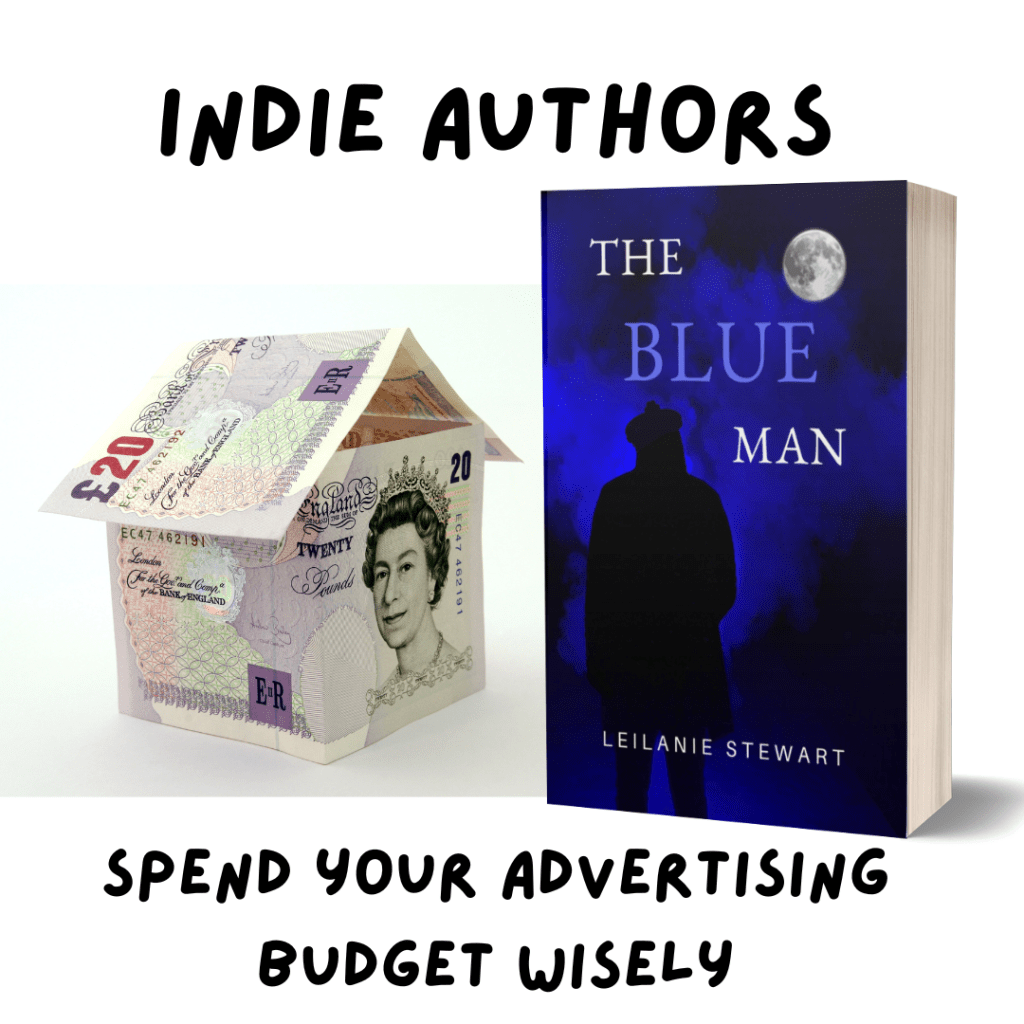
A self-published author is not only a writer, but a graphic designer, a book publicist, a distributor, a social media promoter and many more jobs that I have forgotten to mention. But where should an Indie author spend their money? Books don’t sell themselves, but if an author is putting on a number of different hats, they need to be savvy with their budget – unless of course, they have a money tree growing in the back garden.

Paying for cover art

This is a good investment, so long as you know where to go to source a good graphic designer. In my case, because my cover ideas are pretty straightforward, I have done my own covers for The Buddha’s Bone and The Blue Man using Canva Pro.

Paying for a typesetter

I have heard that authors can find good copy editors and typesetters through Reedsy, though personally I haven’t explored this option myself; I do my own typesetting to keep costs down.

Paying for an editor

A good editor is a worthwhile investment. If you don’t know anyone with professional editing skills to proofread your manuscript, I would definitely advise hiring one. In my case, I am lucky to have an editor with a PhD in English Literature who is happy to correct my final drafts in exchange for a copy of the book and a nice bottle of wine. It isn’t a boast; I am very lucky.

Playing for advertising

Yes, yes, yes. You absolutely should pay money for ads to get your work out there. Ads that work for me are Bargain Booksy (if your book is under $4.99 USD) at a cost of approx. £25/£22 per ad, in my case for literary fiction and horror. Every time I run a Bargain Booksy ad, I see a spike in sales, so I would most definitely recommend this. I have also had success with Awesome Gang in terms of driving traffic and click throughs for my book links. Lately I’ve managed to attract new readers for The Blue Man by running sponsored ads on KDP.

Paying for reviews

No, no, no. An author should never have to pay for reviews. Yes – I know reviews are hard to get as an Indie author – but paying for them is a waste of money. Save your cash for ads. Reviews might help readers decide whether to buy your book or not, but I doubt they will cause a major spike in sales. Lately I have been solicited by numerous dodgy book reviewers offering to review my book for a fee. Basically I don’t respond. I’m fortunate to have willing ARC readers for my books who will accept a free mobi, epub or print proof copy in exchange for an honest review. I really feel that authors should offer free review copies to willing ARC readers or book bloggers in exchange for a review without having to pay anything (other than the retail cost of their book and possibly postage, if mailing a paperback).

The takeaway?

It can be expensive enough as an Indie author to get your book out there, so save your extra cash for your marketing budget: advertising helps to reach readers and reviews help boost visibility, though an author shouldn’t have to pay for them.

Thanks for all the reviews of The Blue Man

Many thanks to all the readers and book bloggers who have left reviews of The Blue Man on Amazon and Goodreads. It really helps boost my book’s visibility and help it to reach new readers, so I want you to know I appreciate all the feedback.

As any Indie author knows, sometimes it can feel like a lonely journey when we don’t have a publishing team or an agent doing all the heavy lifting. Marketing a book is even harder than writing a book – and I for one am learning on the job.

Promoting a book is an ongoing effort. To reach readers, you need to take a relentless approach to advertising. I have been running ongoing sponsored ads on Amazon, which have had a fair few click-throughs and KU reads, or buys, and I’ve been placing paid ads on Bargain Booksy and Awesome Gang among others. It’s all about getting the book in front of the right readers, and it ain’t easy…

With all that in mind, if you’ve read my book, please consider leaving a review or even a star rating. It really helps. Also, I hope you stick around for Book 2 in my Belfast Ghosts series coming later in 2022. 😊

Keto summer plan – keeping carb cravings at bay

Non-bookish post today. Literary life aside, it’s time for an update about my ongoing keto journey and low-carb lifestyle.

Why am I back on keto?

Anyone who knows me will know that I’m no longer obese. Two years ago I had a BMI of 31 (over 30 is obese) and I weighed about 13st 5, which is very large for my 5ft 4 frame. Since that epic lockdown diet, during which I lost 3 stone, I have periodically returned to a strict keto diet for maintenance. For me, this tends to be after seasonal holidays and family birthdays. Otherwise, I have pretty much managed to keep the bulk of the weight I lost safely off.

Does keto work?

In my experience yes, but you have to stick to it. If you can’t maintain a state of ketosis (when your body burns fat for fuel instead of glucose due to a lack of carbohydrates in the diet) then you won’t see any results. For me, even condiments can throw me out of ketosis, not to mention a favourite of mine – wine.

My tips for maintaining my low carb diet this summer

In addition to strict keto, and moderate exercise, here are a few things I’m doing to stay on top of my health and keep the fat from piling back onto my waistline:

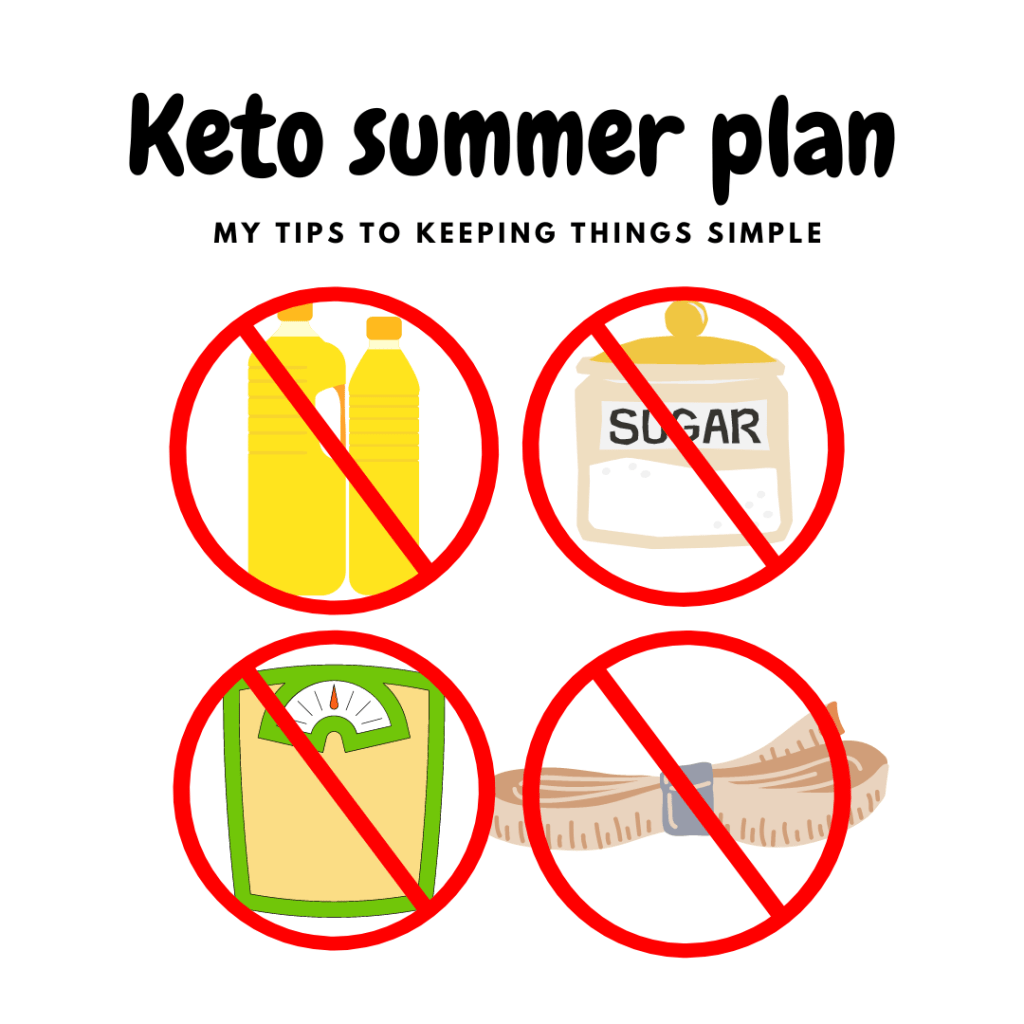
1. No weigh-ins this summer. The scales are gathering dust!

2. No tape measure either. It’s not helpful to berate myself over gaining a few pounds (more than a few) or my inability to shrink my waistline.

3. I am trying, whenever possible, to not eat added sugar. Obviously sugar is included in condiments and sauces, so it’s hard to eliminate entirely, but I’m sticking to whole foods whenever possible.

4. No sweeteners. Did you know that sweeteners affect the metabolic uptake of healthy bacteria in our guts? We all know how important gut health is to overall mental and physical health.

5. No trans fats. At home we cook with butter, lard or ghee and use olive oil for dressings. Out and about in restaurants, many foods are cooked in vegetable oil because it’s cheap. I know immediately what is cooked in vegetable oil as it causes gastric reflux. I’m almost like a built in trans-fat barometer. If the pressure is too great, then…boom!

That’s it then. Simplicity works. If you’re reading this post, then maybe you might be a little like me – and if you are, I hope my tips help you too. 😊

Two week publishing wrap-up for The Blue Man: sales, reviews and getting on the top 100 list

It’s two weeks since The Blue Man was published, so it’s time for a wrap-up of how my third novel has fared in the massive ocean of books. Not too badly, considering how many books are released on Amazon each day (anyone have any figures on that, btw? Feel free to comment below) although I probably have modest expectations compared to some writers. Perspective is key to success, and for me, having readers buy my books is enough to consider a book a success. Selling more than one book to a stranger who wants to read my story because it appeals to them – not because they know me – is my definition of a successful book. How’s that for modest expectations?

So, what else should I consider? Well, my book made it onto the Top 100 Hot New Releases chart on Amazon, coming in at #18. That news merited a lovely big glass of wine as a celebration. It also reached as high as #283 in the best sellers rank for ghost horror, so I was also chuffed about that too. It wouldn’t mean squat to the Stephen Kings and Dean Koontz’s of the horror book world, but it means a lot to me.

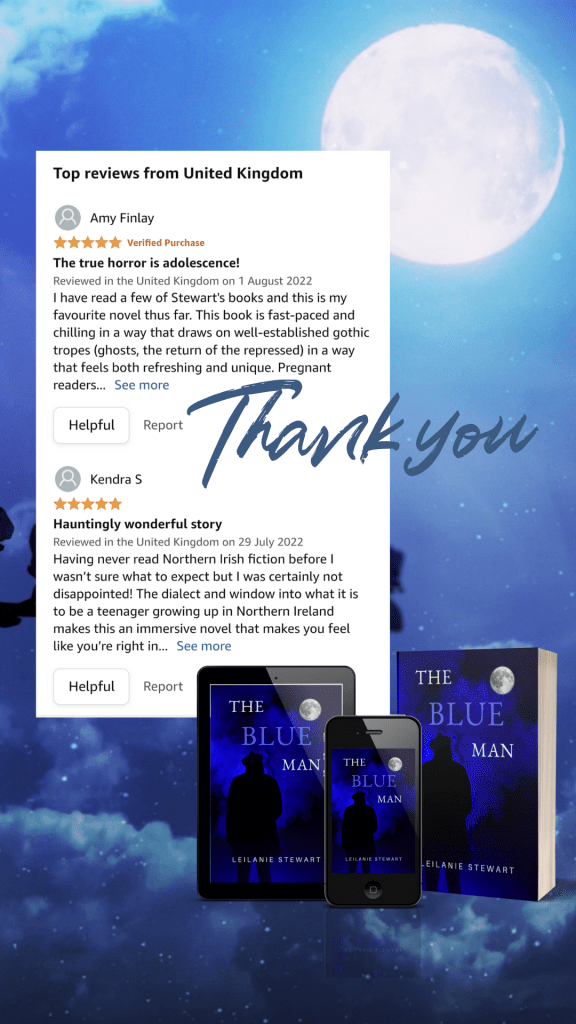
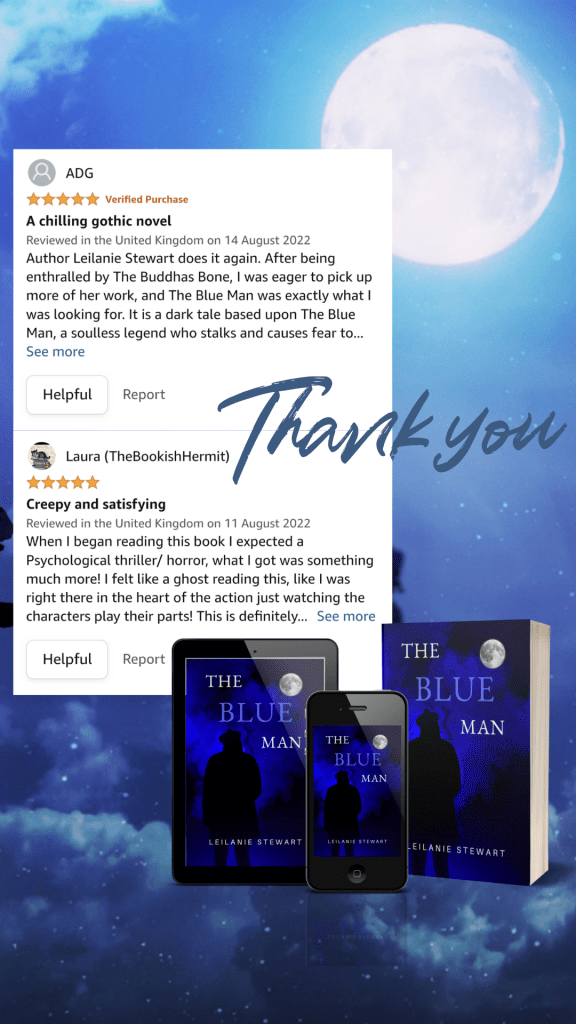
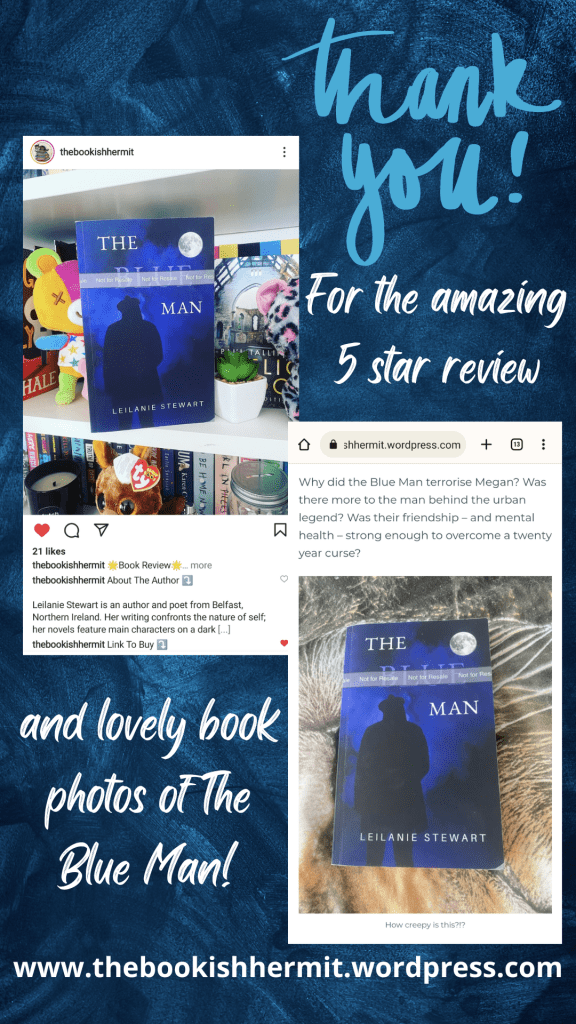
I’ve also had a few lovely reviews posted on Amazon UK, with one insightful review comparing the true horror in my story to adolescence, another describing how the dialogue made it feel like an immersive novel, and the most recent from Laura at The Bookish Hermit, who enjoyed the flawed characters and frenemies vibe and felt it was creepy and satisfying.

What’s the takeaway from all this? I only ever compare myself to my previous books, not other authors. So in that respect, The Blue Man is my biggest success yet. The Buddha’s Bone was well received in the first few weeks and The Blue Man has outstripped it by a small margin. Is that because of the genre? It’s a ghost horror whereas The Buddha’s Bone is psychological fiction – although both are literary fiction for their second categories. I don’t know if the genre has an impact. All I know is that I’m delighted that horror lovers are buying The Blue Man, because it’s standalone book 1 of 3 in my Belfast Ghosts series and so I hope readers will stick around for Book 2 coming soon.